 Skagit County
 Allura Isn't a Bad Product — It's Just Not the One We Put on Skagit County Homes
Homeowners in Mount Vernon, Burlington, Sedro-Woolley, and along the Skagit River delta ask us this question more than almost any other: "What's wrong with Allura siding?" The honest answer is nothing dramatic. Allura is a legitimate fiber cement product made by a company with real manufacturing history, and it will pass code inspection on your home just like any approved fiber cement siding. We simply don't install it, and we think you deserve a straight explanation of why — not a scare story, but a look at the practical differences that matter once a product is on a wall facing forty-plus inches of annual rain, salt-laden air off the Sound, and a moss season that runs most of the year here.
This page exists because we install James Hardie exclusively, on every siding job we take on in Skagit County. We're not paid by Hardie to say that — we made the call ourselves after years of tear-offs, warranty calls, and repaint jobs on other brands. Below is the reasoning, laid out plainly.
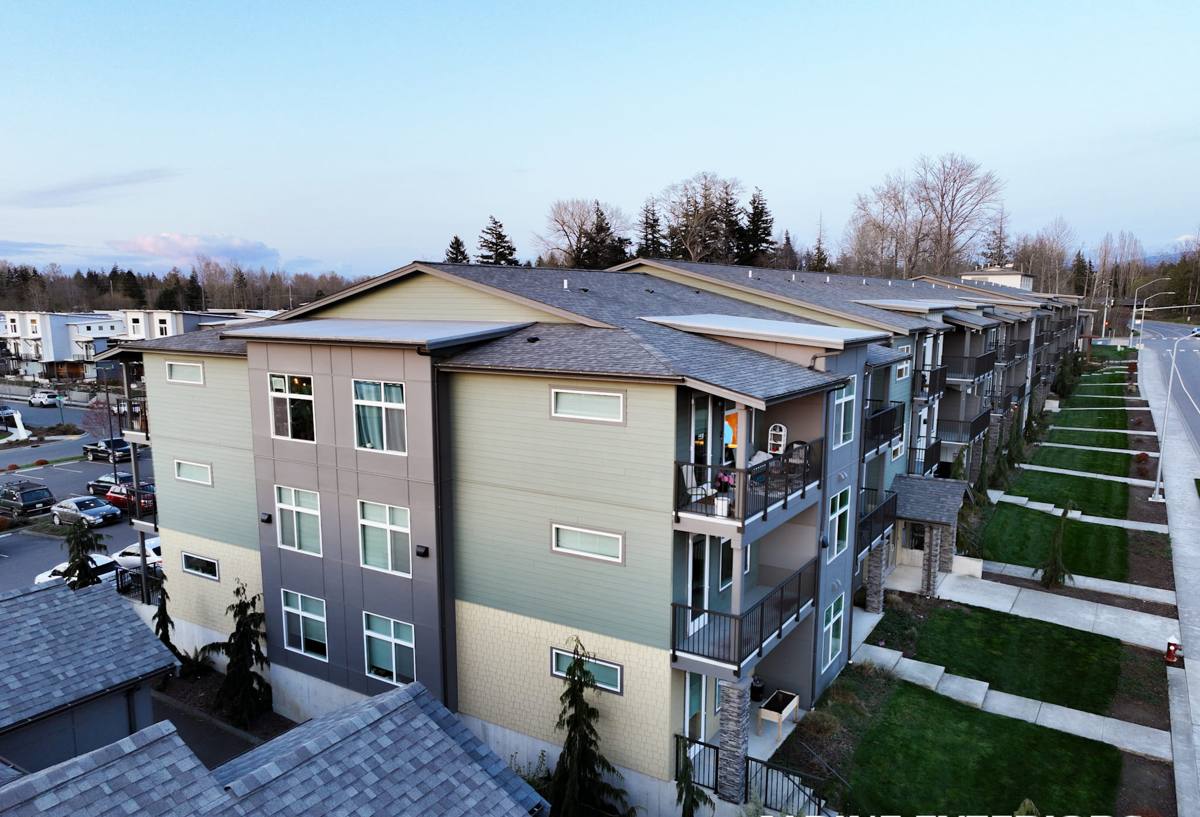
What Allura Siding Actually Is
Allura (formerly marketed under names like Plycem and Maxitile before consolidating under the Allura brand) is a fiber cement siding product — the same base category as James Hardie. Fiber cement itself is a good material class: it's non-combustible, resists rot better than wood, and doesn't attract insects the way untreated wood products do. Allura panels, lap siding, and trim are manufactured to meet the same ASTM C1186 standard that governs fiber cement products sold in the U.S.
Where the differences show up isn't in the raw chemistry of the cement board — it's in the finish system, the climate engineering, the distribution and warranty support, and the track record we've personally observed on homes in wet, coastal Pacific Northwest conditions.
The Factory Finish Question
James Hardie's ColorPlus finish is a baked-on, factory-cured coating applied in a controlled environment, backed by its own dedicated finish warranty separate from the substrate warranty. Allura offers primed and some factory-finished options, but the factory finish coverage and long-term color-warranty structure has historically been less robust and less consistently available across product lines than Hardie's. In a region where UV isn't the primary threat but moss, algae growth, and constant damp cycling are, the quality and adhesion of that factory finish over 15-20 years matters as much as the board underneath it.
Climate-Specific Engineering
James Hardie makes region-specific formulations — its HZ5 product line is engineered for climate zones with freeze-thaw cycling and prolonged moisture exposure, which describes the Skagit Valley well between November and April. Allura does not offer the same tiered, climate-zone-specific product engineering. That's not a knock on the material's basic durability; it's a difference in whether the manufacturer is formulating the product for your specific weather pattern or shipping a more generalized version nationwide.
Why Installation Sensitivity Matters More Here Than Almost Anywhere
Fiber cement siding of any brand is only as good as its installation. Improper flashing, insufficient clearance from grade, tight-butted joints with no expansion gap, or caulking where a gap should breathe — any of these mistakes will cause moisture problems eventually, on any fiber cement product. But the margin for error is thinner with less common or regionally under-supported brands, for a simple reason: fewer local crews are trained on the specific quirks of that product line, fewer suppliers stock the matching trim and touch-up materials locally, and fewer manufacturer reps are available for on-site problem-solving when something goes sideways mid-project.
James Hardie has invested heavily in contractor certification programs (we're Hardie-trained), and Hardie product, trim, and touch-up paint are stocked at multiple building supply yards within a short drive of Mount Vernon and Burlington. Allura's regional distribution and installer training footprint in Western Washington is thinner. When a crew runs short on matching trim on a Friday afternoon, or a homeowner needs a touch-up kit two years after install, that distribution gap becomes a real, practical problem — not a theoretical one.
Salt Air, Driving Rain, and Moss: What Skagit County Siding Actually Faces
It's worth being specific about what siding endures here, because it's the whole reason this comparison matters:
- Salt-laden air moving inland from Padilla Bay and the Sound accelerates corrosion of exposed fasteners and stresses factory finishes over time.
- Driving rain off winter storms pushes water horizontally into joints, seams, and butt ends far more aggressively than a simple vertical downpour.
- A long moss and algae season — realistically 8-9 months of the year in shaded, north-facing, or tree-lined lots common throughout the county — keeps siding surfaces damp and tests how well a finish resists organic growth and staining.
- Freeze-thaw cycling in the colder months, especially in the foothills toward Concrete and Darrington, stresses any joint or seam that wasn't detailed correctly.
None of these conditions are exotic. They're just persistent, and persistence is what separates a siding job that looks good for 3 years from one that looks good for 25. It's why we don't treat "it's fiber cement, it'll be fine" as a sufficient standard — the finish system, the climate engineering, and the local support network all have to hold up under sustained exposure, not just pass initial inspection.
Warranty Structure: Read Past the Headline Number
Both Hardie and Allura advertise long warranty periods on their fiber cement substrate — that part of the marketing is comparable on paper. The real differences show up in the details:
| Factor | James Hardie | Allura |
|---|---|---|
| Substrate (non-warping) warranty | Long-term, transferable, well-documented claims process | Comparable stated term, but claims process and regional support less established locally |
| Factory finish warranty | Separate ColorPlus finish warranty, distinct from substrate coverage | Finish warranty coverage varies by product line and is less consistently available |
| Climate-specific formulation | HZ5 zone engineering for wet, freeze-thaw climates | No equivalent tiered regional product line |
| Local contractor training network | Established certified-contractor program in Western Washington | Thinner regional installer training footprint |
| Local material/trim availability | Stocked at multiple regional supply yards | More limited local stocking, longer lead times for matching trim |
A warranty is only as useful as the ability to actually exercise it — get a claim processed, get matching replacement material, get a local installer who's dealt with that brand's specific detailing before. That practical backing is where we see the real gap.
What We Put on Homes Instead, and Why
We install James Hardie fiber cement siding exclusively — no exceptions, no upsell tiers to vinyl or LP SmartSide as a "budget option." Here's the case for it, specific to what Skagit County homes face:
- Non-combustible — fiber cement doesn't feed a fire the way wood-based products can, which matters given regional wildfire smoke seasons and general fire-safety planning.
- ColorPlus factory finish — baked-on color with its own warranty, engineered to resist the fading, chalking, and moss-related staining that damp Pacific Northwest exposure causes over time.
- HZ5 climate engineering — formulated for exactly the freeze-thaw, high-moisture conditions the Skagit Valley sees for a good chunk of the year.
- Established local supply chain — matching trim, touch-up paint, and replacement boards are available regionally, not back-ordered from a limited distribution network.
- Strong, transferable warranty — useful when you sell the home, not just while you own it.
- Proven track record — decades of real-world performance in exactly this climate, not just lab testing.
What Correct Hardie Installation Requires
None of the above matters if the installation is wrong. A correct Hardie install in this climate means proper rain-screen or drainage plane detailing, correct fastener spacing and type, expansion gaps at all butt joints, flashing integrated correctly at every penetration and horizontal transition, and minimum clearance from grade, decks, and roof lines. We follow Hardie's published installation specifications on every job — that's the other half of why the material performs the way it's rated to.
A Practical Checklist If You're Comparing Siding Bids
Whether you go with us or another contractor, use this list when you're evaluating siding proposals for a Skagit County home:
- Ask which specific product line and climate zone rating is being quoted — not just "fiber cement" as a category.
- Ask whether the crew is manufacturer-certified for that specific brand.
- Ask where matching trim and touch-up material are stocked locally, and what the lead time is if you need more in five years.
- Ask what the factory finish warranty covers separately from the substrate warranty.
- Ask how the bid addresses flashing, expansion gaps, and clearance from grade — get it in writing, not just verbally promised.
- Ask for the manufacturer's own installation guide and confirm the bid matches it.
The Bottom Line
Allura is a real fiber cement product, not a corner-cutting material, and a homeowner who chooses it and gets a correct installation from a trained crew can reasonably expect years of decent service. We're not here to tell you it will fail. We're telling you why, after weighing factory finish warranties, climate-specific engineering, local distribution, and installer support, we standardized on James Hardie for every siding job we take on in this county — and why we'd rather turn down work than install something we can't stand behind at the same level.
If you're planning a siding project anywhere in Skagit County and want a straight comparison for your specific home, we're glad to walk through it in person. Request a free, no-pressure estimate using the form below — we'll look at your home's exposure, existing siding condition, and give you an honest read on what it actually needs.