 Skagit County
 Siding in Big Lake: Built for Skagit County Weather
Big Lake sits in that stretch of Skagit County where the landscape does a lot of the talking — timbered hillsides, a working lake, and homes that range from older cabins upgraded into year-round residences to newer builds set back in the trees. What ties the housing stock together isn't age or style, it's exposure. Homes here sit under heavy tree cover for long stretches of the year, catch the same marine-influenced weather that rolls in off Puget Sound and the Skagit River valley, and go months at a time without a real drying stretch. That combination is hard on exterior siding, and it's a big part of why we treat Big Lake as its own case rather than a copy-paste of a Mount Vernon or Sedro-Woolley job.
We're a Skagit County exterior contractor working siding, roofing, windows, and decks across the county, and Big Lake is inside our regular service area — not a stretch job we take once a season. That matters more than it sounds like it should. A crew that's worked this specific pocket of the county knows which sides of a house take the worst weather, where moss builds up fastest, and what kind of moisture problems show up first when siding starts to fail.
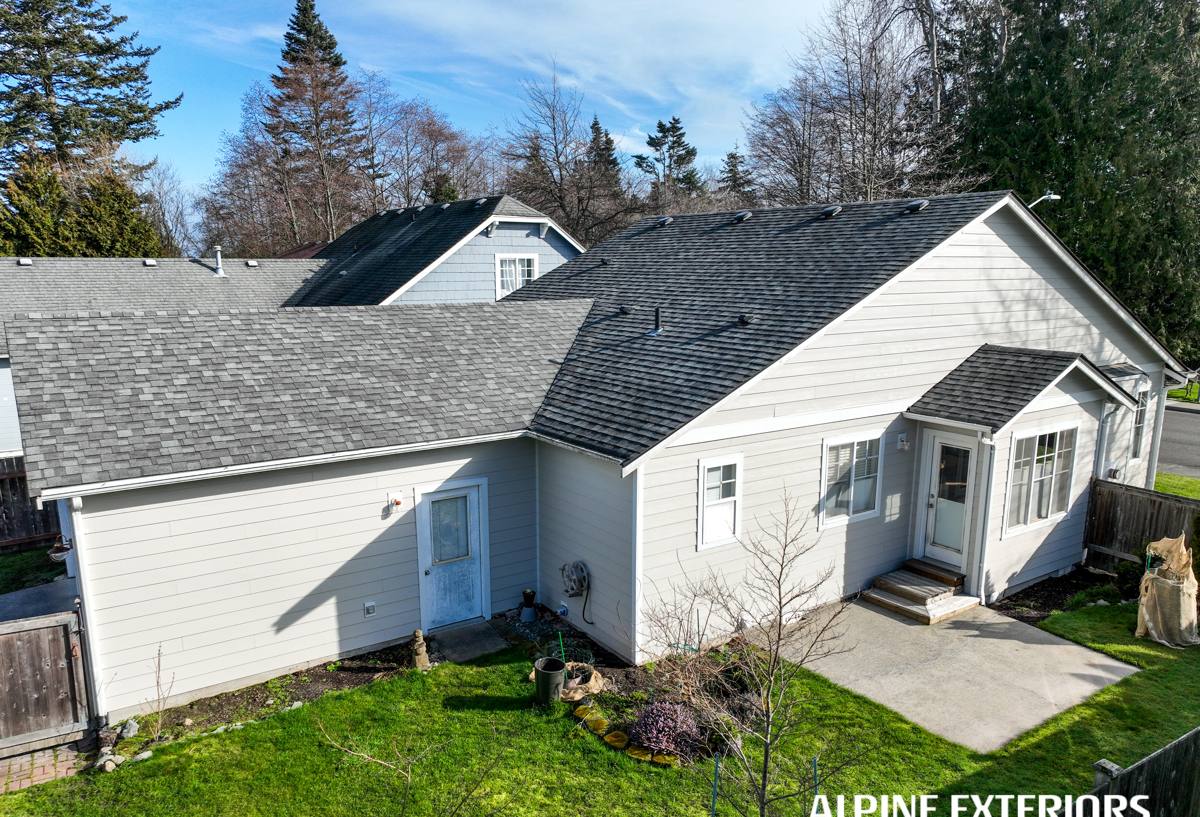
What the Climate Does to Siding Out Here
Three things define exterior wear around Big Lake, and they compound each other.
Salt Air Off the Sound
Big Lake is inland from Puget Sound, but Skagit County as a whole sits close enough to salt water that airborne salt is a real factor in coastal and near-coastal exposure, especially on homes with open western or southwestern faces. Salt-laden moisture accelerates corrosion on fasteners, trim hardware, and any siding product that isn't formulated to resist it. Over years, that shows up as rust streaking, failing caulk joints, and metal components that give out well before the siding field does.
Driving Rain
This isn't a light-drizzle climate. Skagit County gets sustained, wind-driven rain, and Big Lake's tree cover and lake-adjacent microclimate can funnel that moisture at siding sideways rather than straight down. Driving rain finds every weak lap joint, every under-caulked seam, and every spot where a siding product's water management wasn't built for sustained saturation. Products that perform fine in a drier climate often show their limits here within the first several winters.
A Long Moss Season
Shade, moisture, and mild temperatures are exactly what moss and algae need, and Big Lake has all three for most of the year. Moss doesn't just look bad — it holds moisture against the siding surface, keeps shaded walls from ever fully drying out, and accelerates whatever underlying weakness a product already has. On wood-based or fiberboard sidings, prolonged moss contact can soften material at the surface. On a properly finished fiber cement product, it's mostly a cosmetic issue that washes off — a meaningful difference over a ten- or twenty-year timeline.
Why We Install James Hardie and Nothing Else
We made a deliberate call as a company to install only James Hardie fiber cement siding — not vinyl, not LP SmartSide, not Cemplank or Allura, not primed spruce or cedar. That's not a marketing angle; it's a standard we hold to because of what we see in the field, especially in exposure conditions like Big Lake's.
- Non-combustible material — fiber cement doesn't feed a fire the way wood-based or engineered-wood sidings can, which matters in a county with real wildland-urban interface exposure around lakes and timber.
- Built for sustained moisture — Hardie's HZ5 product line is engineered specifically for climates with prolonged wet exposure, which is exactly what Big Lake's tree cover and rain pattern deliver.
- Factory-applied ColorPlus finish — baked-on color that resists fading and holds up to UV and moisture cycling far better than field-applied paint, which means fewer repaint cycles over the life of the siding.
- Won't rot or delaminate — cement-based composition doesn't absorb and swell the way wood fiberboard products can when they stay wet for weeks at a time.
- Strong transferable warranty — backed by a manufacturer warranty structure that holds up when the product is installed to spec, and that transfers to a new owner if the home sells.
We're upfront that other products have real strengths — vinyl is inexpensive and low-maintenance in mild climates, LP SmartSide is lighter and easier to install, cedar has a look some homeowners specifically want. Our position isn't that those products are junk. It's that after years of siding work in this exact climate, we don't think they hold up as well as fiber cement under sustained coastal moisture, driving rain, and heavy shade — and we'd rather install one product well than install several products with trade-offs we're not comfortable standing behind.
Comparing Siding Options for a Big Lake Home
| Product | Moisture Performance | Maintenance | Fire Resistance | Typical Lifespan |
|---|---|---|---|---|
| James Hardie Fiber Cement | Engineered for sustained wet climates (HZ5) | Low — factory finish, occasional wash | Non-combustible | 30+ years |
| Vinyl | Can warp/buckle; seams are moisture entry points | Low, but color fades over time | Melts/deforms under heat | 20-30 years |
| LP SmartSide (engineered wood) | Vulnerable to edge swelling if not maintained | Moderate — caulk and paint upkeep | Combustible (wood-based) | 20-30 years with upkeep |
| Cedar | Absorbs moisture, prone to rot in shade | High — regular staining/sealing | Combustible | Varies widely with maintenance |
The maintenance column is where a lot of Big Lake homeowners end up making their decision. A shaded, lake-adjacent lot with limited drying time between rain events punishes any siding that depends on the homeowner staying on top of caulking, painting, and sealing. Fiber cement's factory finish and moisture resistance take a lot of that ongoing burden off the table.
How a Siding Job Works, Start to Finish
Assessment
We start with a walk-around to look at your current siding's condition, check for moisture intrusion or soft spots around windows and trim, and get a sense of how sun and shade hit each side of the house. On a lake-adjacent lot, we're also looking at how close tree cover sits to the walls, since that drives moss and drying patterns.
Tear-off and Prep
Old siding comes off, and we check the sheathing and weather-resistive barrier underneath for any damage that's already happened — this is often where we find out how much water a failing siding system let through before it was visibly obvious.
Weather Barrier and Flashing
Correct water management behind the siding matters as much as the siding itself, especially in a driving-rain climate. Proper flashing at windows, doors, and horizontal transitions is what actually keeps water out over the long run.
Installation to Manufacturer Spec
James Hardie products are only as good as the installation. Correct fastener patterns, proper clearances, and correct caulking at joints are what the warranty is actually contingent on — and it's where a lot of subpar installs fail years down the road.
Final Detailing
Trim, corners, and paint touch-up (where field-applied trim is used) get finished out, and we walk the job with you before calling it done.
Beyond Siding: Roofing, Windows, and Decks
Siding rarely fails in isolation out here. A roof that's shedding water poorly, windows with failing flashing, or a deck ledger board holding moisture against the house all interact with how your siding performs. Because we handle roofing, windows, and decks as well as siding, we can look at a Big Lake home as one exterior system rather than a series of disconnected problems — which matters when driving rain and shade are working against every component at once.
Signs It's Time to Look at Your Siding
- Persistent moss or algae growth that comes back quickly after cleaning
- Soft spots or visible swelling, especially near the bottom courses or around trim
- Paint that's peeling or bubbling rather than just fading
- Visible gaps or separation at seams and corners
- Rust staining running down from fasteners or trim hardware
- Rooms near exterior walls that feel damp or musty during wet months
Why a Local Crew Matters
Big Lake isn't a drive-by market for us. Working regularly across Skagit County means we've seen how this specific combination of shade, lake moisture, and coastal-influenced rain treats different siding products over real timelines — not just what a spec sheet says. That's the kind of judgment that only comes from doing the work here repeatedly, and it's why we can tell you honestly what your home's exposure actually calls for instead of giving you a generic answer.
If your siding is showing its age, or you're planning ahead for a replacement rather than waiting for a failure, we're happy to take a look and give you a straight assessment — no pressure, no upsell script. Reach out for a free estimate and we'll walk your home's exterior with you.