 Skagit County
 Siding in Bow: Built for Samish Bay Weather
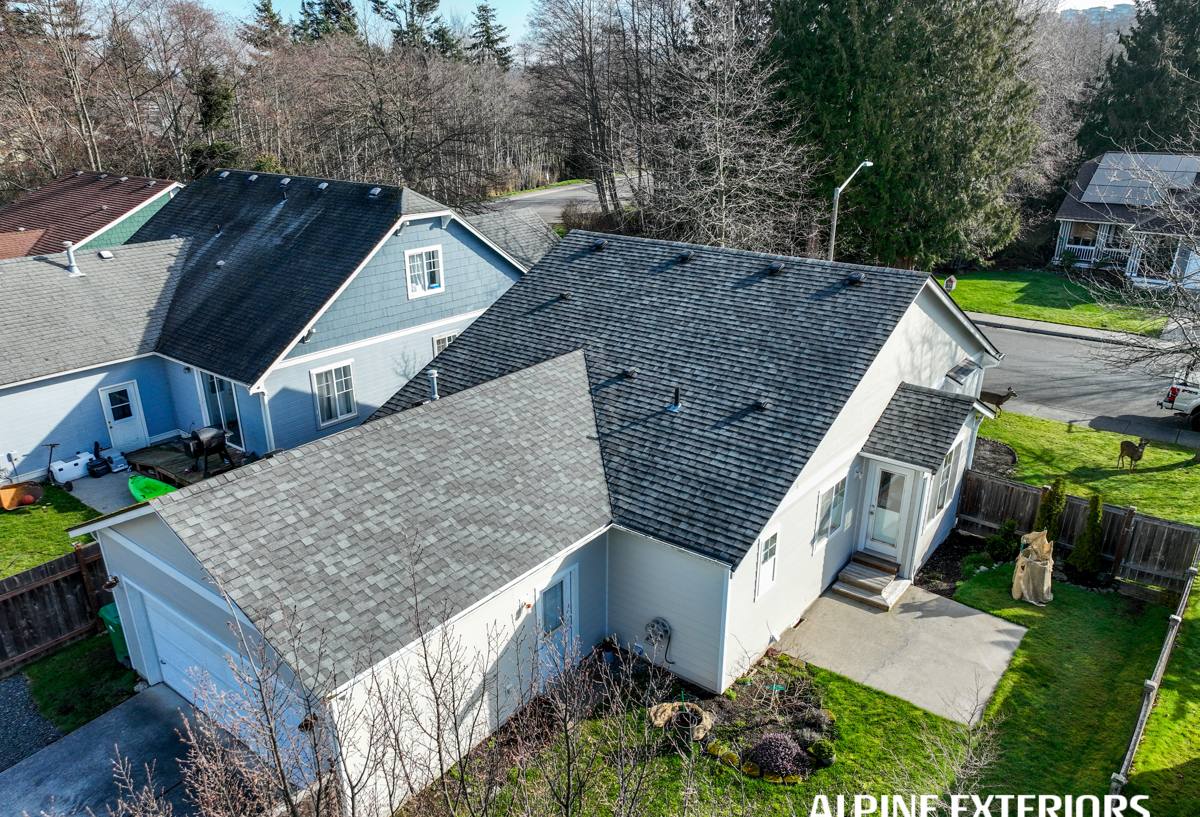
Bow sits in one of the more unusual microclimates in Skagit County. You're close enough to Samish Bay and Padilla Bay to get real salt air off the water, but you're also tucked against farmland, timber, and the foothills leading up toward Chuckanut Mountain. That combination means homes here take a beating from two directions at once: marine moisture rolling in off the bay, and the deep shade and dampness that comes with being surrounded by trees and fields. Add in a long, wet Pacific Northwest winter and you've got a recipe for siding that fails faster than it should if it wasn't built or installed for the job.
We're a Skagit County-based crew, and Bow is inside our regular service area — not a stretch job we drive an hour for a few times a year. We know what siding, roofing, windows, and decks look like after five or ten years in this specific stretch of the county, and we build our recommendations around that, not around a national sales script.
What Bow Homes Are Actually Up Against
Salt Air and Driving Rain
Proximity to Samish Bay means a steady low-level dose of salt-laden moisture, especially on west- and south-facing walls. Salt air accelerates corrosion on fasteners and trim metal, and it works against paint film over time, causing chalking and premature fading on lower-grade siding materials. Pair that with driving rain — wind-driven storms that push water sideways into wall assemblies rather than straight down — and you need siding and flashing details that shed water actively, not siding that just tolerates being wet.
The Long Moss Season
Between the shade from surrounding trees, the humidity off the bay, and Skagit County's extended damp season, moss and algae get a long runway to establish themselves on north-facing walls, under eaves, and anywhere airflow is limited. On wood-based siding products, that constant moisture contact is exactly the condition that leads to swelling, soft spots, and eventual rot at seams and butt joints. It's not a cosmetic issue after a few years — it becomes a maintenance and repair issue.
Freeze-Thaw Cycling
Bow doesn't get brutal winters, but it does get repeated cycles of cold snaps followed by wet, milder stretches. Any siding material that absorbs moisture is vulnerable to that freeze-thaw cycling — water gets into the material, freezes, expands, and slowly breaks down the substrate from the inside. It's a slow failure, which is part of why it catches homeowners off guard.
Why We Install Only James Hardie Fiber Cement
We made a deliberate decision years ago to install one siding system: James Hardie fiber cement. We don't install vinyl, LP SmartSide, Cemplank, Allura, primed spruce, or cedar, and we're upfront about why. Every one of those products can be installed correctly and can perform reasonably well in the right conditions — but in a climate like Bow's, with sustained salt exposure, driving rain, and a long moss season, the trade-offs stack up against homeowners more than they realize at the time of purchase.
Wood-based products, including engineered wood siding and traditional cedar, depend heavily on maintaining an intact factory or field-applied coating to keep moisture out. Once that coating is compromised — at a scratch, a poorly sealed cut end, or a failed caulk joint — moisture gets into the wood fiber and the clock starts on rot. In a wet, mossy environment like Bow's, those failure points show up faster than they would in a drier climate.
Vinyl siding is low-maintenance in terms of not needing paint, but it's a thin material that can warp, crack in cold snaps, and fade under UV exposure. It also doesn't hold up structurally the way fiber cement does, and it's not rated for the same fire performance.
James Hardie fiber cement is a cement, sand, and cellulose fiber composite. It doesn't absorb moisture the way wood does, it's non-combustible, and it holds paint and factory finishes far longer than wood-based alternatives because the substrate itself isn't swelling and contracting with every wet-dry cycle. That's the profile we want on a home that's going to sit within a mile or two of Samish Bay for the next several decades.
| Factor | Wood-Based Siding (cedar, spruce, engineered wood) | Vinyl | James Hardie Fiber Cement |
|---|---|---|---|
| Moisture absorption | High — vulnerable at cuts, joints, coating failures | Low, but seams and panels can warp | Very low; engineered to resist moisture |
| Salt air / coastal performance | Coating breaks down faster near salt exposure | Fades and becomes brittle over time | Factory finish holds up well in marine air |
| Fire rating | Combustible | Combustible, can melt/deform | Non-combustible |
| Typical repaint interval | 3–7 years depending on exposure | N/A (can fade, not repainted easily) | 15+ years with ColorPlus factory finish |
| Moss/algae vulnerability | High in shaded, damp conditions | Low structural risk, cosmetic staining possible | Low; doesn't feed rot the way wood substrates do |
How We Approach a Siding Project in Bow
Assessment First
Before we talk product or price, we walk the exterior and look at how the specific lot sits — how much bay exposure the walls get, how much shade and tree cover there is, where water currently pools or splashes, and where the existing siding is already showing stress. A house tucked back in the trees away from the water faces a different set of risks than one with an open exposure toward Samish Bay, even a few hundred yards apart.
Moisture Management Behind the Siding
Siding is only as good as what's behind it. We pay close attention to weather-resistive barriers, flashing at windows and doors, and drainage planes so that any moisture that does get past the siding surface has somewhere to go instead of sitting against the sheathing. This matters everywhere, but it matters more in a driving-rain, high-humidity environment like Bow.
Correct Installation to Manufacturer Spec
James Hardie siding performs the way it's rated to perform only when it's installed to spec — correct fastener placement, proper clearances at grade and roof lines, and correctly sealed or capped cut ends. We install to those specifications on every job, because a lot of the moisture and durability complaints attributed to fiber cement generally trace back to installation shortcuts, not the material itself.
Beyond Siding: Roofing, Windows, and Decks
We're not a siding-only outfit. Roofing, windows, and decks all face the same regional pressures — salt air, wind-driven rain, and moss — and they all interact with your siding at flashing points, transitions, and trim. A window that leaks at the flange or a roof edge that dumps water onto a wall can undermine even a well-installed siding job. Having one crew that understands how all four systems tie together means fewer gaps where problems start, and one point of accountability instead of several contractors pointing at each other.
Signs It's Time to Look at Your Siding
- Soft spots, bubbling, or visible swelling, especially near the bottom courses or around window trim
- Paint that's peeling or chalking faster than a normal repaint cycle would suggest
- Persistent moss or dark staining on north-facing or shaded walls that keeps coming back after cleaning
- Visible gaps, warping, or separation at seams and corner boards
- Rising energy bills that suggest the wall assembly isn't insulating or sealing the way it used to
- Siding that's original to a home built more than 20-25 years ago, particularly wood-based products
What Affects Cost on a Bow Siding Project
Every home is different, but a few factors consistently move the price on siding jobs in this area:
- Home size and wall complexity — more corners, gables, and trim details mean more labor and material cuts
- Extent of moisture damage — if there's rot or compromised sheathing behind the existing siding, that repair work happens before new siding goes on
- Access and site conditions — trees, slopes, and tight lot lines around Bow properties can affect staging and scaffolding needs
- Hardie product line and profile — lap siding, panel systems, and shingle-style profiles carry different material costs
- Trim and detail work — corner boards, window trim, and fascia work add to scope beyond the flat wall area
We give straightforward, itemized estimates so you can see exactly what's driving the number, not a vague lump sum.
Why a Local Crew Matters Here
Bow isn't a big market, and it's easy for it to get treated as an afterthought by companies based out of Seattle or Everett who show up a few times a year. We're in Skagit County full time. That means we've actually seen how homes near Samish Bay and out toward Edison hold up over the years, we're not guessing at how the local moss season or salt exposure plays out, and we're not disappearing after the job if a warranty question comes up. If you need us back out for a roofing issue or a window that needs attention down the road, we're a short drive away, not a distant call center.
Get a Free, No-Pressure Estimate
If your siding is showing its age, or you're planning ahead for a project on a Bow property, we're happy to come take a look and give you an honest read on what you're working with. There's no obligation and no pressure — just a straightforward assessment and an estimate you can actually use to make a decision. Fill out the form below to get started.