 Skagit County
 Two Different Materials, Same Job
When homeowners in Skagit County start researching siding replacement, two products keep coming up: James Hardie fiber cement and LP SmartSide engineered wood. Both are marketed as upgrades over vinyl. Both look good on a sample board. But they are built from fundamentally different raw materials, and that difference matters a lot once the siding is actually on a house facing Puget Sound weather for the next 30-plus years.
We install James Hardie exclusively. We don't install LP SmartSide, and we think homeowners deserve a straight explanation of why — not a sales pitch, not a scare tactic, just an honest look at what each product is made of and how that plays out in a county with salt air, driving rain, and a moss season that can run half the year.
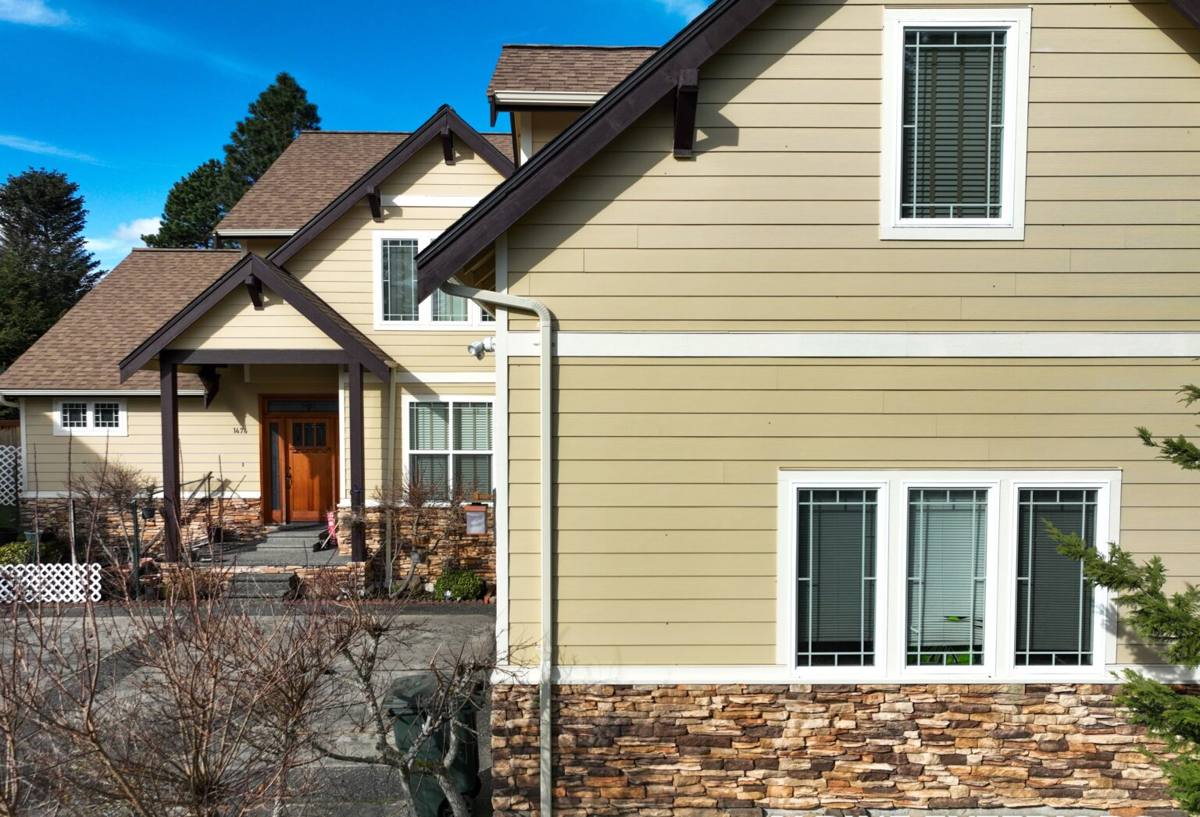
What LP SmartSide Actually Is
LP SmartSide is an engineered wood product. The core is strand board — wood fibers and strands bonded with resin under heat and pressure, similar in concept to OSB sheathing but treated and finished for exterior use. LP treats the substrate with zinc borate to resist fungal decay and insects, then applies a resin-saturated overlay and factory primer or finish.
What It Gets Right
To be fair to the product: LP SmartSide is lighter and easier to cut and install than fiber cement, which can shave labor time on a job. It holds paint well when new, comes in lap, panel, and trim profiles, and costs less per square foot installed than James Hardie in most markets. For a budget-conscious remodel where the homeowner is comfortable with a shorter maintenance cycle, it's not an unreasonable product. We're not going to pretend otherwise.
Where Engineered Wood Struggles in Our Climate
The core issue with any wood-based siding — no matter how well engineered — is that it's still wood. Wood swells, wicks moisture, and given enough water exposure over enough years, it can eventually soften or delaminate at cut edges and seams. LP's zinc borate treatment and resin coating are real engineering improvements over old-school hardboard siding from the 1990s, which is why LP SmartSide holds up better than what it replaced. But "better than hardboard" is a low bar, and it doesn't change the underlying vulnerability.
Salt Air
Much of Skagit County sits close enough to Puget Sound and the Skagit River delta that homes deal with a steady dose of salt-laden moisture in the air. Salt air accelerates the breakdown of paint films and finishes on any exterior material, but it's particularly hard on wood-based products because compromised finish exposes the substrate underneath to moisture faster than it does on an inert material.
Driving Rain
Our winters bring sustained horizontal rain, not just vertical drizzle. That means water gets driven into laps, seams, and butt joints — exactly the spots where engineered wood siding is most exposed at raw, factory-cut or field-cut edges. If those cut edges aren't field-sealed correctly during installation (a step that's easy to skip and hard to inspect after the fact), moisture has a direct path into the strand board core.
Moss Season
Skagit County's moss and algae season can run from fall through spring on shaded, north-facing, or tree-covered elevations. Moss and algae hold moisture against the siding surface for extended periods. On fiber cement that's mostly a cosmetic issue you can wash off. On a wood-based product, prolonged surface moisture retention is exactly the condition that stresses the finish and, over time, the substrate.
How James Hardie Is Built Differently
James Hardie siding is fiber cement — a mix of Portland cement, sand, and cellulose fiber, cured under pressure into a dense, stable board. There's no wood strand core to swell, wick, or feed fungal decay. It's also non-combustible, which matters to insurers and to homeowners thinking about wildfire exposure during dry summer stretches.
Climate-Engineered Product Lines
James Hardie makes region-specific formulations, including an HZ5 line engineered for the freeze-thaw and moisture conditions of the Pacific Northwest. That's not a marketing label — the fiber cement formulation itself is adjusted for the climate zone it's shipped to, which is the kind of detail that tells you the manufacturer is thinking about places exactly like Skagit County.
ColorPlus Factory Finish
Most Hardie siding on our jobs goes on with the ColorPlus finish — a baked-on, multi-coat finish applied at the factory under controlled conditions rather than field-painted on the jobsite. It resists fading and holds up to UV and salt air exposure far longer than a field-applied coat, and touch-up product is available so small repairs match rather than leaving a patched look.
Side-by-Side Comparison
| Factor | James Hardie Fiber Cement | LP SmartSide Engineered Wood |
|---|---|---|
| Core material | Cement, sand, cellulose fiber | Wood strand board with resin binder |
| Moisture vulnerability | Low — inert, non-organic core | Moderate — treated, but still wood-based |
| Fire rating | Non-combustible | Combustible (treated wood) |
| Finish | Factory-baked ColorPlus available | Factory primed or pre-finished; often field-painted |
| Cut-edge sensitivity | Low | High — must be field-sealed at every cut |
| Typical installed cost | Higher | Lower |
| Manufacturer warranty (siding) | Long-term, transferable, non-prorated in early years | Limited warranty, typically shorter and more conditional |
Warranty Structure: Read the Fine Print
Every siding warranty has conditions, and homeowners should read them closely regardless of brand. What we point out to clients is the structural difference: James Hardie's warranty on fiber cement products is built around a material that doesn't have a wood-decay failure mode to begin with, and it's transferable to a subsequent homeowner within a set window, which matters for resale. Engineered wood warranties tend to carry more explicit exclusions around field-cut edge sealing, caulking maintenance, and moisture exposure — conditions that put more of the long-term risk back on correct installation and ongoing homeowner maintenance.
Installation Sensitivity Matters More Than the Spec Sheet
Both products can fail early if installed wrong — that's true of any siding. But the failure modes are different. Fiber cement installation mistakes usually show up as caulking or flashing issues that are visible and fixable. Engineered wood installation mistakes — an unsealed cut edge, a nail driven at the wrong reveal, a missing kick-out flashing — can let moisture into the strand core where it's not visible until the damage has already progressed. That raises the stakes on contractor skill and follow-through for every cut and seam, on every elevation, for the life of the install.
What This Costs Over the Life of the Siding
Sticker price on the install day isn't the whole cost picture. Consider these factors together before deciding:
- Repaint or refinish cycle — factory-baked finishes last longer than field-applied coats before they need attention.
- Caulk and seam maintenance — wood-based sidings generally need more diligent, more frequent seam maintenance.
- Moss and algae cleaning — both benefit from periodic washing in our climate, but the consequence of skipping it differs by material.
- Warranty claims process — check whether the warranty is prorated and what voids it.
- Resale perception — fiber cement is widely recognized by buyers and appraisers in this region as a premium, low-maintenance material.
A Checklist Before You Decide
- Ask any contractor bidding engineered wood siding how they seal every field cut, not just the factory edges.
- Get the actual warranty document, not a summary, and check what voids coverage.
- Ask what happens on north-facing or shaded elevations where moss holds moisture longest.
- Compare the finish type — factory-baked versus field-primed — and ask about the expected repaint interval.
- Factor in your home's exposure to salt air if you're near the Sound or the Skagit River delta.
Why We Standardized on James Hardie
We made a decision as a company to install only James Hardie fiber cement, and it comes down to what we're willing to put our name behind for the next 30 years, not just the next 30 days. Fiber cement removes the wood-decay failure mode entirely, holds a factory finish through our wet winters and moss seasons, and carries a warranty structure built around a material designed to outlast the house's paint schedule several times over. LP SmartSide is a legitimate, improved product compared to what it replaced — we're not disputing that. We just don't think it's the right long-term answer for Skagit County's combination of salt air, sustained rain, and moss, and we'd rather install one product well than juggle trade-offs we're not comfortable standing behind.
If you're weighing siding options for a home in Skagit County, we're happy to walk your property, look at your exposure and elevations, and give you a straight answer on what makes sense — with a free, no-pressure estimate using the form below.