 Skagit County
 Sedro-Woolley's Climate: What Your Siding Is Actually Up Against
Sedro-Woolley sits in the upper Skagit River valley, tucked between farmland and the foothills of the North Cascades. That location shapes what happens to the outside of a house here in ways that are different from a home on the open coast or out in the drier interior. The valley holds moisture. Tree cover is heavy in a lot of neighborhoods, which means shade lingers on north- and east-facing walls long after the sun has cleared the rest of the yard. Add the region's long, wet winters and you get siding that stays damp for extended stretches, especially in spots that don't get much direct sun or airflow.
That combination — persistent moisture plus shade — is exactly the recipe for moss, algae, and mildew growth on exterior surfaces. It's not a cosmetic footnote. Anything organic growing on a wall is holding water against it, and water held against the wrong siding material for months at a time is how rot and paint failure start, even on siding that looked fine when it went up.
River Valley Humidity and Shade
Homes closer to the Skagit River or backed up against tree lines tend to see the worst of it — less drying wind, more standing humidity, more moss creeping up from the bottom of the wall. Homes on more open lots with better sun exposure fare better, but nobody in this part of Skagit County is fully exempt from a long wet season.
Freeze-Thaw and Temperature Swings
Sedro-Woolley also gets colder overnight lows than the immediate coastline, particularly in winter when cold air settles in the valley. Siding and trim that absorb moisture and then go through a freeze cycle are more likely to crack, swell, or delaminate over time. Materials that resist water absorption in the first place hold up far better through that cycle, year after year.
Why Siding Material Choice Matters More Here Than People Assume
A lot of homeowners think of siding as a one-time decision that mostly comes down to color and budget. In a climate like this one, the material itself does most of the long-term work. Siding that swells, absorbs water, or needs regular repainting will show its age fast in a wet, shaded valley environment. Siding engineered to shed water and resist moss and moisture damage will simply look and perform better for longer, with a lot less maintenance in between.
That's the entire reason we built our company around a single product line instead of offering everything on the market.
Why We Install Only James Hardie Fiber Cement Siding
We don't install vinyl siding, LP SmartSide, cedar, primed spruce, or other fiber cement brands like Cemplank or Allura. That's a deliberate standard, not a limitation on what we're capable of installing. After years of working on homes throughout Skagit County, James Hardie fiber cement is the product we trust to perform in this specific climate, and it's the only one we put our name behind.
Built for Moisture, Not Just Resistant to It
Hardie's fiber cement is engineered specifically for wet climates. It doesn't absorb and swell the way wood-based products can, and it holds paint and factory finish far longer than materials that flex and contract with moisture and temperature changes. In a valley environment where siding stays damp for days at a time, that difference matters more than it does in a drier climate.
ColorPlus Factory Finish
Hardie's ColorPlus finish is baked on at the factory under controlled conditions, which gives it better fade and wear resistance than a field-applied paint job. In a climate where mildew and algae growth are a constant fight, a tougher, more consistent finish means less streaking, less staining, and a longer stretch before the house needs attention.
Non-Combustible
Fiber cement doesn't burn. That's a meaningful advantage anywhere in Washington given the wildfire seasons the region has seen in recent years, and it's simply a better long-term safety profile for a home than a combustible siding material.
A Warranty Backed by the Manufacturer
James Hardie backs its siding with a strong, transferable limited warranty on the product and finish. That matters at resale, and it matters if something ever does go wrong — you're not relying solely on the installing contractor's word, you're backed by the manufacturer that engineered the product.
What We Don't Install, and the Honest Trade-Offs
We get asked about vinyl, wood, and LP SmartSide often enough that it's worth explaining plainly rather than dodging the question.
Vinyl siding is inexpensive and easy to find installers for, and it has genuinely improved over the decades. But it's a petroleum-based product that expands and contracts significantly with temperature swings, can crack in cold snaps, and fades over time in a way that can't be repainted back to new. In a valley climate with real winter cold and a long wet season, it's not the product we want to stand behind for the life of a house.
LP SmartSide is an engineered wood product with a good reputation when installed correctly, but it's still wood-based at its core, meaning it's more dependent on flawless caulking, flashing, and maintenance to keep moisture out over the long run than fiber cement is. In a shaded, wet environment, that's a bigger ongoing commitment than most homeowners want to sign up for.
Cedar and primed spruce look beautiful when new, and some homeowners love the natural look enough to accept the trade-off. But solid wood siding demands the most maintenance of any option here — regular refinishing, vigilant caulking, and real vulnerability to the moss and mildew this valley produces in abundance. We're honest with customers who ask for it: it's not a product we install, because we don't think it holds up to our standard in this climate without a maintenance schedule most people won't keep up with.
How the Options Compare
| Factor | James Hardie Fiber Cement | Vinyl | Wood / LP SmartSide |
|---|---|---|---|
| Moisture resistance | Engineered for wet climates | Doesn't absorb water, but seams can leak | Vulnerable without diligent upkeep |
| Moss/algae resistance | Holds factory finish well | Prone to staining and discoloration | High susceptibility, especially in shade |
| Cold-weather performance | Stable through freeze-thaw | Can crack or become brittle in cold | Prone to swelling/cracking with moisture cycles |
| Fire resistance | Non-combustible | Combustible | Combustible |
| Maintenance | Low; occasional cleaning | Low, but fading is permanent | High; regular refinishing needed |
| Warranty | Strong, transferable manufacturer warranty | Varies by manufacturer | Varies; often installer-dependent |
Siding Is Only Part of the Envelope
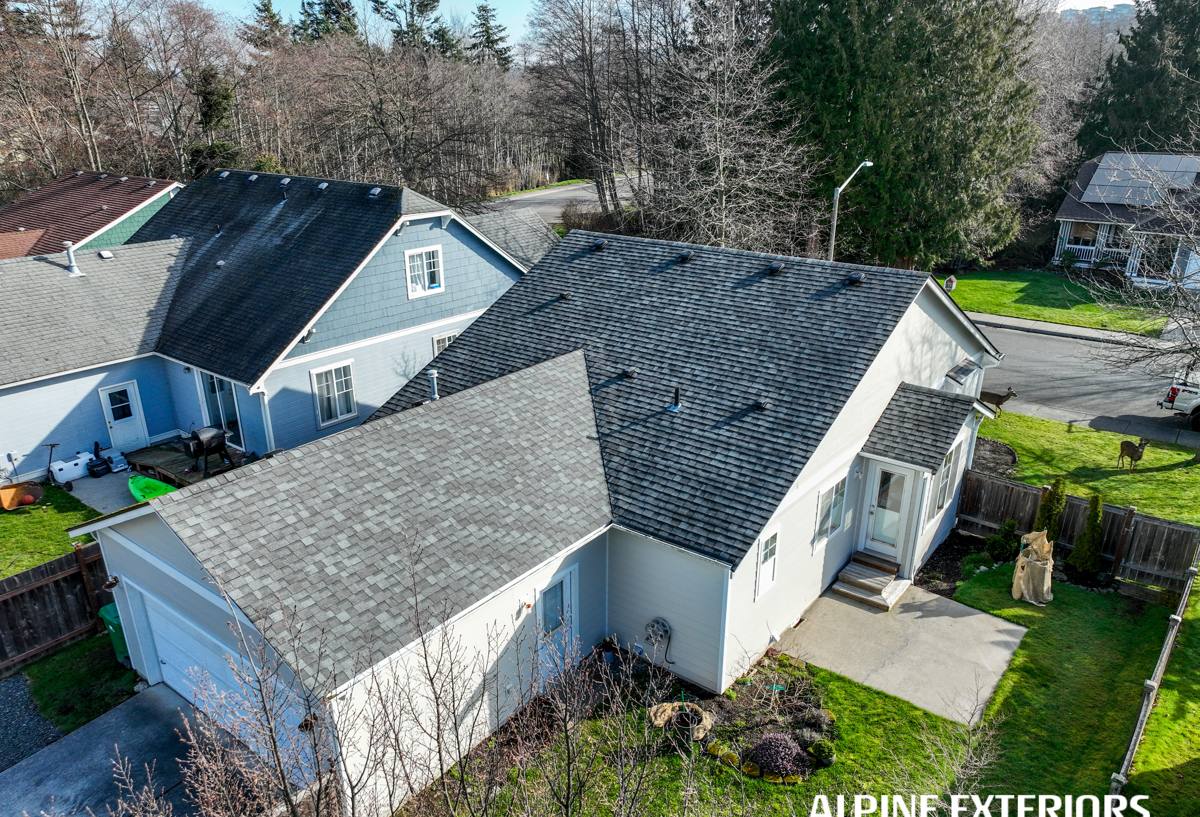
Siding does the most visible work, but it's not the only system standing between a Sedro-Woolley home and the weather. We also handle roofing, windows, and decks, because those systems all interact with each other. A roof with failing flashing or clogged gutters dumps extra water onto the siding below it. Windows with worn seals let moisture into the wall cavity behind the siding, no matter how good the siding itself is. Decks attached to the house need proper ledger flashing so water doesn't track back into the wall.
Treating the exterior as one connected system, rather than a patchwork of separate trades, is a big part of why the work holds up. When we're on a roof or replacing windows, we're also looking at how water moves off that house and where the siding installation needs to account for it.
What Correct Installation Looks Like in This Climate
James Hardie siding performs the way it's designed to only when it's installed to spec. A lot of the moisture problems people associate with fiber cement siding actually trace back to installation shortcuts, not the product itself. In a wet valley climate, the details matter even more than they would somewhere drier.
- Proper clearance between siding and grade, decks, patios, and roof lines so water doesn't wick up into the board
- Correct fastener placement and spacing per Hardie's installation specifications
- Properly lapped and sealed house wrap or weather-resistive barrier behind the siding
- Flashing at every window, door, and roof intersection, not just caulk
- Painted or factory-finished cut edges, since exposed raw edges are where moisture intrusion starts
- Adequate ventilation gap where required, so siding can dry out between wet stretches
Skip any one of these and you can undercut even the best siding product on the market. It's also why we don't treat installation as an afterthought to the sale.
Why a Local Crew Matters in Skagit County
A crew that works Skagit County regularly understands things a traveling or out-of-area contractor won't — which neighborhoods hold shade and moisture longest, how the valley's winter temperature swings affect materials, and what permitting and inspection expectations look like locally. That local knowledge shows up in small decisions throughout a project: where extra flashing attention is worth it, which orientations need closer moss and mildew monitoring, how to sequence work around the region's wet season.
It also means accountability. A local company has a reputation to maintain in the community it works in, and that's a different incentive than a crew passing through for one job.
Get a Free, No-Pressure Estimate
If your Sedro-Woolley home's siding is showing moss, chalking paint, soft spots, or just age, we're happy to take a look and give you an honest read on what's going on and what it would take to fix it right. There's no obligation and no pressure — just a straightforward assessment from a crew that works this climate every day. Use the form below to request your free estimate.