 Skagit County
 Siding in a Salt Air, Marine Climate
Anacortes sits on Fidalgo Island, surrounded by the salt water of Rosario Strait, Guemes Channel, and the San Juan Islands shipping lanes. That location gives the town its views and its working waterfront character — and it also gives every exterior surface in town a harder job than a house fifteen miles inland in the Skagit Valley. Salt-laden air, near-constant marine moisture, driving rain off the water, and long stretches of gray, damp weather all work on siding, trim, and roofing year-round. We've replaced enough failing siding on Fidalgo Island to have a clear opinion on what holds up here and what doesn't, and that opinion is the reason we standardized our siding installs on one product line rather than offering a menu of options.
This page covers what Anacortes homes actually face from the climate, how our siding, roofing, window, and deck work fits that reality, and why we think a crew that understands this specific stretch of coastline matters more here than in most parts of the county.
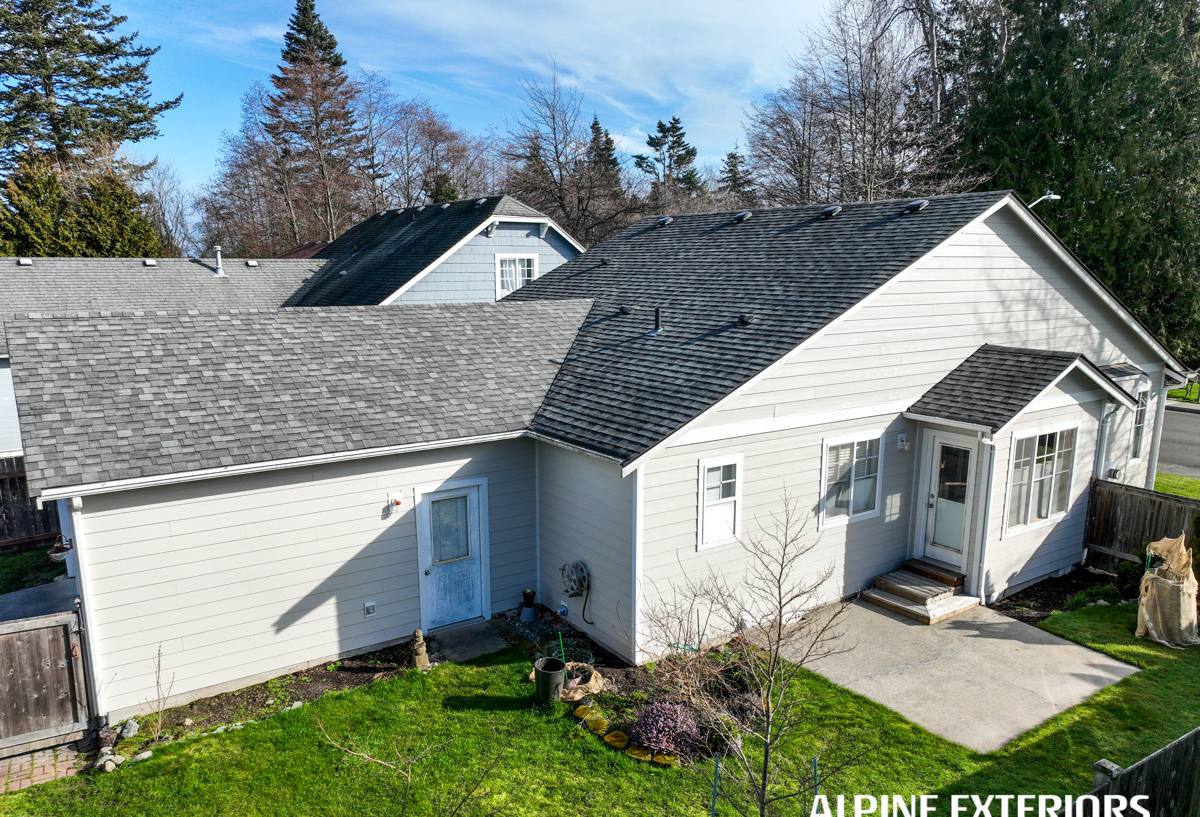
What the Anacortes Climate Does to a House
Salt Air and Corrosion
Airborne salt is the defining difference between Anacortes and inland Skagit County towns like Mount Vernon or Sedro-Woolley. Salt particles carried on marine wind settle on exterior surfaces and accelerate corrosion of exposed metal fasteners, flashing, and hardware. It also interacts with certain siding materials and coatings differently than it does with drier, inland exposures — some finishes chalk, fade, or break down faster under a steady diet of salt air and UV reflecting off open water.
Driving Rain and Wind-Driven Moisture
Anacortes gets weather straight off the Strait of Juan de Fuca and Rosario Strait, and homes on more exposed slopes or waterfront lots take rain nearly horizontally during winter storms. Wind-driven rain doesn't just fall on a wall — it gets pushed into every seam, joint, and fastener penetration that isn't properly flashed and sealed. Houses on the west and north sides of the island, facing open water, generally take more of this than homes tucked into town.
Moss, Mildew, and a Long Damp Season
Like the rest of western Skagit County, Anacortes has a long wet season where surfaces rarely get a full dry-out. Combine that with tree cover on many lots and you get conditions where moss, algae, and mildew establish quickly on north-facing walls, under eaves, and anywhere airflow is limited. Siding that absorbs moisture or has organic wood content gives moss something to root into; siding that doesn't hold water resists it far better.
Why We Install James Hardie and Nothing Else
We install James Hardie fiber cement siding exclusively. We don't offer vinyl, LP SmartSide, Cemplank, Allura, primed spruce, or cedar, and on a page like this it's worth explaining why, honestly, rather than just stating it as policy.
- Vinyl can perform fine in mild climates, but it expands and contracts with temperature swings, can warp or crack in wind-driven weather, and its seams and J-channels give wind-driven rain more opportunities to get behind the cladding — a real concern on exposed Anacortes lots.
- Wood products (cedar, primed spruce) look great new but are organic material in a climate that stays damp for months at a time. They need consistent repainting and caulking to keep moisture and rot at bay, and missed maintenance cycles show up fast as paint failure, cupping, or rot — especially on north walls that never fully dry.
- Other fiber cement brands (LP SmartSide is actually engineered wood strand, not fiber cement; Cemplank and Allura are fiber cement) can be reasonable products, but we've standardized on one manufacturer, one installation system, and one factory finish process so our crews install to a single spec every time, and homeowners get one warranty structure to understand rather than comparing fine print between brands.
James Hardie fiber cement is non-combustible, doesn't provide moss or mildew an organic surface to feed on the way wood does, and holds its shape in wet-dry, hot-cold cycling far better than vinyl. The ColorPlus factory finish is baked on under controlled conditions rather than field-applied, which matters in a climate where field-applied paint has a narrow weather window to cure properly. For a marine environment like Anacortes, that combination — non-combustible, dimensionally stable, factory-finished, and not food for moss — is why it's the only product we put on a house here.
James Hardie Product Lines for This Area
James Hardie makes climate-engineered product lines, and for Anacortes and the rest of coastal Skagit County we generally recommend the HZ5 line, engineered for wetter, harsher climate zones, over the HZ10 line built for hot-dry regions. The distinction isn't marketing — it affects how the product is formulated to handle moisture cycling.
| Product | Common Use | Why It Fits Anacortes |
|---|---|---|
| HardiePlank lap siding | Primary wall cladding | Traditional lap profile, factory ColorPlus finish resists salt-air fading better than field paint |
| HardiePanel vertical siding | Modern facades, accent walls, gable ends | Clean lines for contemporary island homes, fewer horizontal joints for water to find |
| HardieTrim boards | Corners, window and door trim, fascia | Dimensionally stable trim that won't cup or split like wood trim exposed to marine moisture |
| HardieShingle siding | Accent gables, Craftsman and Cape Cod style homes | Shingle look without the maintenance burden of cedar shakes in a damp climate |
Our Siding Installation Approach
Product choice only matters if the installation is right, and in a marine climate the installation details matter more than usual.
Flashing and Water Management First
Before any siding goes up, we're thinking about where wind-driven rain will try to get behind the wall — window and door heads, deck ledgers, roof-to-wall transitions, and any penetration for vents or fixtures. Proper flashing and a correctly lapped weather-resistive barrier underneath the siding matter more on an exposed Fidalgo Island lot than almost anywhere else in the county.
Fastener and Hardware Choices
Salt air corrodes the wrong fasteners over time. We use fastening hardware appropriate for coastal exposure and follow James Hardie's fastening specifications closely, since under-driven or over-driven fasteners are one of the most common causes of premature siding problems, especially where wind loads are higher near open water.
Caulking and Joint Treatment
Joints and seams are sealed to manufacturer spec, not just caulked and moved past. In a climate with this much sustained moisture exposure, a shortcut at a butt joint or trim intersection is where water eventually finds its way in.
Roofing, Windows, and Decks in the Same Climate
Siding doesn't work in isolation — the whole exterior envelope has to handle the same salt air and rain load, which is why we also handle roofing, windows, and decks rather than treating siding as a standalone project.
- Roofing: Roof-to-wall flashing details directly affect how much water reaches your siding. A roof replacement or repair is also a chance to correct flashing that's been letting water track behind the siding for years.
- Windows: Window flashing and integration with the siding plane is one of the most common failure points we see on coastal homes. Replacing windows and siding together lets us get that transition right in one pass instead of patching around an existing window.
- Decks: Deck ledger boards attach directly to the wall and are a frequent water-intrusion point if not flashed correctly — a real issue on Anacortes homes with outdoor living space facing the water.
Signs Your Anacortes Home Needs Siding Attention
- Moss or algae established on north-facing or shaded walls that keeps returning after cleaning
- Paint that's chalking, peeling, or failing faster than expected, especially on wood or previously painted surfaces
- Soft spots, bubbling, or visible warping in existing siding, particularly near ground level or under windows
- Rusting or corroding fasteners, trim nails, or flashing visible on the exterior
- Gaps opening up at seams, corners, or trim boards
- Visible water staining on interior walls near exterior corners after storms
- Siding that feels consistently damp or spongy to the touch after dry weather
Why a Local Crew Matters Here
Anacortes isn't a uniform climate zone — a house on the water in West Anacortes or Skyline faces a different wind and salt exposure than a home closer to downtown or tucked into trees. A crew that works this specific area regularly knows which walls take the worst of the weather, which older homes in Skagit County tend to have outdated flashing details, and how much moss and mildew pressure to expect based on tree cover and sun exposure on a given lot. That local knowledge shapes real decisions — where to add extra flashing attention, which product line makes sense, and what maintenance schedule actually fits the property, rather than applying a generic approach to a coastal island home.
What to Expect from an Estimate
A siding estimate on an Anacortes home includes a look at the current siding condition, an assessment of any moisture damage or flashing issues already present, and a straightforward conversation about which James Hardie product line and finish fits the home and its exposure to wind and salt air. We'll also flag any roofing, window, or deck details that affect how the new siding will perform, since those systems all interact on a coastal home.
If your Anacortes home is due for new siding, or you're seeing early signs of moss, paint failure, or moisture damage, we're happy to take a look and give you a straightforward, no-pressure estimate — just fill out the form below.