 Skagit County
 Why Color Choice Deserves More Thought Than Most Homeowners Give It
Most people treat siding color as the last decision in a remodel, something to pick from a fan deck in the last five minutes of a sales meeting. That's backwards. On a house that will wear the same color for fifteen to thirty years, color is a structural decision as much as an aesthetic one. It affects how the finish holds up to sun and salt air, how much maintenance you'll do, and how the house reads against the wet, green backdrop that defines most of Skagit County. Get it right and you barely think about your siding again. Get it wrong and you're staring at a chalky, faded wall in a decade wondering why the color you loved in the showroom looks nothing like it did on day one.
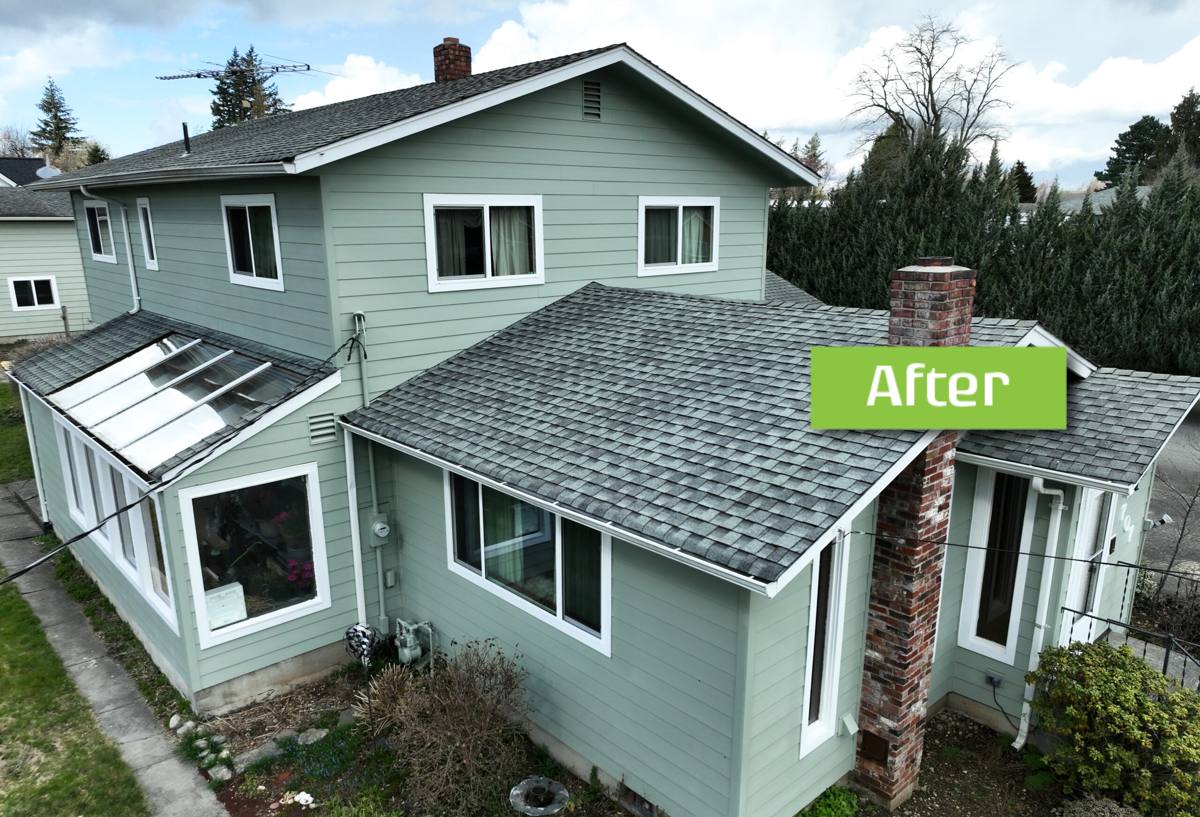
What ColorPlus Technology Actually Is
James Hardie's ColorPlus Technology is a factory-applied finish, not paint you'd buy at a hardware store and not a stain. The color is baked onto the fiber cement in multiple coats under controlled conditions before the boards ever leave the plant. That matters for three practical reasons:
Consistency
Every board in a batch gets the same finish, applied the same way, cured the same way. Field-applied paint depends on weather, humidity, and the skill of whoever is holding the sprayer that day. Factory finish removes most of that variability.
Adhesion
The finish is cured onto the substrate before installation, which gives it better bond strength than paint applied on-site to a vertical wall in whatever weather shows up that week.
Coverage
Multiple coats applied in a factory setting typically give more even, complete coverage than a single field coat, especially on the cut edges and detail work that are hardest to paint well on a ladder.
Why This Matters More in Skagit County Than in a Dry Climate
A house in a dry inland climate can get away with a mediocre paint job for a long time because there's little moisture pushing on the finish. That's not the situation here. Skagit County sits between the Salish Sea and the Cascade foothills, which means salt-laden air along the coastal and lowland areas, long stretches of driving rain off the water, and a moss season that runs most of the fall and winter. Salt air accelerates the breakdown of lower-quality finishes. Driving rain finds every gap in a coating and works it loose over time. And moss doesn't just grow on roofs — it colonizes north-facing siding walls that stay damp for weeks at a stretch, and a weak finish gives it more to hold onto. A factory-cured, multi-coat finish is simply better positioned to handle that combination than a single coat of field-applied paint on primed board.
The ColorPlus Palette: What You're Actually Choosing From
James Hardie's color offering runs from quiet neutrals to deep, saturated tones, and the exact lineup available to you depends on your product line and region. Broadly, the palette breaks into a few useful categories:
- Warm neutrals and whites — the most common choice, low-maintenance and resale-friendly, and forgiving against roofing and stonework that's already on the house.
- Cool grays and blue-grays — popular in the Pacific Northwest generally, and especially fitting against Skagit County's water, evergreen, and overcast-sky palette.
- Deep tones — charcoal, deep green, navy — striking, but worth understanding before you commit (see below on heat and fade).
- Warm woodtones and earth tones — complement natural stone, timber accents, and the farmhouse and craftsman styles common in the county's older neighborhoods.
Trim, fascia, and accent pieces are typically finished separately from field siding, which lets you pair a quieter body color with a contrasting trim, or vice versa, without mixing manufacturers or finish systems.
A Note on Dark Colors
Darker colors absorb more solar heat, which can affect how the siding expands and contracts, and in direct, south-facing exposure can accelerate fade over the long term compared to lighter tones. This isn't a reason to avoid dark siding — plenty of Skagit County homes wear deep charcoal or navy well — but it's a real factor. If you're set on a dark color, ask about how it performs on the specific HZ product line you're installing, and don't skip the manufacturer's guidance on exposure.
Matching Color to the House and the Setting
Color decisions land differently depending on where the house sits. A home overlooking the water in Anacortes or out toward the coastline reads differently in bright white than the same white would on a wooded lot outside Sedro-Woolley. Historic downtown-adjacent homes near La Conner or Mount Vernon often benefit from period-appropriate palettes — muted greens, warm creams, deep reds — rather than the starkest modern grays. Farmhouse-style homes on larger lots tend to carry warm neutrals and black or dark green trim well. None of this is a hard rule; it's a starting point for narrowing a large palette down to a handful of realistic options before you start holding up sample boards against your actual house.
Factory Finish vs. Field-Painted Siding: The Real Cost Comparison
The sticker price on primed board that you paint yourself, or have painted after install, is usually lower than pre-finished ColorPlus board. But that comparison only tells you the day-one cost. Here's how the two options actually compare over time:
| Factor | ColorPlus (factory finish) | Field-painted (primed board) |
|---|---|---|
| Initial material cost | Higher | Lower |
| Labor to finish | None — arrives finished | Additional coat(s) required after install |
| Finish warranty | Backed by manufacturer, tied to the product | Backed by paint manufacturer or installer, separate from the siding warranty |
| Typical repaint interval | Often well beyond 10-15 years before touch-up is needed | Commonly 5-8 years in wet coastal climates |
| Touch-up needs | Occasional caulk and touch-up paint at cut edges/seams | Full recoat cycles over the life of the siding |
| Long-run cost | Lower total cost of ownership in most wet climates | Higher, once repaint labor is factored in |
In a climate like this one, where driving rain and salt air both work against a finish, the math tends to favor factory-applied color once you look past the first invoice.
Warranty Coverage: Know What's Actually Backed
James Hardie backs ColorPlus Technology with a separate finish warranty from the product warranty on the siding itself, and the specific terms vary by product line and region, so ask your contractor for the current published warranty document rather than relying on general claims. The key point is that the color and the board are covered together, by one manufacturer, under one set of terms. Field-applied paint, by contrast, is typically backed by whoever made or applied the paint — a separate company from the siding manufacturer — which means if the color fails, you're dealing with a different warranty conversation than if the board itself has a problem.
Installation Details That Protect the Finish
A factory finish is only as good as the installation around it. A few details matter more than homeowners usually expect:
- Cut edges get touch-up. Every field cut exposes unfinished fiber cement. Manufacturer-approved touch-up paint or caulk needs to go on every cut edge, every time — skipping this is one of the most common corner-cutting mistakes on Hardie jobs.
- Proper gapping and fastening. Boards need the clearances the manufacturer specifies so they can move with moisture and temperature without stressing the finish at the joints.
- Correct caulk and sealant. Not all caulks are compatible with ColorPlus finish long-term; using the wrong product can cause discoloration or adhesion failure right where it's most visible.
- Flashing and drainage behind the siding. None of this is about the finish directly, but trapped moisture behind the board will eventually show up as staining or premature wear on the surface color, especially on north-facing walls that stay damp through a Skagit County winter.
A Practical Checklist Before You Pick a Color
- Pull actual sample boards, not just a printed swatch — factory finish colors read differently in overcast Pacific Northwest light than on a screen or a small chip.
- View samples against your house at different times of day, including the gray, low-light conditions that make up most of the year here.
- Check the color against your roofing, stonework, and any fixed elements you're not replacing.
- Ask what HZ product line is specified for your exposure and how that affects finish performance.
- Confirm which cut-edge touch-up product will be used and get it in writing.
- Get the specific finish warranty document, not just a verbal summary of coverage.
- If you're near the water or in an area with heavier salt exposure, ask directly how the finish is expected to perform there.
Getting It Right the First Time
Color is one of the few siding decisions you don't get to quietly revise later — repainting fiber cement siding is a real project, not a weekend touch-up, so it pays to slow down at the color stage rather than at the caulk gun stage. Between the product line, the exposure on your specific walls, and how the house sits relative to sun, wind, and rain, there's enough variability from one Skagit County property to the next that a general recommendation only goes so far.
If you're weighing colors for a new install or a full re-side, we're happy to bring actual ColorPlus samples out to your property, walk the exposures with you, and talk through what's held up well on similar homes in this area. There's no cost and no pressure — just fill out the form below to set up a free estimate.