 Skagit County
 Mount Vernon homes sit low in the Skagit Valley, where river-bottom flatland, farmland, and a genuinely wet Pacific Northwest climate all come together. It's not the harshest exposure in the county — that's usually reserved for homes right on the water — but it's a steady, year-round dampness punctuated by storms that push rain sideways into siding rather than straight down onto a roof. Siding here isn't just a cosmetic choice. It's the single largest piece of a home's exterior surface area, and it takes the brunt of what this valley's weather delivers, month after month, year after year.
What Mount Vernon's Climate Does to Siding Specifically
Three things drive siding wear in this part of Skagit County: salt-tinged air moving in off Skagit Bay and the broader Puget Sound system, wind-driven rain from Pacific storm fronts, and a moss season that runs long because the valley doesn't dry out the way inland regions do. None of these show up as a single dramatic event. They accumulate — a slow breakdown of paint film, caulk, and fastener integrity that turns into a maintenance problem years after a house was built or last re-sided.
Salt-laden air corrodes exposed fasteners and trim faster than it would in a drier inland climate. Wind-driven rain finds its way into any gap in flashing, any under-caulked joint, any seam that wasn't lapped correctly the first time it went up. And moss, which thrives in the shaded, damp conditions common on north-facing walls and tree-lined lots around Mount Vernon, holds moisture against a siding surface long after the rain has stopped — keeping wood-based products wet far longer than a sunnier, more exposed wall ever would.
Why This Matters More for Some Siding Products Than Others
The practical effect is that not all siding materials age the same way in this environment. Products with an organic, wood-based core depend on an intact paint film and well-sealed cut edges to keep moisture out — and once that seal is compromised at even one seam or fastener hole, the material underneath starts absorbing water it was never designed to hold long-term. That's a maintenance burden that grows heavier every year a homeowner is in a climate like this one, rather than lighter.
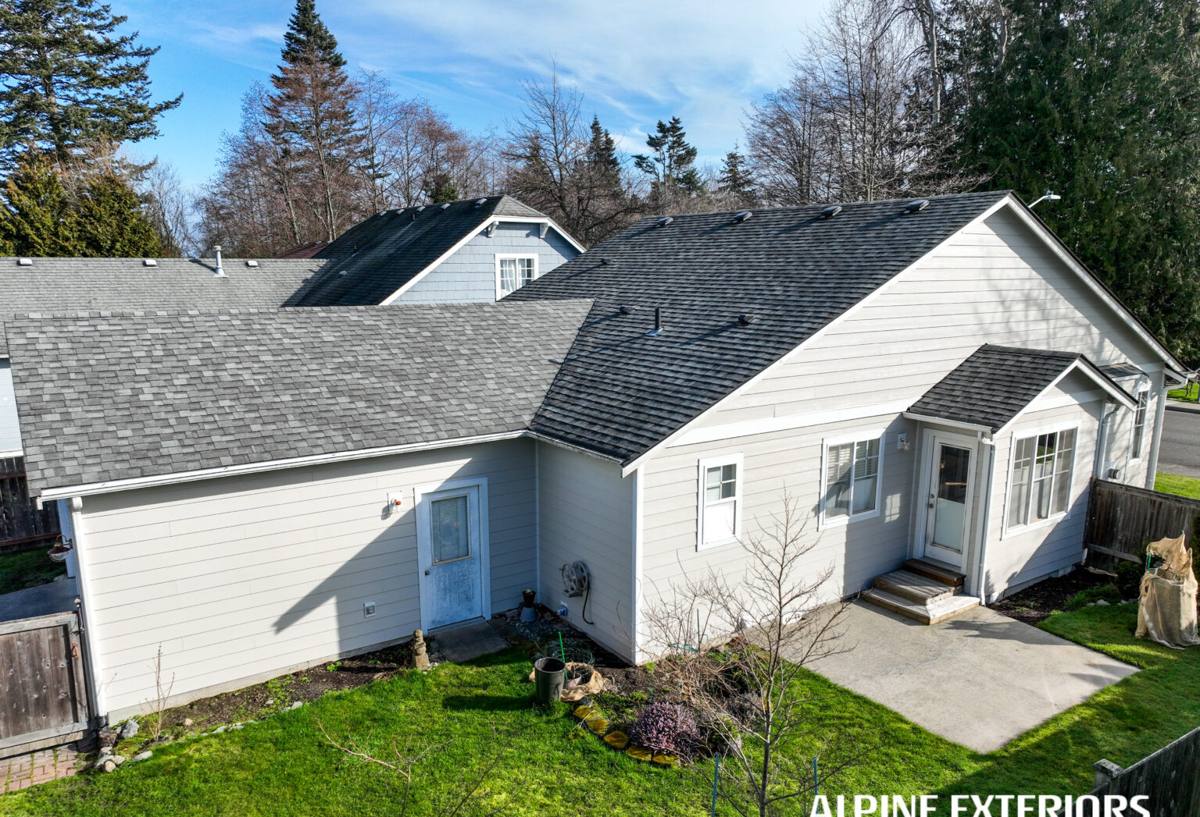
Why We Install Only James Hardie Fiber Cement
We don't install vinyl, LP SmartSide, cedar, primed spruce, Cemplank, or Allura. That's a deliberate standard, not an oversight in our product lineup. James Hardie fiber cement is cement, sand, and cellulose fiber — an inorganic material that doesn't rot, doesn't feed moss and mildew growth the way an organic substrate can, and doesn't swell or delaminate from sustained moisture exposure the way engineered or solid wood products can when a seal fails. In a valley that stays damp for long stretches of the year, that's not a marginal difference. It's the difference between a home that needs a repaint-and-recaulk cycle every several years and one that holds its finish and its structure with far less intervention.
Hardie also builds region-specific HZ product lines engineered for different climate zones — a home in the Skagit Valley's marine, moisture-heavy environment gets a product formulated for exactly that kind of exposure, not a generic all-climate board. Combine that with a factory-applied ColorPlus finish (baked on rather than field-painted) and a strong, transferable manufacturer warranty, and you get a siding system that's genuinely engineered around the problem this climate creates, instead of one that simply tolerates it if maintained perfectly.
What We're Not Saying
We're not going to tell you every other siding product is junk — that's not honest, and it's not our call to make about products we don't sell. Vinyl, engineered wood, and cedar all have real, legitimate use cases, and plenty of licensed, reputable contractors install them well. What we are saying is that after years of doing exterior work in this specific climate, we made a professional decision to standardize on one product system because we believe it holds up better here with less ongoing maintenance risk to the homeowner — and we'd rather explain that plainly than install something we're not fully behind.
How a Siding Project Actually Works
A siding replacement is more than swapping old boards for new ones. What happens underneath the cladding — the water-resistive barrier, the flashing at windows and doors, the drainage plane behind the siding — determines how the whole assembly performs over time, arguably more than the siding material itself. Here's the general sequence we follow on a full re-side:
- Remove existing siding and inspect the sheathing underneath for rot, soft spots, or prior water intrusion.
- Repair or replace any compromised sheathing before anything new goes back on the wall.
- Install or renew the water-resistive barrier, lapped correctly from bottom to top so water sheds outward.
- Flash all windows, doors, and penetrations so water is directed out and away from the wall assembly, not trapped behind it.
- Install James Hardie siding and trim to manufacturer specification, including proper fastening, clearances from grade and roof lines, and joint treatment.
- Final inspection of caulking, trim details, and paint touch-up at cut edges.
Skipping or rushing any one of those steps is how a house ends up with a hidden moisture problem behind brand-new siding. It's also why the crew doing the work matters as much as the material they're installing.
Why a Local Crew Matters in Skagit County
A contractor who works Skagit County regularly knows things a traveling crew from outside the region often doesn't: how far to hold siding off grade and hardscape given how wet this valley stays, which wall orientations around Mount Vernon tend to hold moss and need extra attention to ventilation and drainage detail, and how salt-influenced air further west toward the Sound affects fastener and flashing choices even on homes that aren't directly waterfront. None of that is exotic knowledge — it's just familiarity that comes from doing this work here, on homes like the ones already standing in this valley, rather than applying a generic install process and hoping it holds up.
It also matters for warranty follow-through. A local company is still around, and still reachable, years after the crew has moved on to the next job — which matters a great deal when a manufacturer warranty depends on correct installation and any future service needs a company that knows the house's history.
Beyond Siding: Roofing, Windows, and Decks
Siding doesn't work in isolation. The same wind-driven rain and long wet season that stress a home's cladding put equal or greater demands on the roof, windows, and any exterior deck structure. We handle all four because they're interconnected systems on the same house — flashing at a roof-to-wall intersection, window integration into a siding plane, and a deck ledger attachment into the wall are all places where two trades meet, and problems tend to show up exactly at those seams when they're handled by crews who never talk to each other. Addressing siding, roofing, windows, and decks as one coordinated exterior scope, rather than four separate vendors, reduces the number of places where details can fall through the cracks.
What Siding Replacement Typically Involves, Cost-Wise
Every home is different, and a firm number only comes from an on-site look at square footage, trim complexity, sheathing condition, and access. That said, homeowners researching a project generally want to understand the factors that move a project's scope and cost up or down before they ever get a quote:
| Factor | How It Affects Scope |
|---|---|
| Sheathing condition | Hidden rot or prior water damage found during tear-off adds repair scope before new siding can go on |
| Home size and wall complexity | More square footage, more corners, more dormers and trim details all add labor time |
| Existing siding type | Some materials remove faster and cleaner than others; brick or masonry sections change the approach |
| Trim and accent work | Board-and-batten sections, window trim upgrades, and accent color changes add material and labor |
| Access and site conditions | Tight lots, tall walls, or landscaping close to the house can slow staging and protection work |
| Product selection within the Hardie line | Lap siding, panel systems, and shingle-style products carry different material and install costs |
The honest range for a full siding replacement on a typical single-family home runs into the tens of thousands of dollars once tear-off, sheathing repair contingencies, and quality installation are all accounted for — but the only way to get a number that means anything is a walk-through of the specific house.
Signs Your Current Siding May Be Struggling
Homeowners in the Mount Vernon area often live with early warning signs for a while before deciding to act. A few worth taking seriously:
- Paint that's peeling, bubbling, or failing faster than a normal repaint cycle would explain
- Soft or spongy spots when you press on siding, especially near the bottom courses or around windows
- Visible moss or persistent green growth on shaded, north-facing walls that doesn't clear up seasonally
- Cracked or separated caulk joints at trim, corners, or window and door边trim
- Gaps or warping at seams and butt joints that weren't there a few years ago
- A musty smell or visible staining on interior walls that back up to exterior siding
Any one of these on its own might be minor. Several together, especially on a home that's due for its next maintenance cycle anyway, are usually a sign it's worth having someone look at the whole wall assembly rather than patching the visible symptom.
Maintenance Expectations After a Hardie Install
One of the practical advantages of fiber cement in a climate like this one is how little ongoing maintenance it asks for compared to wood-based alternatives. There's no repainting cycle tied to protecting the substrate itself, since the ColorPlus finish is factory-baked and warranted separately from the board. That doesn't mean zero maintenance — caulked joints should still get a periodic visual check, and any physical damage from impact should be addressed promptly to keep the water-resistive barrier behind it intact — but the maintenance burden is meaningfully lighter than what an organic-core product asks for in a valley that stays wet this much of the year.
Getting Started
If you're noticing wear on your siding, planning ahead for a roof, window, or deck project, or just want an honest read on where your home stands, we'll come take a look. If you'd like a free, no-pressure estimate on siding, roofing, windows, or decks for your Mount Vernon home, use the form below and we'll set up a time to walk the property with you.