 Skagit County
 Siding Built for Concrete's River Valley Climate
Concrete sits in the upper Skagit River valley, tucked against the foothills of the North Cascades. That location shapes everything about how a house ages here. Homes get more annual rainfall than towns closer to the coast, sit under heavier tree cover, and see bigger temperature and humidity swings between the valley floor and the surrounding slopes. Add in long stretches of shade from second-growth forest and the moisture that collects in a river valley, and you get siding conditions that are genuinely tougher than what a lot of manufacturers design for.
Across Skagit County generally, exterior materials deal with driving rain, salt-tinged marine air moving up from Puget Sound, and a moss season that can stretch from fall through spring. In Concrete specifically, the bigger factors are sustained dampness from tree canopy, slower drying times on shaded elevations, and the freeze-thaw swings that come with proximity to higher terrain. Whatever the exact mix, the result is the same: siding here needs to shed water fast, resist sustained moisture exposure, and hold its finish without constant upkeep.
Why We Only Install James Hardie Fiber Cement
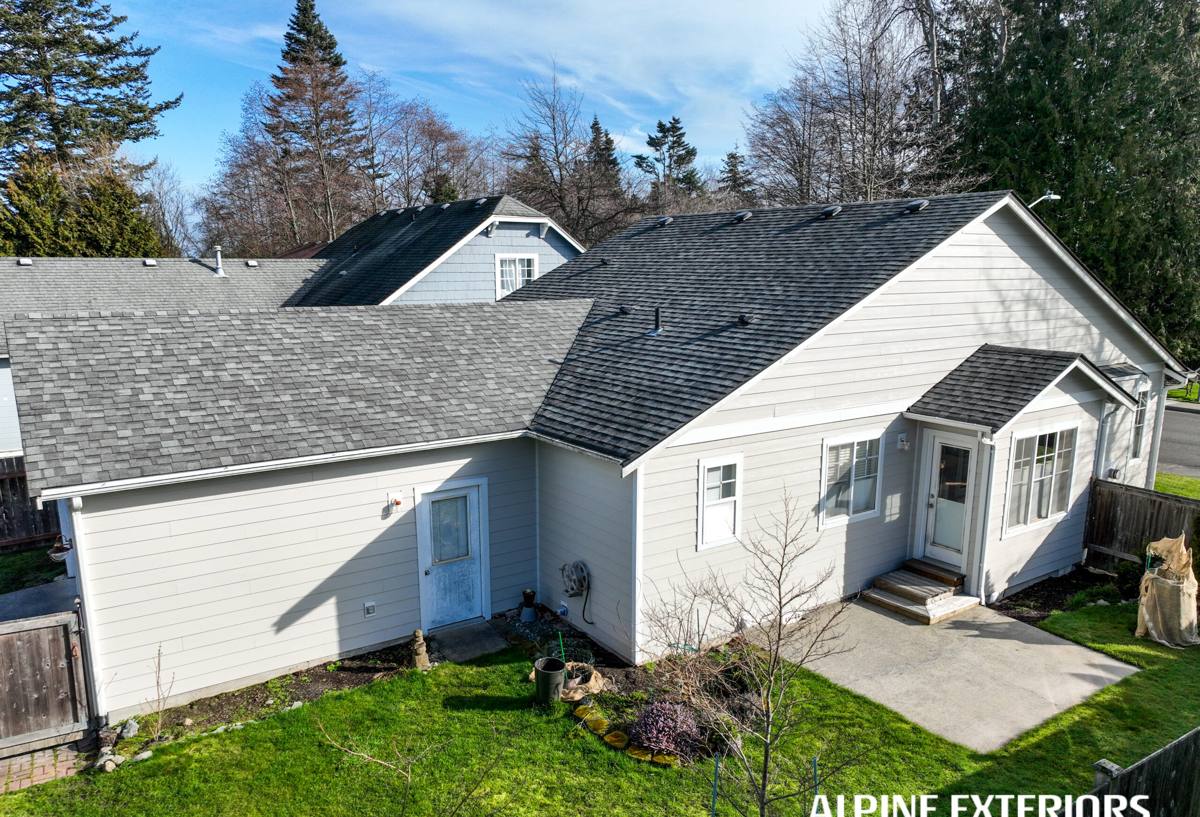
We install James Hardie siding exclusively — not vinyl, not LP SmartSide, not Cemplank, not Allura, not primed wood or cedar. That's not a marketing position, it's a standard we've held to because of what we see on homes in this region over time. Fiber cement from James Hardie is non-combustible, engineered to resist moisture-driven damage, and finished at the factory with ColorPlus technology rather than relying on a field-applied coat of paint that starts breaking down the first wet winter.
For a town like Concrete, where shade and humidity work against a house year-round, that matters more than it does somewhere drier. Wood-based and engineered-wood products can perform fine for a while, but they depend heavily on consistent airflow and sun exposure to dry out between rain events — exactly what a lot of shaded Concrete lots don't get. Hardie's cement composition doesn't feed mold or rot the way wood fiber can, and it holds paint and caulking lines far longer under damp conditions.
What James Hardie Gets Right for This Climate
- Non-combustible composition — a real consideration near forested terrain and wildfire-smoke seasons
- Factory-applied ColorPlus finish resists fading and doesn't need repainting on the same schedule as field-finished materials
- Engineered HZ5 product line built specifically for colder, wetter climate zones like ours
- Dimensionally stable — resists the swelling, cupping, and cracking that come with repeated wet-dry cycles
- Doesn't support moss and mildew growth the way wood-based siding can when it stays damp for long stretches
What Concrete Homes Tend to Face
Every house is different, but there are patterns we see repeatedly on homes in this part of the county:
Persistent Shade and Slow Drying
Lots backed up against tree lines or set into a slope often have entire wall sections that rarely see direct sun. That keeps siding damp longer after every rain, which accelerates wear on anything not built to handle sustained moisture — old paint jobs, wood trim, and lower-grade composite products in particular.
Moss and Organic Growth
Where shade and moisture overlap, moss doesn't stay on the roof — it works its way onto siding, especially near the ground line, under eaves, and anywhere airflow is limited. Left alone, that growth holds moisture directly against the wall surface.
Temperature and Humidity Swings
Sitting closer to the mountains than towns lower in the county, Concrete sees a wider range of conditions — colder snaps in winter, higher humidity from the river corridor, and more dramatic shifts between seasons. Siding here has to handle expansion and contraction without the joints and finish cracking open.
Driving Rain and Wind-Driven Moisture
Storms moving up the valley can drive rain sideways into wall assemblies, particularly on exposed gable ends and upper stories. That makes correct flashing and water-management detailing at least as important as the siding material itself.
How Our Siding Process Works Here
We approach every Concrete project the same disciplined way, adjusted for the specific lot conditions:
- On-site assessment — we look at sun exposure, tree cover, drainage patterns, and the condition of the existing wall assembly before recommending anything.
- Water-management check — flashing, house wrap, and drainage planes get evaluated and corrected as part of the install, not left to chance behind new siding.
- James Hardie installation to manufacturer spec — correct fastening, clearances, and joint treatment, which is what actually determines whether the warranty holds and the siding performs long-term.
- Trim and detail work — the transitions around windows, corners, and rooflines are where most water intrusion problems start, so we treat them as first-class work, not an afterthought.
- Final walkthrough — we go over the finished work with the homeowner before calling the job done.
Beyond Siding: Roofing, Windows, and Decks
Siding doesn't work in isolation — it's one part of a home's overall envelope. We also handle roofing, windows, and decks, because a siding job that ignores a failing roof edge or a leaking window flashing is just delaying the next problem. If we're on-site for a siding estimate and see an issue with the roof or a window that's contributing to moisture problems, we'll tell you directly rather than staying narrowly focused on the scope we were called for.
For a river-valley property with heavy shade, that whole-envelope view matters. Decks in particular take a beating from the same moss and moisture conditions that affect siding, and a roof with compromised flashing can send water straight down a wall, undermining even a well-installed siding job.
Cost Factors for a Concrete Siding Project
| Factor | Why It Matters Locally |
|---|---|
| Home size and wall complexity | More corners, gables, and dormers mean more trim and detail work, which affects both material and labor |
| Existing wall condition | Damp-prone, shaded homes are more likely to need sheathing repair or upgraded water-resistive barrier before new siding goes on |
| Access and site conditions | Sloped lots and tree-heavy properties can add setup time and affect how materials are staged |
| Siding profile and finish | Lap, shingle, and panel styles carry different material and labor costs within the Hardie product line |
| Trim and accessory work | Fascia, soffit, and trim replacement done alongside siding is more efficient than doing it separately later |
We don't quote a project without seeing it. Photos and square footage give a rough idea, but the shade pattern, current wall condition, and access on a specific lot all move the number.
What to Ask Before Hiring Anyone for Exterior Work
- Are they licensed and insured in Washington, and will they show you proof without being asked twice?
- Do they install to the manufacturer's written specifications, or their own shortcut version?
- Will they address water-management details — flashing, house wrap, drainage — as part of the job, or just swap old siding for new over whatever is underneath?
- Do they explain product trade-offs honestly, or push whatever they have the easiest markup on?
- Do they know this area specifically — how shade, moss, and moisture behave on local homes — or are they applying a generic playbook?
Why a Local Crew Matters in Concrete
A lot of exterior problems in this area trace back to work that was technically installed but not installed for these conditions — clearances too tight for a home tucked under trees, caulking used where a proper flashing detail was needed, or a siding choice that just wasn't built for sustained shade and moisture. We work across Skagit County, which means we see how the same materials perform differently on a foggy coastal lot versus a shaded river-valley property like the ones common around Concrete. That's the kind of judgment that doesn't come from a spec sheet — it comes from doing the work here, repeatedly, and paying attention to what actually holds up.
Get a Straightforward Estimate
If your home in Concrete is due for new siding — or you're seeing moss buildup, paint failure, or soft spots that suggest moisture has been getting in — we're happy to take a look and give you an honest read on what's going on and what it would take to fix it right. The estimate is free, there's no pressure, and you'll get a straight answer about whether James Hardie fiber cement is the right call for your home. Use the form below to get started.