 Skagit County
 Avon Sits Right in the Path of Skagit County's Toughest Weather
Avon is a small, close-knit community in the Skagit River valley, surrounded by farmland and a short drive from the tidal flats and open water that define this part of Washington. That location matters more than most homeowners realize. Air moving in off Puget Sound carries salt and moisture inland, and it settles on everything it touches, including the siding on your house. Combine that with the region's long, wet winters and the near-constant cloud cover of a typical Skagit Valley fall through spring, and you get a climate that is genuinely hard on exterior building materials.
Homes in and around Avon deal with three compounding problems: driving rain that gets pushed sideways into wall assemblies during winter storms, salt-laden air that accelerates corrosion on fasteners and trim, and a moss and algae season that can run eight months or longer in shaded, north-facing, or tree-covered lots. None of this is unique to any one street in Avon — it's the reality of exterior maintenance anywhere in this part of the county. But it's exactly why the siding material you choose, and how it's installed, matters as much here as anywhere in Washington.
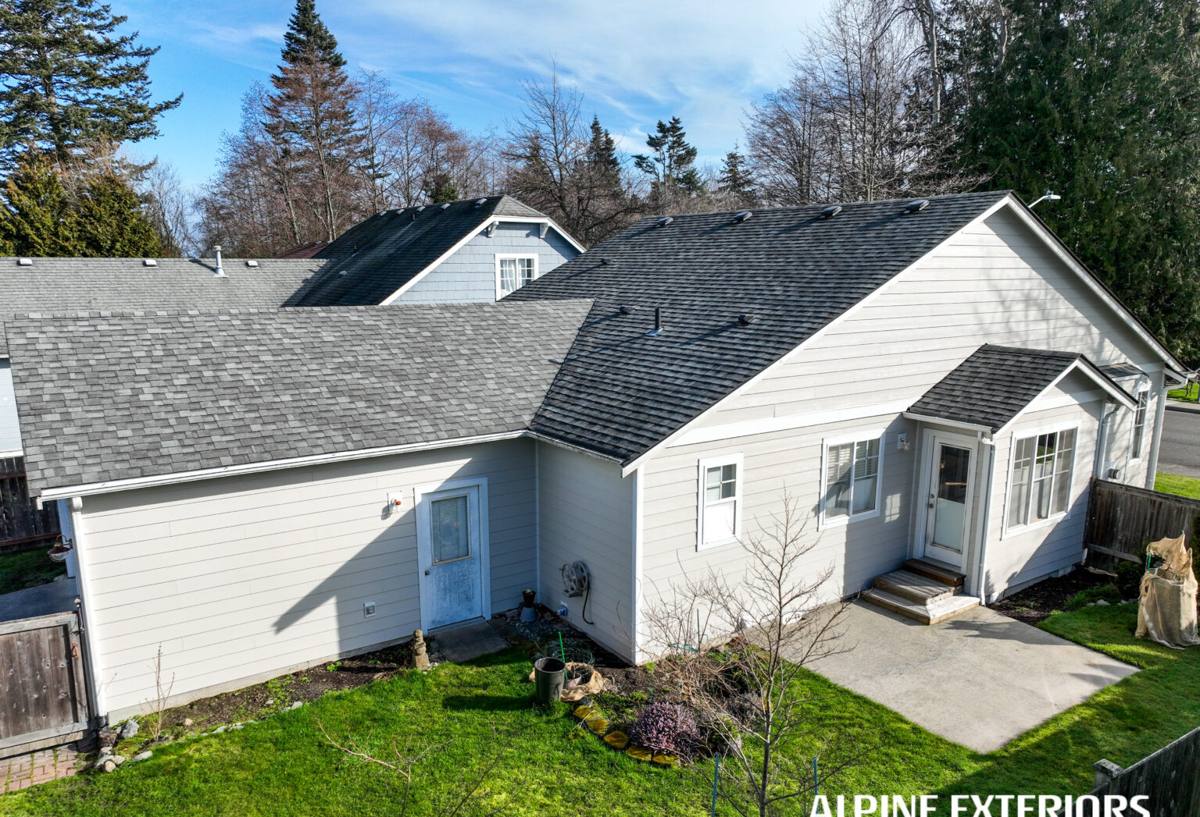
What Constant Moisture Actually Does to a House
Most siding failures aren't dramatic. They're slow. Water finds a seam, a nail hole, or a joint that wasn't flashed correctly, and it works its way behind the cladding a little at a time. Months or years later, a homeowner notices soft trim, a stain bleeding through paint, or a section of wall that feels spongy. By the time it's visible, the damage is usually already into the sheathing.
Moss and Algae Aren't Just Cosmetic
In a climate like Skagit County's, moss and algae growth on siding isn't just an appearance issue — it holds moisture against the surface of the wall long after the rain has stopped. On materials that aren't dimensionally stable or that rely on a painted surface to keep water out, that constant dampness shortens the useful life of the siding and the paint job protecting it.
Salt Air and Fasteners
Homes closer to open water or tidal areas see faster corrosion on unprotected metal — nail heads, flashing, trim fasteners. Over time, corroding fasteners can stain siding, loosen panels, and create small gaps where water gets a foothold. Correct fastener selection and installation detailing matter as much as the siding material itself.
Why We Only Install James Hardie Fiber Cement
We made a deliberate decision as a company to install one siding system: James Hardie fiber cement. We don't install vinyl, LP SmartSide, Cemplank, Allura, primed spruce, or cedar. That's not a marketing position — it's a practical one, built on what actually holds up in a climate like this one.
Fiber cement is a mix of cement, sand, and cellulose fibers, engineered to be dimensionally stable. It doesn't expand and contract with moisture the way wood-based products do, and it doesn't soften or delaminate when it stays wet for extended stretches, which is a real concern in a valley that sees months of low clouds and rain. Hardie's ColorPlus finish is baked on in a factory-controlled process, which gives it more consistent, fade-resistant coverage than field-applied paint, and it's backed by a real finish warranty rather than relying on a homeowner's future repainting schedule.
Hardie also builds region-specific product lines. Their HZ5 formulation is engineered for climates that see freeze-thaw cycles and sustained moisture exposure, which describes a Skagit Valley winter well. We install to Hardie's published specifications — correct clearances, fastener patterns, and flashing details — because the product's performance and warranty depend on it being installed right, not just installed.
None of this means other siding materials are junk. Vinyl is inexpensive and low-maintenance in mild climates. Cedar has a genuine, warm appearance that some homeowners love. LP SmartSide and other engineered wood products have improved over the years. But each of those materials asks a homeowner to accept a trade-off — ongoing caulking and repainting, sensitivity to sustained moisture, or a maintenance schedule that's easy to fall behind on — that we don't think makes sense for the weather this county gets. Fiber cement lets us stand behind the work without asking a homeowner to fight the climate every year to keep it looking right.
How We Approach a Siding Job in Avon
Assessment First
Every project starts with a walk-around of the home: current siding condition, trim and flashing details, areas showing moisture staining or moss buildup, and anything unusual about the site — heavy tree cover, exposure to prevailing wind and rain, proximity to sprinklers or landscaping that keeps a wall damp.
Tear-Off vs. Overlay
In most cases, we recommend a full tear-off to bare sheathing rather than installing new siding over old. That lets us inspect the wall assembly for hidden rot or moisture damage before it's covered up again, and it lets us install a proper water-resistive barrier and flashing system from scratch — which matters a lot more in a climate that sees driving, wind-blown rain than it would somewhere drier.
Water Management Details
The siding itself is only part of what keeps a house dry. Correct flashing above windows and doors, proper kick-out flashing where rooflines meet walls, and adequate clearance between siding and grade, decks, or roofing are what actually stop water from getting behind the wall in the first place. We treat these details as non-negotiable, not optional upgrades.
More Than Siding: Roofing, Windows, and Decks
Siding doesn't work in isolation — it's one part of the building envelope, and the other parts have to do their job too. We also handle roofing, window replacement, and deck construction, which lets us look at a home as a whole system instead of patching one component while ignoring the rest.
- Roofing: A roof in poor condition sends water down onto the top of the siding and trim, which is one of the most common causes of premature siding failure we see.
- Windows: Old or poorly flashed windows are a major source of the moisture intrusion that shows up as siding and trim damage years later.
- Decks: Decks attached to the house need to be built and flashed so they don't trap water against the wall behind them — a detail that's easy to get wrong and expensive to fix later.
When we're on a property for a siding project, we'll flag anything we see on the roof, windows, or attached structures that could undercut the work, rather than staying narrowly focused on the walls.
What Drives the Cost of a Siding Project
Every home is different, and we won't quote a price without walking the property, but these are the main factors that move a siding project's cost up or down.
| Factor | Why It Matters |
|---|---|
| Tear-off vs. overlay | Full tear-off costs more upfront but allows inspection and repair of hidden damage and proper water barrier installation |
| Home size and wall complexity | More corners, dormers, and roof-wall intersections mean more flashing work and labor time |
| Underlying sheathing condition | Rot or moisture damage found during tear-off adds repair costs before new siding goes on |
| Trim and accessory scope | Fascia, soffits, and trim boards replaced alongside siding add material and labor |
| Color and profile selection | Factory-finished ColorPlus panels and certain siding profiles carry different material costs |
| Site access | Tree cover, tight lot lines, or difficult staging areas affect labor time and equipment needs |
Keeping Your Siding in Good Shape Between Projects
Fiber cement is low-maintenance compared to wood or vinyl, but "low-maintenance" doesn't mean "no maintenance," especially in a climate that stays damp for so much of the year. A little attention goes a long way toward getting the full lifespan out of the investment.
- Rinse siding annually to remove built-up dirt, pollen, and early moss growth before it takes hold
- Keep gutters clean and functioning so overflow doesn't run down the face of the siding
- Trim back vegetation and tree limbs that keep a wall shaded and damp longer than the rest of the house
- Check caulking around windows, doors, and trim joints once a year and re-caulk where it's cracked or missing
- Walk the exterior after major windstorms to check for loose trim, damaged flashing, or impact damage
- Address any moss or algae growth promptly rather than letting it spread and hold moisture against the surface
Why It's Worth Hiring a Local Crew
A contractor based somewhere outside this climate can install siding, but they won't necessarily know why a particular flashing detail matters here, or how much wind-driven rain a west-facing wall in this part of the valley actually takes in a January storm. Crews who work in Skagit County year-round have seen what happens when those details get skipped — the callbacks, the moisture damage, the moss that comes back within a season. That experience shapes how we detail every job, not just the ones where something already went wrong.
Being local also means we're accountable in a way an out-of-area crew isn't. If something needs a second look after the job is done, we're not far away, and we're not moving on to a different region next month.
If you're weighing your options for siding, roofing, windows, or a deck in Avon, we're happy to take a look and give you a straightforward, no-pressure estimate — no invented urgency, just an honest read on what your home needs and what it would take to do it right.