 Skagit County
 Siding Built for March Point's Waterfront Exposure
March Point sits out on the water, and that location shapes everything about how a house ages here. Homes on this peninsula deal with a combination most inland Skagit County properties don't face at the same intensity: salt-laden air rolling off Fidalgo Bay and the surrounding saltwater, wind-driven rain that hits siding sideways rather than straight down, and a long wet season that keeps north-facing walls and shaded siding damp for weeks at a time. Add in the moss and algae growth that thrives in that kind of moisture, and you've got an exterior that's working hard year-round just to hold up, let alone look good.
We're a Skagit County exterior contractor, and March Point is part of our regular service area. That matters more than it sounds like it should. A crew that works this peninsula regularly knows how the wind comes off the water, which elevations of a house take the worst of the weather, and what kind of siding actually holds up out here versus what looks fine in a showroom two counties away.
What Salt Air Actually Does to Siding
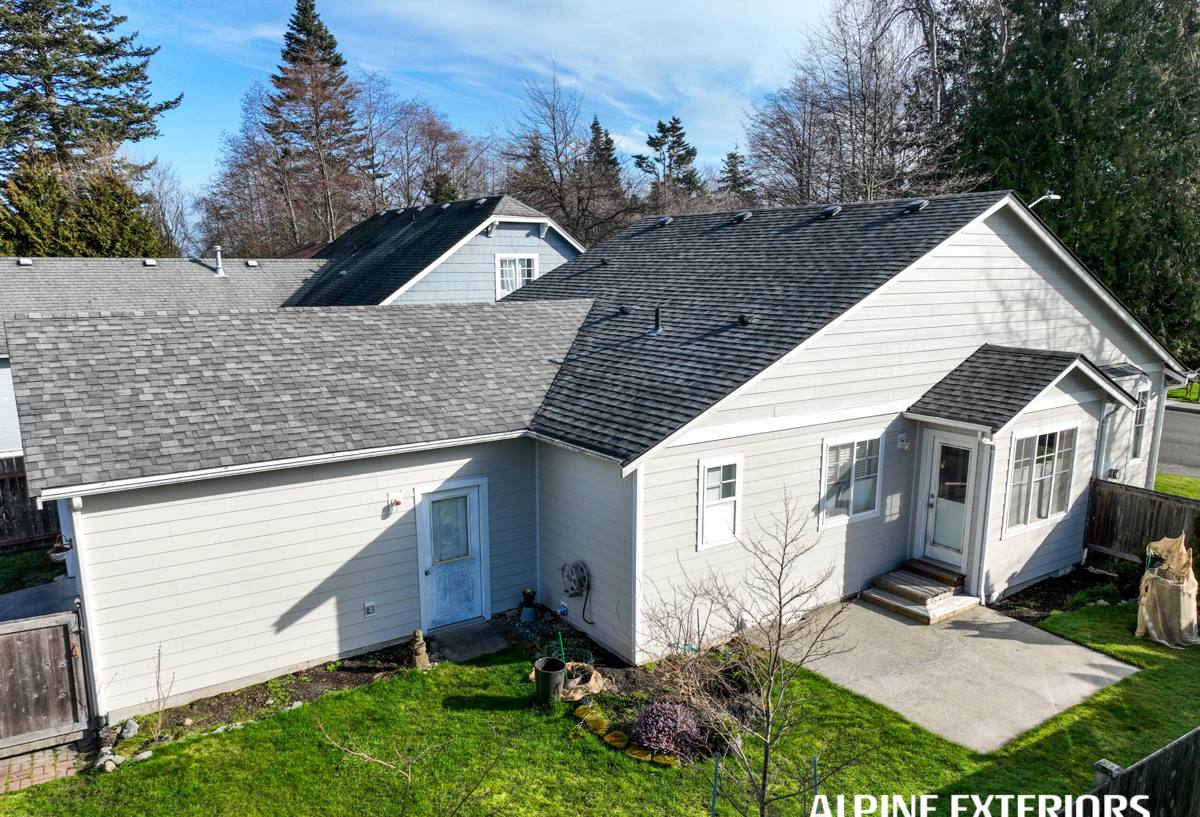
Salt air isn't just a coastal cliché — it's a real corrosion and degradation factor. Airborne salt settles on exterior surfaces and, combined with moisture, accelerates the breakdown of fasteners, trim, and any siding material that isn't engineered to resist it. Over years, homes near saltwater tend to show it first at the fastener heads, the corners, and any spot where two materials meet and trap moisture.
Where We See the Damage First
- Corner boards and trim where caulk joints have opened up
- Fastener heads that have started to bleed rust through paint
- Lower courses of siding near grade, where splashback and standing moisture concentrate
- North and west-facing walls that stay shaded and damp longest after a storm
- Areas around window and door flashing where water intrusion isn't visible until it's already inside the wall
None of this is unique to March Point, but the combination of salt exposure and driving rain off open water makes the timeline shorter here than it is for a house set back in the trees a few miles inland.
Why Driving Rain Changes the Installation Math
Straight-down rain is forgiving. Wind-driven rain is not — it gets pushed sideways and upward into laps, seams, and penetrations that were never designed to shed water from that angle. On an exposed peninsula like March Point, that's a regular occurrence, not a once-a-year storm event.
This is why installation detail matters as much as the siding product itself. Proper flashing above windows and doors, correctly lapped house wrap, back-caulked joints where the manufacturer calls for it, and rainscreen or drainage gap consideration on the more exposed elevations all make the difference between a wall that sheds water and one that slowly absorbs it. We install to those details on every job, not just the ones facing the worst weather — but on a site like March Point, skipping any of it shows up faster.
Why We Install Only James Hardie Fiber Cement
We made the decision to install exclusively James Hardie fiber cement siding, and on a peninsula environment like March Point, that decision matters even more than it does elsewhere in the county.
What That Means for a Home Here
- Non-combustible core — fiber cement doesn't feed a fire, which matters as much for insurance considerations as it does for safety
- Engineered for moisture cycling — Hardie's HZ5 product line is specifically formulated for wetter, harsher climates like the Pacific Northwest coast
- Factory-applied ColorPlus finish — baked-on color that resists the fading and peeling that raw salt air and UV exposure accelerate on field-painted surfaces
- Doesn't rot, delaminate, or feed moss the way organic materials can — fiber cement is inorganic, so it doesn't provide the food source that wood-based products do
- Backed by a strong transferable warranty — meaningful when you're dealing with a demanding climate over a 20-30 year ownership horizon
We don't install vinyl, LP SmartSide, cedar, primed spruce, Cemplank, or Allura. Each of those products has legitimate uses somewhere, but we've chosen not to put our name behind them here, largely because of how each one performs — or doesn't — in exactly the conditions March Point sees: sustained moisture, salt exposure, and long stretches without direct sun to dry things out.
Why Not Vinyl on a Site Like This
Vinyl siding is inexpensive and easy to install, and for a lot of situations that's a reasonable trade-off. But vinyl expands and contracts significantly with temperature swings, and in high-wind coastal exposure it can deform, crack, or blow off at the edges over time. It also doesn't offer the fire resistance or long-term color stability that fiber cement does. On an exposed peninsula, we don't think it's the right long-term investment.
Why Not Wood or Wood-Composite Products
Cedar and primed spruce look good on day one, but wood is an organic material — it's the exact thing moss, algae, and rot organisms are looking for in a damp, shaded, salt-air environment. Wood siding here demands more frequent repainting, more caulk maintenance, and closer inspection for soft spots than most homeowners want to sign up for. LP SmartSide and similar engineered wood products improve on solid wood in some ways, but they still rely on their outer coating to keep moisture out, and coating failures at cut edges or fastener penetrations are a known weak point in wet climates.
Roofing, Windows, and Decks in the Same Environment
Siding doesn't work in isolation — the whole building envelope has to manage the same moisture and salt load. We handle roofing, windows, and decks as well, because a siding job done right often surfaces issues in the roofing above it or the flashing around window openings that need to be addressed at the same time. Decks on a saltwater-exposed property face their own version of this problem: fasteners, ledger connections, and board-to-board gaps all need attention to standing water and salt corrosion that inland decks don't deal with as severely.
When we're on-site for a siding project, we look at the whole exterior — not to upsell unrelated work, but because a compromised roof edge or poorly flashed window will undermine even a perfect siding installation.
Cost Factors for a March Point Siding Project
Every home is different, but a few factors consistently move the price on a project out here more than they would on a sheltered inland lot.
| Factor | Why It Matters on a Waterfront Site |
|---|---|
| Home elevation and wind exposure | More exposed walls need more attention to flashing, fastening, and joint detailing |
| Extent of existing moisture damage | Salt air and driving rain can hide rot behind old siding until it's opened up |
| Trim and detail work | Corner boards, window trim, and fascia often need coordinated replacement for a sealed system |
| Access and staging | Waterfront lots can have tighter access or landscaping that affects scaffolding and material staging |
| Product line selection | HZ5 and other coastal-rated Hardie products are priced differently than standard interior-zone products |
What a Straightforward Siding Project Looks Like
- On-site inspection to assess current siding condition, moisture damage, and flashing details
- Honest recommendation on what needs replacing versus what can be preserved
- Removal of old siding and inspection of sheathing and house wrap underneath
- Repair of any rot or water damage found before new siding goes on
- Installation of James Hardie fiber cement to manufacturer specifications, including proper flashing and fastening for the exposure level
- Final walkthrough so you understand what was done and why
Why a Local Crew Matters Here
Skagit County covers a lot of different microclimates, from the drier interior valley to exposed waterfront sites like March Point. A crew that only works inland projects can underestimate what a peninsula exposure requires — lighter flashing details, less attention to corner sealing, or product choices that aren't rated for the conditions. We work this area regularly, which means we're not guessing at what March Point homes need; we've seen how the weather here treats different materials and different installation approaches over time.
That local knowledge also means faster response for inspections, more realistic timelines around weather windows, and a crew that understands the access and staging challenges that come with waterfront properties.
Get a Straightforward Estimate
If you own a home in March Point and you're seeing early signs of siding wear — cracked caulk joints, rust streaks at fastener heads, moss creeping up the lower courses, or paint that's failing faster than it should — it's worth getting an honest look before small problems become expensive repairs. We offer free, no-pressure estimates and will tell you plainly what we see and what we'd recommend, whether that's a full siding replacement or targeted repair work.