 Skagit County
 Hamilton's Climate Is Harder on a House Than It Looks
Hamilton sits in the Skagit River valley, tucked between forested hillsides that trap moisture and shade large parts of many properties for much of the year. That combination of river humidity, heavy fall and winter rain, and long stretches without direct sun creates exactly the conditions that wear down exterior building materials fastest. Add in the marine-influenced weather that pushes inland across Skagit County from Puget Sound, and Hamilton homes deal with a damp, mossy climate almost year-round, not just during the wettest months.
Siding, trim, and fascia boards in this kind of environment are under constant low-grade attack. It's rarely one dramatic storm that causes damage — it's the slow, repeated cycle of wood and moisture-sensitive materials absorbing water, swelling, drying, and absorbing again. Over years, that cycle is what causes soft spots, cracked paint, delamination, and rot, especially on north-facing walls and anywhere gutters or downspouts aren't keeping water moving away from the house.
Moss and Organic Growth
Shaded, damp siding is a magnet for moss, algae, and mildew. On wood-based products this isn't just cosmetic — organic growth holds moisture against the surface and accelerates decay underneath. Homes in river valleys and tree-covered lots, which describes a lot of Hamilton, tend to need more frequent cleaning and repainting than homes in drier, more open parts of the county.
Driving Rain and Wind-Driven Moisture
Rain in this part of Washington doesn't always fall straight down. Wind pushes it sideways into wall assemblies, which means siding seams, butt joints, and anywhere caulking has failed become entry points for water. Once moisture gets behind siding, it can sit there for weeks before anyone notices a problem on the interior.
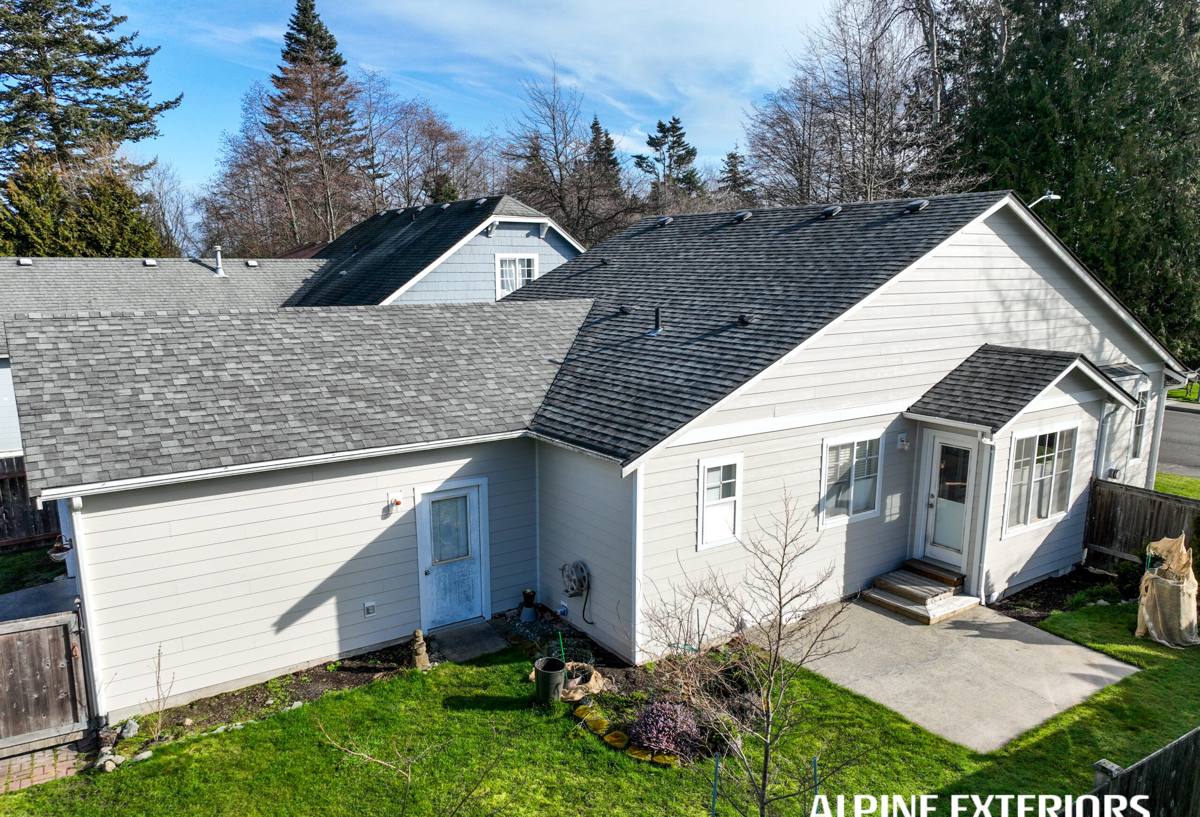
Why We Only Install James Hardie Fiber Cement Siding
We made a deliberate decision as a company to install James Hardie fiber cement siding exclusively. We don't install vinyl, LP SmartSide, Cemplank, Allura, or primed wood species like spruce or cedar. That's not a marketing position — it's a standard we hold because of what we've seen these materials do, and not do, in Pacific Northwest conditions like Hamilton's.
Fiber cement is made from cellulose fiber, sand, and Portland cement. It doesn't absorb water the way wood-based products do, it won't warp or delaminate from repeated wet-dry cycles, and it's non-combustible — a real advantage during Washington's dry summer wildfire season, even in a damp county like Skagit. James Hardie's ColorPlus finish is baked on at the factory under controlled conditions, which gives it more consistent, longer-lasting color than field-applied paint, and it's engineered specifically for Pacific Northwest moisture with their HZ5 product line.
None of this means fiber cement is maintenance-free. It still needs to be installed correctly, caulked properly, and kept clear of standing water and soil contact. But the failure modes we see most often in this climate — swelling, rot, delamination, moss taking hold in soft material — are largely engineered out of the product to begin with.
What We're Saying No To, and Why
- Vinyl siding: lightweight and inexpensive, but it can warp in heat, crack in cold, and doesn't hold paint or take impact the way fiber cement does.
- LP SmartSide and other engineered wood products: wood-based, so they're more moisture-sensitive at cut edges and seams than fiber cement, especially in a valley climate like Hamilton's.
- Cemplank and Allura: also fiber cement, and reasonable products, but we've standardized on one manufacturer so we can guarantee installation detail, warranty support, and color-matching consistency for every job.
- Primed spruce or cedar: beautiful when new, but real wood requires the most upkeep of any siding option here — repainting, caulking, and vigilance against rot are ongoing responsibilities, not one-time tasks.
Our Process for Hamilton Properties
Assessment First
Every project starts with a walk-around of the house, not just the siding itself. We look at roofline drainage, gutter condition, grading around the foundation, and how much shade and moisture exposure each wall actually gets. A wall tucked against a hillside or tree line needs different detailing than one that gets full afternoon sun.
Removal and What's Underneath
Once old siding comes off, we check the sheathing and house wrap underneath for hidden water damage. This is often where the real story of a house's moisture history shows up — and it's better to find and fix it now than to seal it behind new siding.
Installation to Spec
James Hardie engineers exact specifications for fastener placement, gapping, flashing, and caulking, and those specs exist because they directly affect long-term water performance. We follow them, including proper clearance at grade, deck ledgers, and window and door openings — the details that determine whether siding lasts fifteen years or fifty.
Recognizing When Siding Needs Attention
| Sign | What It Usually Means |
|---|---|
| Soft or spongy boards | Moisture has gotten into wood-based siding and started rot |
| Persistent moss or dark streaking | Shaded, damp areas holding moisture against the surface |
| Peeling or bubbling paint | Water trapped behind the paint film, common on older wood siding |
| Visible gaps at seams or trim | Failed caulking, an entry point for wind-driven rain |
| Warping or bowing panels | Repeated wet-dry cycling common in vinyl and engineered wood |
Cost Factors for a Hamilton Siding Project
Every home is different, but a few factors consistently move the price of a siding project in this area:
| Factor | Why It Matters |
|---|---|
| Home size and wall complexity | More corners, gables, and dormers mean more cutting and detail work |
| Existing damage found during removal | Rotted sheathing or framing needs repair before new siding goes on |
| Siding profile and trim details | Lap width, board-and-batten, and trim style all affect labor and material |
| Access and site conditions | Steep lots, tree cover, or tight driveways can affect setup and staging |
| Color and finish selection | Factory ColorPlus finishes eliminate on-site painting costs but vary by product line |
We give straightforward, itemized estimates so homeowners can see exactly what they're paying for, rather than a single lump number.
A Full Exterior, Not Just Siding
Siding rarely fails in isolation. A roof that's shedding water poorly, windows with failed seals, or a deck that's trapping moisture against the house all put extra strain on the siding around them. Because we handle roofing, windows, and decks in addition to siding, we can look at a Hamilton property as one connected system instead of a series of unrelated repairs.
Roofing
A roof in poor condition sends water where it shouldn't go — behind fascia boards, into soffits, and down onto siding it wasn't designed to protect. We check roof drainage and flashing as part of any siding evaluation.
Windows
Old or poorly flashed windows are one of the most common hidden sources of water intrusion behind siding. Replacing or re-flashing windows at the same time as a siding project often prevents a callback a few years later.
Decks
Deck ledgers that attach directly to the house are a frequent moisture entry point if not flashed correctly. We build and inspect decks with the same attention to water management that goes into our siding work.
Why a Local Crew Matters in Hamilton
A contractor who works across Skagit County regularly understands that a home in a shaded river valley like Hamilton faces different demands than one on open, sunnier ground elsewhere in the county. That shows up in small decisions — how much rain screen gap to leave, which flashing details to prioritize, how aggressively to plan for moss and organic growth — that a crew unfamiliar with the area might not think to address. We also stand behind our work locally, which means a shorter drive and a faster response if something needs a look after the job is done.
What Homeowners Should Check Before Committing
- Ask what siding material is being proposed, and why — not just the price
- Confirm whether the estimate includes repair of any rot found during removal
- Ask about flashing details around windows, doors, and deck ledgers
- Get the manufacturer's warranty terms in writing, including what's transferable
- Check that the crew is factory-trained on the specific product being installed
- Ask how drainage and moss exposure on your specific lot will be addressed
If your Hamilton home is showing signs of wear, or you're just planning ahead, we're happy to take a look and give you a straightforward, no-pressure estimate. There's a form below — reach out and we'll walk the property with you and talk through what actually makes sense for your home.