 Skagit County
 Siding in Burlington: A Different Kind of Weather Problem
Burlington sits in the Skagit Valley, close enough to Puget Sound and the Skagit River delta that homes here deal with a specific combination of exterior stressors: salt-tinged marine air moving in off the water, long stretches of driving rain through fall and winter, and a moss season that can run most of the year in shaded, north-facing spots. None of these things alone is unusual for western Washington. Together, over years, they wear down siding faster than most homeowners expect — especially siding that wasn't built for this kind of climate in the first place.
We're a Skagit County siding contractor, and Burlington is core service territory for us. That matters more than it sounds like it should. A crew that works this valley regularly knows which elevations of a house take the worst of the weather, where moss tends to establish first, and what kind of moisture problems show up behind siding that looks fine from the curb. That local pattern recognition changes how we approach an inspection, a repair, or a full replacement.
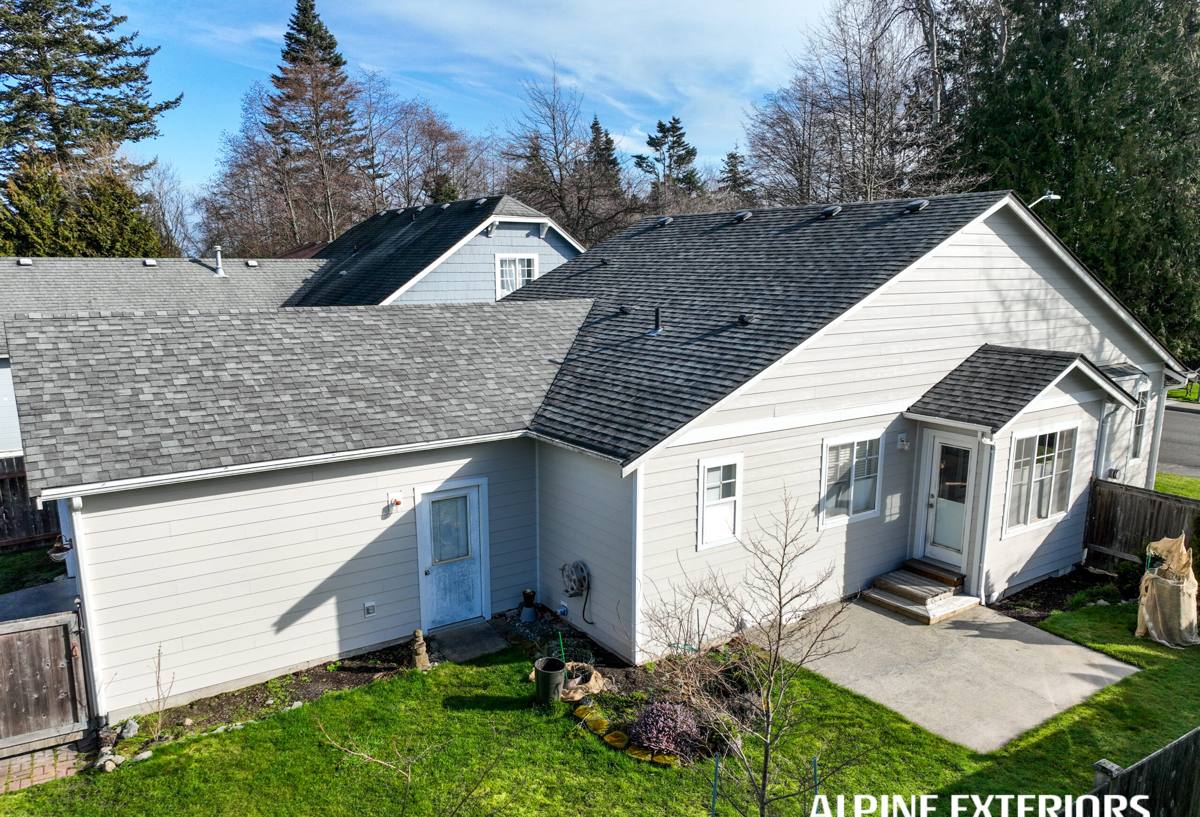
What Burlington's Climate Actually Does to Siding
Salt Air and Moisture
Burlington isn't right on the water, but it's close enough that the marine layer and salt-carrying air common to the Skagit Valley and greater Puget Sound region reach homes here regularly. Salt-laden moisture accelerates corrosion on fasteners, flashing, and any exposed metal trim, and it speeds up the breakdown of paints and finishes that aren't formulated to resist it. Siding with a weak factory finish will chalk, fade, and lose adhesion faster in this kind of air than it would in a drier inland climate.
Driving Rain
Western Washington's rain isn't just frequent — a lot of it comes in sideways during fall and winter storms, driven by wind off the Sound and up the valley. Driving rain finds every weak seam, every under-caulked joint, and every spot where siding wasn't lapped correctly. Materials that absorb water, or that swell and don't fully dry back out between storms, are the ones that eventually rot, delaminate, or need repainting on a short cycle.
Moss and Organic Growth
Shaded exposures, tree cover, and the valley's persistent damp create ideal conditions for moss, algae, and mildew to colonize siding surfaces. Beyond the cosmetic issue, moss holds moisture against the wall assembly longer than open air would, which is exactly what accelerates rot in moisture-sensitive materials. A siding product's resistance to sustained dampness is one of the more important — and most overlooked — factors for a Burlington home.
Why We Only Install James Hardie Fiber Cement
We made a deliberate decision as a company to install one siding system: James Hardie fiber cement. We don't install vinyl, LP SmartSide, Cemplank, Allura, primed spruce, or cedar. That's not a marketing angle — it's a standard we hold to because of what we've seen play out on homes in this exact climate over time.
Fiber cement is non-combustible, dimensionally stable, and doesn't feed moisture the way wood-based products can. James Hardie's HZ5 product line is specifically engineered for climates like ours — cold, wet, and humid for long stretches of the year — and it comes with a factory-applied ColorPlus finish that's baked on and warrantied, rather than relying on a field-applied paint job to hold up against salt air and UV.
We'll walk through the honest trade-offs on the products we don't install below. This isn't about calling any of them bad products — it's about explaining why, given what Burlington's weather does to a house over 15, 20, and 30 years, we standardized on the one system we trust to hold up with the least maintenance burden for the homeowner.
Why We Don't Install Vinyl Siding
Vinyl siding is affordable, low-maintenance in the sense that it doesn't need painting, and easy to find installers for. Those are real advantages, and we understand why so many homes have it. Where it falls short for us is durability and performance in exactly the conditions Burlington sees: it can warp or distort under heat and UV exposure over time, it's more vulnerable to cracking in cold snaps, and wind-driven rain can get behind panels at seams and corners if installation isn't precise. It also isn't fire-resistant, and it doesn't hold up structurally the way fiber cement does over decades. We'd rather put a product on a home that ages well without those vulnerabilities.
Why We Don't Install LP SmartSide
LP SmartSide is a legitimate engineered wood product with real fans, and it costs less upfront than fiber cement. But it's still a wood-strand product at its core, which means it's more sensitive to sustained moisture exposure than cement-based siding — a real concern given how much driving rain and dampness this valley sees. If caulking, flashing, or paint maintenance lapses even for a season or two, moisture intrusion can lead to swelling and rot at edges and seams. We'd rather not put a wood-based product on a home where the climate actively works against wood-based products.
Why We Don't Install Cemplank or Allura
Cemplank and Allura are both fiber cement products, and fiber cement as a category is exactly the direction we believe in. Our decision here isn't about the base material — it's about manufacturer track record, factory finish quality and warranty structure, and consistency of product lines engineered specifically for regional climate zones. James Hardie's HZ system, ColorPlus finish process, and transferable warranty are the specific package we've chosen to stand behind, and we'd rather install one system extremely well than split our expertise across several.
Why We Don't Install Primed Spruce or Cedar
Natural wood siding, whether primed spruce or cedar, has real aesthetic appeal that some homeowners specifically want. But wood is wood: it expands, contracts, and absorbs moisture, and it needs an ongoing maintenance commitment — repainting, recaulking, checking for rot — that only gets more demanding in a climate with this much sustained dampness and moss pressure. Cedar in particular is also a combustible material. For homeowners who want the maintenance burden to go down over time instead of staying constant, fiber cement is the better long-term fit, and it's why we don't offer wood siding installation.
How a Siding Project Works With Us
Inspection and Assessment
We start by looking at the whole exterior envelope, not just the siding surface — trim, flashing, window and door transitions, and any areas already showing moss, staining, or soft spots. In a place like Burlington, we pay particular attention to north- and west-facing walls, areas under tree cover, and any elevation that takes the brunt of storms coming up the valley.
Scope and Product Selection
Depending on the home's condition, the project might be a full re-side, a partial replacement of damaged sections, or targeted repairs. We'll walk through James Hardie's plank, panel, and shingle-style options, the HZ5 climate designation, and ColorPlus color choices so you understand what you're getting and why it fits the house.
Installation to Spec
Fiber cement performs the way it's supposed to only when it's installed correctly — proper clearances, correct fastening, and flashing details done right at every penetration and transition. Manufacturer warranties on fiber cement are generally tied to installation meeting spec, which is part of why installer experience matters as much as the product itself.
Cleanup and Walkthrough
We finish with a full site cleanup and a walkthrough so you know what was done, what to expect as the finish weathers in, and any basic care recommendations going forward.
Comparing Siding Materials for a Burlington Home
| Material | Moisture Resistance | Maintenance Over Time | Fire Resistance | Typical Warranty Structure |
|---|---|---|---|---|
| James Hardie Fiber Cement | High — cement-based, doesn't absorb and swell like wood | Low — factory finish, no regular repainting | Non-combustible | Long-term, transferable |
| Vinyl | Moderate — seams and laps are vulnerable points | Low, but can warp/fade over decades | Not fire-resistant | Varies widely by manufacturer |
| LP SmartSide / Engineered Wood | Moderate — sensitive if maintenance lapses | Moderate — paint and caulk upkeep needed | Treated, but wood-based | Manufacturer-specific, install-dependent |
| Cedar / Primed Spruce | Lower — natural wood absorbs moisture | High — ongoing painting, sealing, rot checks | Combustible | Typically limited or none from a manufacturer |
Beyond Siding: Roofing, Windows, and Decks
Siding doesn't work in isolation — it's one part of a home's overall exterior envelope, and in a climate like Skagit County's, the pieces need to work together. We also handle roofing, windows, and decks, which matters most where these systems meet: roof-to-wall flashing, window trim and drip caps, and deck ledger connections are common places for water intrusion if they're not detailed correctly. Having one contractor who understands how all of these systems interact reduces the chance that a repair in one area creates a new problem in another.
Signs Your Burlington Home May Need Siding Attention
- Moss, algae, or persistent green staining on north-facing or shaded walls
- Paint that's peeling, bubbling, or chalking off on your hand when touched
- Soft or spongy spots when you press on the siding, especially near the bottom courses
- Visible warping, cupping, or gaps opening up between panels or boards
- Rusting or staining fasteners and trim
- Rising energy bills that may point to a compromised exterior envelope
- Cracks or separation at corners, window trim, and other transition points
Why a Local Crew Matters
Siding installation isn't one-size-fits-all across regions. A crew that mostly works dry-climate installs won't necessarily flash and lap details the same way a Skagit Valley crew does, and those details are exactly what determines whether siding sheds Burlington's driving rain for 30 years or starts letting water in within five. Working this county regularly means we've seen how homes here actually age — which elevations take the worst weather, which product choices held up, and which ones didn't — and that experience shapes every estimate and installation we do.
If your Burlington home's siding is showing its age, or you're planning ahead for a replacement, we're happy to come out, take a real look, and give you a straightforward assessment. Reach out for a free, no-pressure estimate using the form below.