 Skagit County
 Siding for Lyman Homes, Built for the Skagit Valley
Lyman sits in the Skagit River valley, tucked between the foothills of the Cascades and the working farmland that runs west toward Sedro-Woolley and Mount Vernon. It's a quieter corner of Skagit County, but the exterior of a house here works just as hard as anywhere else in Western Washington — arguably harder, given how much tree cover, shade, and river moisture surrounds many properties. We serve Lyman as part of our regular Skagit County service area, and we bring the same standards here that we bring to every job: James Hardie fiber cement siding, installed to manufacturer spec, backed by a crew that shows up when we say we will.
This page covers what Lyman homeowners tend to deal with on the exterior of their homes, how our siding, roofing, window, and deck work fits that reality, and why we standardized on one siding product instead of offering the usual mix of options.
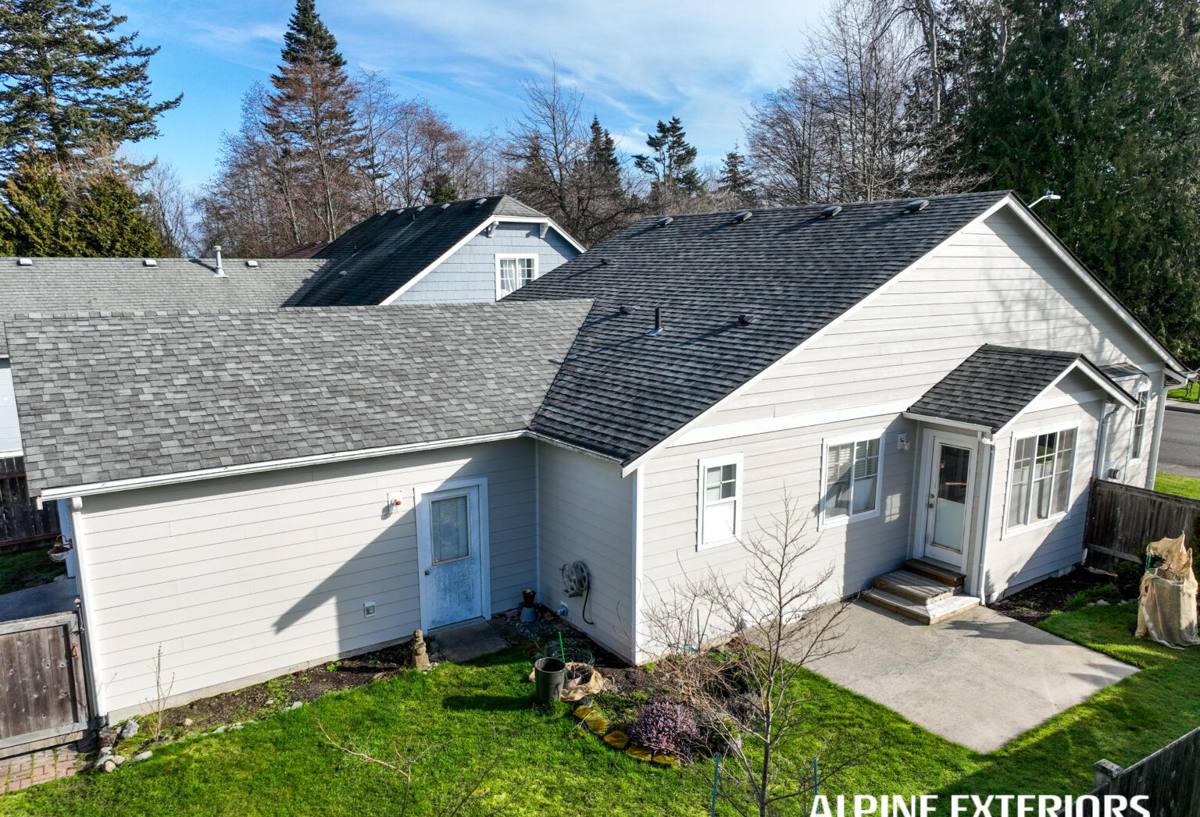
What the Skagit Valley Climate Does to a House
Skagit County doesn't get the dramatic weather of other regions — no hurricanes, no hard freezes for long stretches — but it gets something arguably harder on a building envelope: persistent, low-grade moisture exposure, month after month, year after year. In and around Lyman, that shows up as a few specific problems.
Driving Rain and Wind-Driven Moisture
Western Washington rain isn't usually torrential, but it's frequent and often comes in sideways with the wind funneling through the valley. Over years, that pattern finds every weak point in a home's exterior — a poorly flashed window, a butt joint that wasn't sealed right, a piece of trim that was never back-primed. Water doesn't need a storm to cause damage here; it just needs time and a gap.
Shade, Tree Cover, and a Long Moss Season
Lyman's setting near the river and foothills means a lot of homes sit under mature trees or in the shadow of hillsides for large parts of the day. That shade keeps siding and roofing damp longer after every rain, which is exactly what moss, algae, and mildew need to take hold. A siding or roofing material that can't shed water quickly or resist organic growth is going to show it here faster than it would on an open, sun-exposed lot.
Regional Air Moisture
Even away from the immediate coastline, Skagit County sits close enough to Puget Sound and the Salish Sea that damp, salt-tinged marine air moves through the valley regularly, especially with prevailing westerly winds. It's a milder effect inland than right on the water, but it still adds to the overall moisture load a home's exterior has to shrug off year-round.
Why We Only Install James Hardie Siding
We get asked fairly often why we don't offer vinyl, LP SmartSide, or one of the other fiber cement brands like Cemplank or Allura. The honest answer is that we made a decision as a company to install one product because we believe it performs best in exactly the conditions Lyman and the rest of Skagit County deal with, and we didn't want to be in the position of installing something we wouldn't put on our own homes.
Vinyl Siding
Vinyl is inexpensive and easy to install, and that's a real advantage for some homeowners. But it's a thin plastic product that expands and contracts with temperature swings, can warp or crack over time, and doesn't hold up well to impact. It also can't be painted to match trim or refresh a look without special paint systems, and seams are a permanent part of how it's installed. In a shaded, damp environment, vinyl doesn't feed moss the way wood can, but it also doesn't offer the rigidity or the factory-baked finish that keeps a home looking sharp for decades.
LP SmartSide
LP SmartSide is an engineered wood product — strand board with a resin and wax treatment and a factory finish. It's lighter than fiber cement and easier on installers' backs, and it holds paint well. The trade-off is that it's still wood-based, meaning it's more vulnerable to moisture intrusion at cut edges, seams, and fastener penetrations than a cement-based product. In a climate where siding stays damp for long stretches, we've made the call that wood-based substrates carry more long-term risk than we're willing to put our name behind.
Other Fiber Cement Brands
Cemplank and Allura are legitimate fiber cement products and share the same basic non-combustible, moisture-resistant composition as Hardie. Where we've landed is on the specifics: Hardie's HardieZone system engineers products specifically for Pacific Northwest moisture exposure, its ColorPlus factory finish has a long track record, and its warranty structure and market presence give homeowners an easier path if something needs attention years down the road. We install one product so we can be experts in it — not generalists across five.
| Siding Type | Moisture Resistance | Maintenance | Finish Life |
|---|---|---|---|
| Vinyl | Good (non-porous, but seams/gaps let water behind panel) | Low, but can't easily be repainted | Fades over time, no true refinish option |
| LP SmartSide | Fair — vulnerable at cut edges and fasteners | Moderate — caulking and paint upkeep matter | Factory finish, repaintable |
| James Hardie | Excellent — cement-based, engineered for PNW moisture | Low — occasional wash, no rot risk | ColorPlus finish rated for decades, repaintable |
James Hardie Product Lines We Install
Hardie's lineup gives us flexibility for different Lyman homes — a river-valley farmhouse, a newer build up in the foothills, a rancher on a wooded lot — without changing the underlying material.
- HardiePlank lap siding — the most common choice, available in several textures and exposures, for a traditional horizontal look.
- HardieShingle — for homes wanting a shingle-style look with fiber cement's durability instead of cedar's upkeep.
- HardiePanel — vertical panel siding, often used for board-and-batten styling or accent sections.
- HardieTrim — matching trim boards so the whole exterior system, not just the field siding, resists moisture and holds paint.
All of it comes with the ColorPlus factory finish option, which bakes color onto the board under controlled conditions rather than relying on job-site painting — a real advantage when weather windows in Skagit County can be unpredictable during a project.
How We Approach a Siding Job in Lyman
Fiber cement performs the way it's supposed to only when it's installed correctly. That's true everywhere, but it matters more in a valley climate where installation mistakes get exploited by moisture faster than they would somewhere dry.
What Correct Installation Involves
- Proper water-resistive barrier and flashing details at every window, door, and penetration
- Correct fastener type, spacing, and placement per Hardie's published installation guide
- Adequate clearance between siding and grade, decks, roof lines, and other transitions
- Caulking and sealing only where Hardie's specifications call for it — not as a substitute for proper flashing
- Back-priming and sealing cut edges on site to protect the board's core
We don't treat these as optional steps to save time. Skipping any one of them is how a well-made product ends up with a preventable failure five or ten years later.
Roofing, Windows, and Decks — The Rest of the Exterior
Siding doesn't work in isolation. A roof that's shedding water improperly, windows that are past their sealing life, or a deck that's trapping moisture against the house all put extra load on the siding around them. We handle all four trades — siding, roofing, windows, and decks — so we can look at a Lyman property as one connected system instead of quoting a wall of siding while ignoring a roof valley that's dumping water right onto it.
Roofing
In a shaded, moisture-heavy setting like much of Lyman, roofing material and proper ventilation matter as much as the siding choice. We evaluate the whole roof system — underlayment, flashing, ventilation — not just the shingles on top.
Windows
Old or failing window flashing is one of the most common sources of hidden water damage we find when we open up a wall during a siding job. Replacing windows at the same time as siding, when it makes sense, lets us integrate the flashing properly instead of working around an aging window.
Decks
Decks that attach directly to the house need the same attention to flashing and water management as the siding above them. A deck ledger board that isn't flashed correctly is a common source of rot right where the deck meets the wall.
Why a Local Crew Matters for Lyman Properties
Lyman isn't downtown Mount Vernon or Sedro-Woolley — it's a smaller community, and homes here often sit on larger lots with more tree cover, more slope, and sometimes longer driveways or access considerations than in-town properties. A crew that works across Skagit County regularly knows what that means for staging material, protecting landscaping, and planning around the valley's weather patterns rather than treating every job like it's on a flat, open suburban lot. We also know the practical stuff: permitting expectations for the county, what inspectors here look for, and how to sequence a job around the wetter months instead of fighting them.
Planning a Siding Project: What to Expect
- An on-site evaluation of your current siding, trim, and any moisture or rot issues we find
- A clear explanation of what's driving the recommendation — not just a product pitch
- A written estimate covering material, labor, tear-off (if needed), and any flashing or repair work uncovered along the way
- A realistic timeline that accounts for Skagit Valley weather rather than ignoring it
- A finished job that matches Hardie's installation specifications, protecting the manufacturer's warranty
Get a Free Estimate
If you're weighing a siding, roofing, window, or deck project on a Lyman property, we're happy to come take a look, walk you through what we're seeing, and give you an honest, no-pressure estimate. There's no obligation — just a straightforward conversation about what your home actually needs.