 Skagit County
 Siding Built for Skyline's Marine Climate
Homes in the Skyline area sit close enough to the water that salt air is part of daily life, not an occasional nuisance. Add Skagit County's long, wet winters and the moss and mildew that come with them, and you have an exterior environment that is genuinely tougher on building materials than most inland Washington neighborhoods. Siding here has to hold up against airborne salt, near-constant moisture, and driving rain that gets pushed sideways by wind off the water. We install siding, roofing, windows, and decks throughout Skagit County, and the exterior systems that perform best in Skyline are not always the ones that perform best twenty miles inland.
What Salt Air Actually Does to a House
Salt-laden air accelerates corrosion on fasteners, flashing, and any exposed metal trim. It also settles into porous or absorbent siding materials over time, contributing to surface breakdown and finish failure faster than a standard weather cycle would. This is one of the reasons product selection matters more in a location like Skyline than it does in a dry, inland subdivision — a siding system that's rated fine for "Pacific Northwest weather" in general terms may still struggle specifically with a coastal exposure.
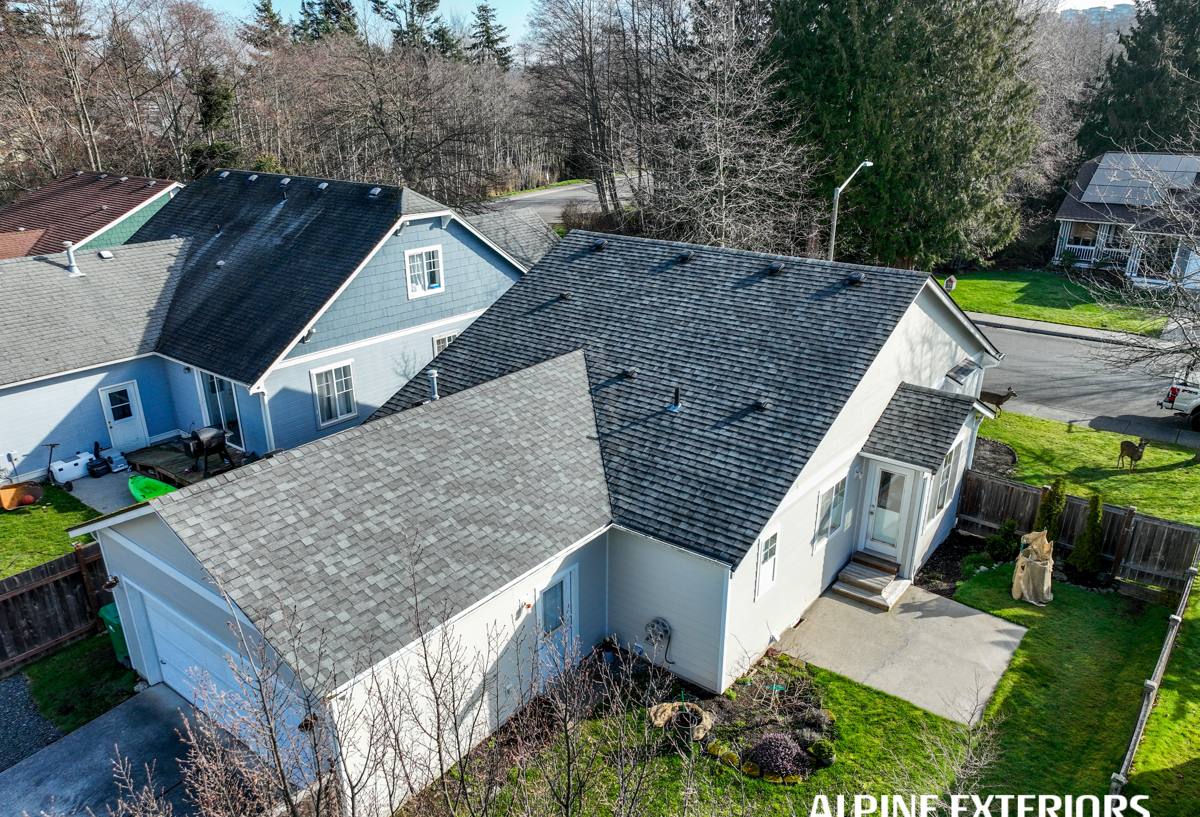
Why Moss Season Is a Bigger Deal Than It Sounds
Skagit County's moss season isn't just a fall or winter event — in a shaded, moisture-heavy lot near the water, conditions favorable to moss and algae growth can persist for much of the year. Moss holds moisture against a wall surface long after the rain has stopped, which slows drying time and creates the kind of sustained dampness that wood-based and wood-alternative siding products are most vulnerable to. It also tends to collect in horizontal laps, corner boards, and anywhere water naturally wants to sit, which is exactly where a siding installer's detail work either pays off or doesn't.
- Proper lap spacing and fastening prevent water from wicking into seams
- Correctly flashed windows and doors keep moisture from getting behind the siding in the first place
- Ventilated rainscreen gaps (where called for) let trapped moisture dry out instead of sitting against the wall
- Factory-finished, non-porous siding sheds moss and mildew far more easily than raw wood or thin composite panels
Why We Install Only James Hardie Fiber Cement
We made a deliberate decision to install James Hardie siding exclusively — not vinyl, not LP SmartSide, not Cemplank, not Allura, not primed spruce or cedar. That's not a marketing position; it's a standard we hold because of what we've seen these products do (or fail to do) in exactly the kind of coastal, wet, moss-prone conditions Skyline sees.
Fiber cement is non-combustible, which matters in a state where wildfire smoke and ember exposure have become a real concern even west of the Cascades. It doesn't absorb water the way wood-based products do, so it isn't prone to swelling, rotting, or delaminating at the seams the way engineered wood siding can be if a seal ever fails. James Hardie's ColorPlus factory finish is baked on under controlled conditions rather than field-painted, which gives it more consistent, longer-lasting color and better resistance to the fading and chalking that salt air and UV exposure cause over time.
Where Other Products Fall Short in This Climate
Vinyl siding is inexpensive and low-maintenance, but it expands and contracts significantly with temperature swings, can crack in cold snaps, and its color is molded in rather than finished on the surface — meaning it fades uniformly and can't be refreshed without replacement. LP SmartSide and similar engineered wood products perform reasonably well when installed and maintained exactly to spec, but they rely on the integrity of a resin-treated wood core; if caulking, paint, or flashing details fail anywhere and moisture gets in, the wood substrate can swell or deteriorate, and repairs are more involved than most homeowners expect. Cemplank and Allura are also fiber cement, so the base material shares Hardie's core advantages, but we've standardized on Hardie specifically for its climate-engineered HZ5 product line (built for exactly this kind of wet, marine-influenced environment), the consistency of its ColorPlus finish, and its transferable warranty structure. Primed spruce and cedar are beautiful materials with a real place in restoration and historic work, but they require an ongoing maintenance commitment — recoating, caulking, and moisture monitoring — that most homeowners don't want to sign up for on a modern home, especially in a moss-heavy microclimate.
Comparing Siding Options for a Coastal Skagit County Home
| Siding Type | Moisture Resistance | Salt Air Durability | Maintenance Burden |
|---|---|---|---|
| James Hardie Fiber Cement (HZ5) | Excellent — does not absorb water or rot | Strong; factory finish resists salt-driven fading | Low — occasional rinse, no repainting cycle |
| Vinyl | Good, but seams and J-channels can trap moisture | Moderate; can chalk and fade faster near saltwater | Low, but color can't be refreshed |
| LP SmartSide / Engineered Wood | Fair — dependent on sealed edges and coatings | Moderate; vulnerable if finish is breached | Moderate — periodic caulk and paint upkeep |
| Primed Spruce / Cedar | Poor without diligent upkeep | Weak in salt-heavy, high-moss environments | High — regular recoating and inspection |
What a Siding Project Looks Like for a Skyline Property
Every home we quote in Skyline gets an actual on-site look before we talk numbers. We're checking the current siding for hidden moisture damage, evaluating how much sun versus shade the walls get (which affects moss growth and drying time), and looking closely at window and door flashing, since that's where most real-world water intrusion problems start. We also factor in the home's proximity to the water and prevailing wind direction, because exposure varies more within a small area like Skyline than people expect — a wall facing open water takes a different beating than one tucked behind a windbreak of trees.
Roofing, Windows, and Decks in the Same Climate
Siding doesn't work in isolation. A roof with failing flashing will send water straight down behind even the best siding installation, and windows with worn seals let moisture in at the frame regardless of what's on the wall around them. Because we handle roofing, windows, and decks in addition to siding, we can flag those issues during a siding estimate instead of leaving a homeowner to discover them later as a "mystery" leak. Decks in a moss-prone, shaded lot face their own version of this problem — trapped moisture under boards and around ledger connections — and we build and repair those with the same drainage-first mindset we bring to siding.
What to Ask Before Hiring Any Siding Contractor in This Area
- Do they carry current Washington contractor licensing and liability insurance, and can they provide proof without hesitation?
- Are they installing to the manufacturer's specific climate zone requirements, not just a generic install method?
- Do they explain flashing and water management details, or do they only talk about the siding panel itself?
- Will they show you how they handle inside corners, butt joints, and areas prone to moss and standing moisture?
- Do they offer a warranty that covers workmanship, separate from the manufacturer's product warranty?
A contractor who can answer all of these clearly, without vague reassurances, is one worth trusting with a coastal exterior. A contractor who can't is a risk you don't need to take on a home exposed to salt air and a long moss season.
Why a Local Crew Matters in Skagit County
A crew that works Skagit County regularly knows the difference between how a wall performs in Skyline versus a drier inland location like Sedro-Woolley or Burlington. That local knowledge shows up in small decisions — how much of a rainscreen gap to build in, where to expect the worst moss buildup, which corners of a home take the most wind-driven rain — that a crew unfamiliar with the area might not think to account for. It also means we're a known quantity if a warranty question or a small issue comes up years down the road, rather than a company that did one job and moved on.
Get a Free, No-Pressure Estimate
If your Skyline home's siding is showing moss buildup, chalky or faded finish, soft spots, or you're just planning ahead for a replacement, we're happy to take a look and give you an honest read on what's going on and what it would take to fix it right. Use the form below to request a free estimate — no pressure, no obligation.