 Skagit County
 Siding Built for Clear Lake's Climate
Clear Lake sits inland from the Skagit River valley, tucked against forested foothills that lead up toward the Cascades. It's a quieter part of Skagit County, but the weather doesn't treat it any easier than the rest of the region. Homes here deal with long stretches of overcast, damp weather, heavy fall and winter rain, and the kind of persistent humidity that comes from being surrounded by trees, low-lying wetlands, and the lake itself. Even away from the saltwater shorelines of Puget Sound, the broader maritime air pattern that defines Western Washington still reaches communities like Clear Lake, keeping moisture in the air for much of the year.
That combination of shade, standing moisture, and mild temperatures is exactly what moss, algae, and mildew need to take hold on an exterior. It's also what wears down siding products that weren't built with this climate in mind. We install James Hardie fiber cement siding exclusively, because it's the product we trust to hold up to what Skagit County actually throws at a house year after year, not just what a spec sheet promises in a showroom.
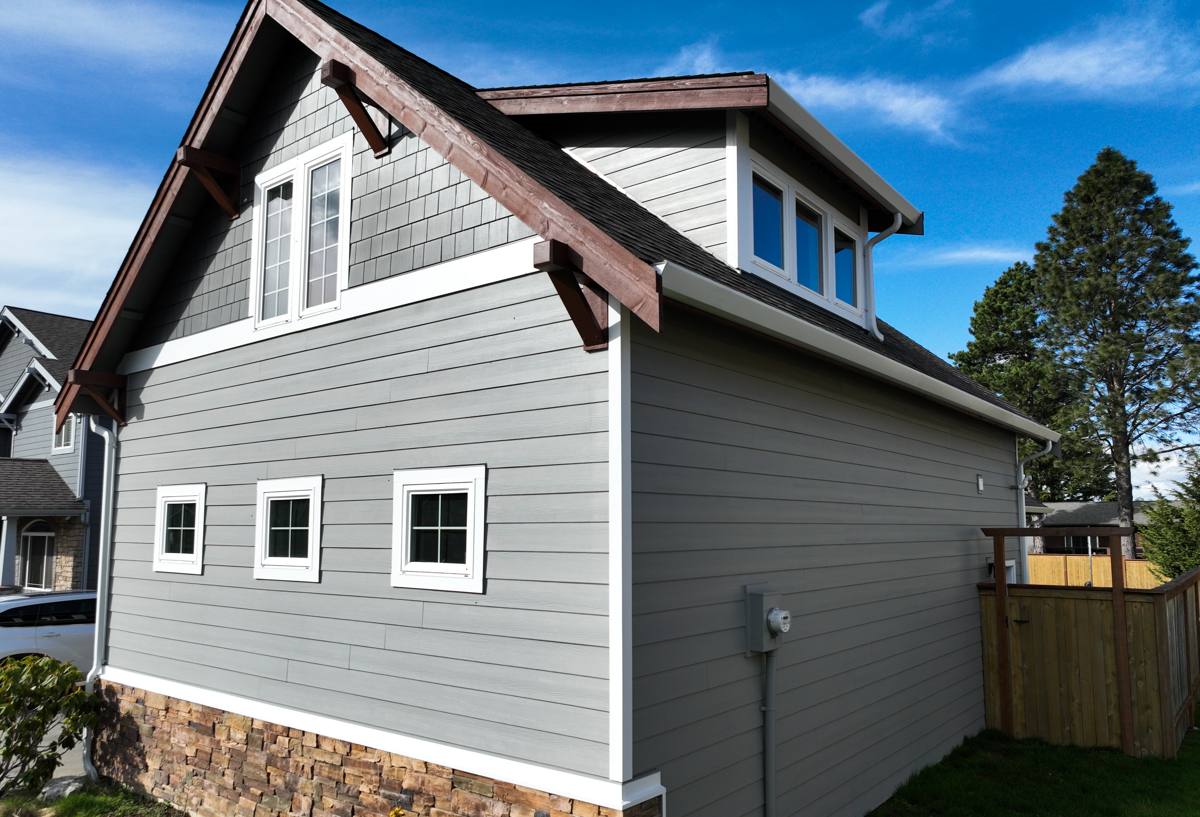
What Clear Lake Homes Are Up Against
Moisture That Doesn't Let Up
Clear Lake gets a real wet season, and it's a long one. Rain soaks into siding seams, trim joints, and anywhere caulking has started to fail. Homes tucked closer to the tree line or the lake itself often see less direct sun to dry things out between storms, which extends how long siding surfaces stay damp. Over years, that moisture exposure is what causes swelling, delamination, and rot in siding materials that aren't engineered to resist it.
Moss and Algae Season
Shaded, humid conditions mean moss and green algae staining are a normal part of exterior maintenance out here, not an occasional nuisance. Moss holds moisture directly against a wall surface, which accelerates whatever damage is already happening underneath. A siding product that resists moisture absorption at the material level handles this far better than one that just gets a coat of paint or primer for protection.
Temperature Swings and UV
Skagit County doesn't get brutal heat, but it does get real seasonal swings, freeze-thaw cycles in the winter, and enough summer sun to fade poorly-finished siding over time. Materials expand and contract with those changes. Siding that isn't dimensionally stable can develop gaps, warping, or finish failure at the joints, which is often where the moisture problems start.
Why We Only Install James Hardie
We made a deliberate decision as a company to install one siding system: James Hardie fiber cement. We don't install vinyl, LP SmartSide, Cemplank, Allura, primed spruce, or cedar. That's not a marketing gimmick — it's a standard we hold because we've seen what holds up in this climate and what doesn't.
- Fiber cement doesn't absorb and swell with moisture the way engineered wood products can
- It's non-combustible, which matters more each year given regional wildfire smoke seasons and insurance considerations
- Hardie's ColorPlus factory finish is baked on and warranted against peeling and fading, unlike field-applied paint
- Hardie makes climate-specific product lines (HZ5 for the Pacific Northwest) engineered for exactly this kind of wet, humid environment
- It carries a strong, transferable manufacturer warranty backed by a company with decades in the fiber cement business
We'd rather install fewer products correctly than offer every option and let homeowners gamble on the one that isn't suited to Clear Lake's weather.
How the Installation Process Works
Assessment and Moisture Check
Every project starts with a walk of the home's exterior, checking for existing moisture damage, rot at trim and window openings, and how the current siding has held up. In a community like Clear Lake, we pay particular attention to north-facing and tree-shaded walls, since those areas dry out slower and typically show the most wear.
Weather Barrier and Water Management
Correct installation is about more than the siding panel itself. We install a proper weather-resistive barrier, flash windows and doors correctly, and make sure water has a clear path away from the wall assembly rather than getting trapped behind it. This is the part of the job that doesn't show up in photos but determines whether the siding lasts fifteen years or fifty.
Fastening and Fit to Hardie Spec
James Hardie publishes specific installation requirements — fastener spacing, clearances above rooflines and decks, gapping at butt joints — and warranty coverage depends on following them. We install to that spec on every job, not a shortcut version of it.
Trim, Caulking, and Finish Details
The seams, corners, and trim details are where most siding failures start. We use compatible trim systems and sealants designed to move with the material, so joints stay tight through the freeze-thaw cycles and wet seasons Clear Lake sees every year.
Comparing Siding Options for This Climate
| Material | Moisture Resistance | Finish Durability | Typical Lifespan Here |
|---|---|---|---|
| James Hardie Fiber Cement | High — engineered for wet climates | Factory-baked ColorPlus finish | 30+ years with correct install |
| Vinyl Siding | Moderate — can warp, doesn't absorb water directly | Field color only, fades over time | 15-25 years |
| LP SmartSide / Engineered Wood | Lower — vulnerable at cut edges and seams | Factory finish varies by line | Highly install-dependent |
| Cedar | Low without ongoing maintenance | Requires repeated staining/sealing | Shorter without diligent upkeep |
These are general patterns, not guarantees — every material's real-world lifespan depends heavily on installation quality and ongoing maintenance. But the pattern holds consistently enough in wet, shaded climates like Clear Lake's that it shaped our decision to standardize on one product.
What Drives Cost on a Clear Lake Siding Project
| Factor | Why It Matters |
|---|---|
| Home size and wall complexity | More corners, dormers, and trim details mean more labor |
| Existing damage | Rot repair at sheathing or framing adds scope before siding goes on |
| Siding profile and color | Hardie offers multiple plank widths, textures, and ColorPlus colors at different price points |
| Access and site conditions | Tree cover, slopes, and tight lot lines around Clear Lake properties can affect staging and labor time |
| Tear-off vs. overlay | Full removal of old siding costs more upfront but avoids trapping moisture behind new material |
We always recommend full tear-off rather than siding over existing material, especially in a climate where hidden moisture is the real long-term risk. It costs more at the outset but avoids finding out five years later that a problem was sealed in rather than solved.
Beyond Siding: Roofing, Windows, and Decks
Siding is only one part of how a home in this climate sheds water and holds up over time. We also handle roofing, window replacement, and deck construction, because these systems all interact. A roof with failing flashing can send water straight down behind good siding. Old windows with worn seals create the same problem at every opening. And a deck built without proper ledger flashing is one of the most common sources of hidden rot on Pacific Northwest homes. Looking at the whole exterior together, rather than patching one component at a time, is usually the more cost-effective approach in the long run.
Why a Local Crew Matters in Skagit County
Working in Clear Lake and the surrounding Skagit County communities day in and day out means we're familiar with how homes here are built, the typical age and construction of the housing stock, and which parts of a property tend to take the most weather damage. That local familiarity shows up in small but meaningful ways — knowing to check shaded north walls first, understanding how close properties sit to tree cover and moisture sources, and being available for warranty work or questions without a long drive across the county.
What to Look for When Hiring
- Manufacturer certification or documented training on the specific product being installed
- A written scope of work covering tear-off, weather barrier, flashing, and fastening details
- Clear communication about warranty terms — both material and workmanship
- Local references or a track record of work in Skagit County specifically
- A willingness to explain why they recommend one product over another, not just sell what's in stock
Maintenance After Installation
James Hardie siding is low-maintenance compared to wood or vinyl, but "low-maintenance" doesn't mean "no maintenance." We recommend an annual visual check for caulking gaps, a gentle rinse to keep moss and algae from building up on shaded walls, and prompt attention to any trim or flashing issues before the wet season sets in. Catching small issues early is far cheaper than repairing water damage that's had a full winter to spread.
If you're planning a siding project in Clear Lake, or want a straight answer on whether your current siding is holding up the way it should, we're happy to come take a look. Estimates are free, there's no pressure, and we'll tell you honestly what we see.