 Skagit County
 Siding in Alger: A Small Community With a Demanding Climate
Alger sits along the I-5 corridor in Skagit County, tucked between forested hillsides and the pull of Samish Bay to the west. It's a quieter stretch of the county — more trees, more shade, more distance from a hardware store — and that setting shapes what happens to a house's exterior over the years. Homes here deal with a mix of coastal moisture carried in off the bay and the deep, standing dampness that comes from being surrounded by timber. That combination is harder on siding than either factor alone.
We're a Skagit County-based siding, roofing, window, and deck contractor, and Alger is inside our regular service area. We're not dispatching a crew from Seattle or Everett who's never worked in this kind of terrain — we know what a shaded, moisture-heavy Skagit County property does to exterior materials, and we build our recommendations around that reality rather than a generic weather average.
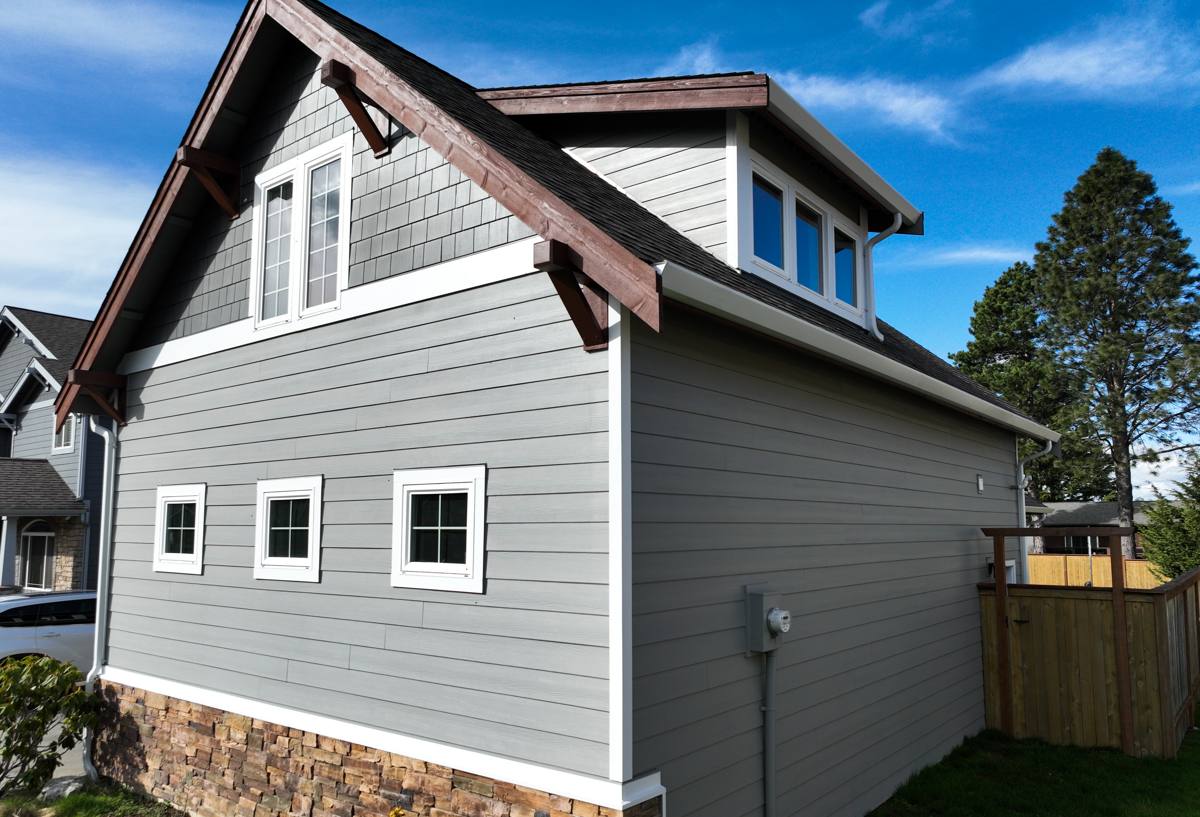
What Alger's Climate Does to a House
Salt Air and Driving Rain
Proximity to Samish Bay and the Salish Sea means Alger properties get some exposure to salt-laden air, especially on west- and northwest-facing walls. Salt air accelerates corrosion of fasteners and metal trim, and it interacts badly with materials that weren't engineered to handle it. Add in the driving, wind-pushed rain that comes through this part of Western Washington in fall and winter, and siding here isn't just getting rained on — it's getting rain forced sideways into seams, laps, and trim joints.
Moss, Shade, and Standing Moisture
Alger's tree cover is a defining feature of the area, and it comes with a trade-off: shaded walls dry out slower after every rain event. That extended dampness is exactly what moss, algae, and mildew need to take hold. On a wood-based or wood-composite product, sustained moisture against the surface is the beginning of rot. On vinyl, trapped moisture behind the panel promotes mold growth you can't see until it's established. A long, low-sun moss season here isn't a cosmetic nuisance — it's a sign of how much water exposure the siding is actually absorbing.
Why We Install Only James Hardie Fiber Cement
We made a decision as a company to install one siding system: James Hardie fiber cement. We don't install LP SmartSide, vinyl, Cemplank, Allura, primed spruce, or raw cedar. That's not a marketing position — it's a standard we hold because of what we've seen happen to other products in exactly this kind of climate, and we'd rather explain our reasoning than pretend every siding material performs the same.
The Trade-Offs of the Alternatives
- Vinyl siding is inexpensive and low-maintenance in a dry climate, but it expands and contracts significantly with temperature swings, can warp under sustained moisture and heat, and isn't fire-resistant — a growing concern as regional wildfire smoke and dry-season fire risk increase even in Western Washington.
- LP SmartSide and other wood-strand composites perform reasonably when installation is flawless, but the wood-fiber core is vulnerable at cut edges and fastener penetrations. In a shaded, high-moisture setting like Alger, any breach in the factory coating gives water an entry point, and swelling or delamination tends to follow.
- Primed spruce and cedar are traditional and attractive, but they're organic material. They need repainting on a real cycle, they're a food source for insects and fungus, and in a climate with a long wet season and heavy shade, the maintenance burden is constant rather than occasional.
- Cemplank and Allura are also fiber cement products and share some of Hardie's core advantages, but we've standardized on one manufacturer so we can guarantee installation consistency, warranty terms, and color-matched trim across every job — rather than mixing systems project to project.
What James Hardie Gets Right
Fiber cement is non-combustible, doesn't support rot or insect damage, and holds its shape through wet-dry cycles far better than wood or vinyl. James Hardie's ColorPlus factory finish is baked on under controlled conditions, which gives it more consistent, longer-lasting color than field-applied paint — a real advantage in a location where you don't want to be repainting siding every few years under a tree canopy. Hardie's HZ5 product line in particular is engineered for climates with freeze-thaw cycles and sustained moisture exposure, which matches Skagit County's weather pattern well. It's backed by a strong, transferable manufacturer warranty, which matters if you ever sell the home.
How We Approach a Siding Job in Alger
Every property here is a little different depending on tree cover, wall orientation, and how close it sits to open water versus deeper into the trees. Before we quote anything, we look at:
- Which walls take the most direct wind-driven rain and salt exposure
- Where moss and algae staining is already visible, and what that tells us about drainage and drying time
- The condition of the water-resistive barrier and flashing underneath the existing siding, not just the surface material
- Whether trim, fascia, and any deck or window elements tying into the siding need to be addressed at the same time
Correct installation matters as much as the product itself. Fiber cement performs the way it's engineered to only when it's cut, gapped, fastened, and flashed to manufacturer specification. Rushed or undersized crews are where most fiber cement callbacks originate — not from the material failing, but from installation shortcuts. We install to spec, including proper clearances at grade and around penetrations, because that's what actually keeps water out over a 30-plus year service life.
Roofing, Windows, and Decks — The Rest of the Exterior
Siding doesn't work in isolation. A roof with failing flashing will send water behind even well-installed siding, an aging window will leak at the frame regardless of what's around it, and a deck ledger tied into the wall is a common point of hidden rot if it isn't detailed correctly. We handle roofing, window replacement, and deck construction alongside siding so that when we're on an Alger property, we're looking at the whole envelope — not just the piece we were called out for. That matters more in a shaded, damp setting where one weak point can undermine the rest of the exterior over time.
What Siding Replacement Typically Costs
Every home is different, but the factors below are what generally move the price on a job in this area. We give firm numbers only after a walk-through — this is meant to help you understand what you're paying for.
| Cost Factor | Why It Matters in Alger |
|---|---|
| Home size and wall complexity | More corners, gables, and trim details mean more cutting, fitting, and labor time |
| Existing siding removal and disposal | Tear-off of old wood, vinyl, or composite siding adds labor and dump costs |
| Water damage or rot found underneath | Shaded, moisture-heavy properties more often reveal sheathing or framing repairs once old siding comes off |
| Hardie product line and profile | Lap width, panel style, and trim selections affect material cost |
| Site access | Tree cover, driveway length, and slope can affect staging and scaffolding needs |
Why a Local Crew Matters in a Place Like Alger
Alger isn't a dense subdivision — it's a rural, wooded pocket of Skagit County, and jobs here often mean navigating longer driveways, tree-shaded work areas, and homes that were built or added onto over different decades. A crew that works across Skagit County regularly knows how to plan around that, knows which walls in this kind of environment take the worst of the moss and moisture, and isn't guessing based on a generic weather report. We're not a national franchise dispatching whoever's available — we're a local contractor that keeps showing up in this county, which means our reputation here has to hold up over the long run, not just for one job.
A Simple Maintenance Checklist for Alger Homeowners
- Rinse moss and algae off siding and trim at least once a year, more often on shaded, north- or west-facing walls
- Keep gutters clear so water isn't overflowing down the siding face
- Trim back branches and vegetation that keep walls in constant shade and slow drying
- Check caulking around windows, doors, and trim joints annually for cracking or gaps
- Have flashing and butt joints inspected periodically, especially after major windstorms
If you're weighing a siding project in Alger — or want a straight answer on whether your current siding, roof, or windows are holding up the way they should — we're happy to come take a look. The estimate is free, there's no pressure attached to it, and you'll get an honest read on what your home actually needs.