 Skagit County
 Storm Damage Roof Repair Built for Avon's Weather, Not a Generic Checklist
Avon sits low in the Skagit Valley, close to the river and not far from the salt water of Padilla Bay, which puts roofs here under a specific kind of pressure most inland Washington homes never see. Wind-driven rain off the water, long stretches of shade and dampness under valley tree lines, and a moss season that can run most of the year all add up faster than a single dramatic storm ever could. When we get a call about storm damage in Avon, we're rarely looking at one clean, isolated problem. We're usually looking at a roof that took a hit on top of months of slow, quiet wear — and the repair has to account for both.
This page covers what storm damage repair actually looks like for homes in and around Avon: what the climate does to roofing materials here, how to tell real storm damage from normal aging, what a correct repair involves, and how our process works from the first call to the final inspection.
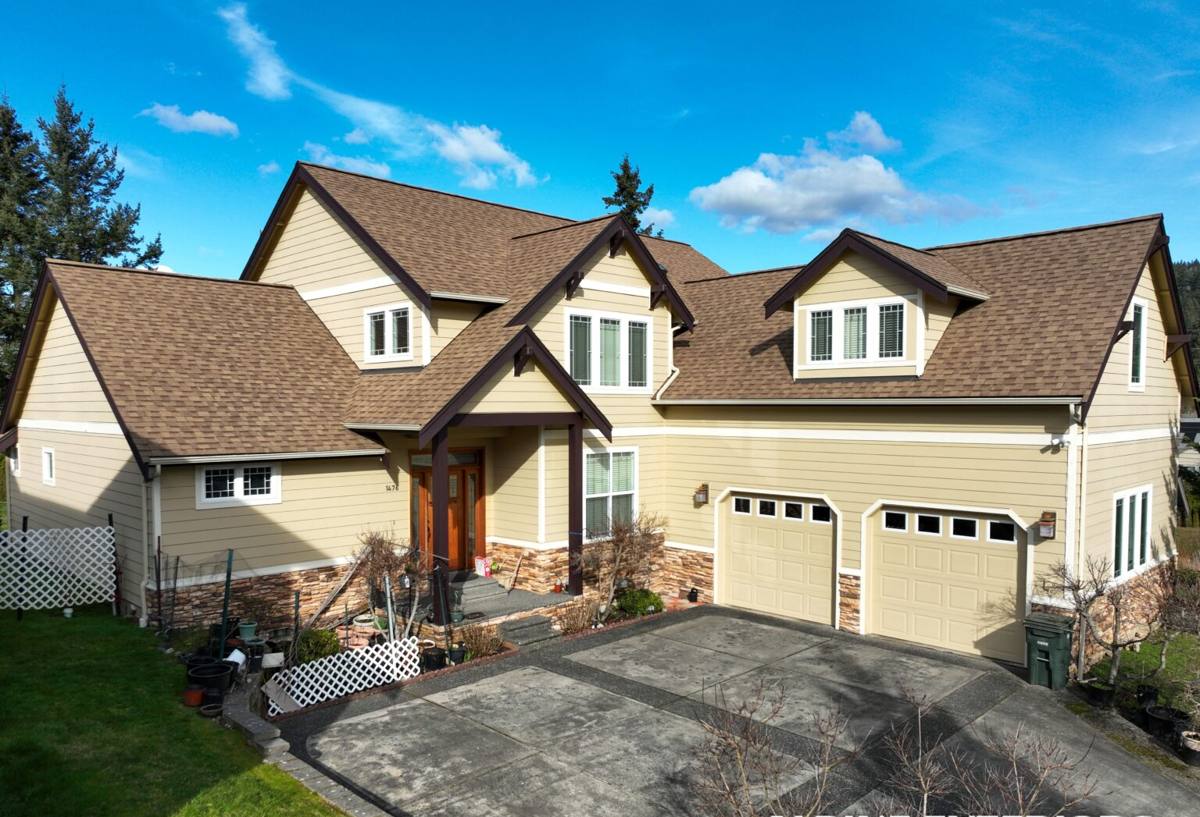
What Skagit Valley Storms Actually Do to a Roof
Most storm damage in this part of the county isn't a single dramatic event like a tree limb through the decking, though that happens too. More often it's a combination of forces working on the roof over the course of one wind-and-rain system:
- Wind uplift on shingle edges and ridge caps — sustained gusts off the valley and bay can loosen tabs and lift ridge caps enough to break the seal, even without visibly tearing anything off.
- Driving rain forced sideways under flashing, at wall-roof intersections, and around chimneys or vent boots that were sealed for calm weather, not horizontal rain.
- Debris impact from branches, cones, and blown grit that bruises or punctures shingles, especially on older, more brittle roofing.
- Standing water and ice in valleys and low-slope sections during cold snaps, which finds any weak seam and works it wider.
The tricky part is that a lot of this damage doesn't show up as an obvious leak right away. Water can travel along the underlayment or decking for weeks before it finds a path into the attic or a ceiling, which is why storm damage often gets discovered well after the storm that caused it.
Signs Worth Checking After a Storm
- Shingle tabs that look lifted, curled, or missing granules in patches (not just general aging wear)
- Ridge cap pieces that are cracked, shifted, or gone
- Flashing around chimneys, skylights, or wall intersections that's bent, pulled loose, or visibly gapped
- New or worsening moss growth concentrated right at a seam, valley, or flashing edge — often a sign water is sitting there
- Granules collecting in gutters or at downspout outlets after a wind event
- Any new stain, sag, or damp smell in the attic or on an interior ceiling
- Fasteners (nails or screws) backing out or showing rust streaks on the shingle surface
If you see two or more of these after a storm, it's worth a proper look before the next system rolls through — not because every item means a major problem, but because in this climate small entry points don't stay small.
Salt Air, Driving Rain, and Moss: The Slow Damage Behind the Fast Damage
Storm damage repairs in Avon almost always intersect with three ongoing climate factors, and a repair that ignores them tends to fail again within a season or two.
Salt Air
Proximity to Padilla Bay means a steady low-level exposure to salt-laden air, which accelerates corrosion on exposed metal — nail heads, flashing edges, gutter fasteners, and any lower-grade hardware. A storm repair that uses standard interior-grade fasteners or unprotected flashing metal may look fine going in and start rusting within a year or two. We specify corrosion-resistant fasteners and flashing for this exact reason, not as an upsell but because it's what actually holds up here.
Driving Rain
Rain that comes in mostly sideways during valley wind events tests roof details that rarely get stressed in calmer weather — step flashing, kickout flashing at roof-to-wall transitions, and the seal around penetrations. A repair that only patches the visible hole without correcting the flashing detail underneath is a repeat call waiting to happen.
Moss
Skagit Valley's combination of moisture, mild temperatures, and shaded roof sections (common on lots with mature trees) gives moss a long growing window. Moss holds moisture against the roofing material, works its rhizoids under shingle edges, and lifts tabs from underneath — which is a slower but very real cousin of storm wind-lift. Any storm repair on an older Avon roof usually needs a moss assessment as part of the job, because moss-compromised shingles fail differently, and sometimes faster, than clean ones under the same wind load.
What a Correct Storm Damage Repair Actually Involves
A quick patch and a proper repair can look similar from the ground. The difference is in what happens under the surface layer.
- Full-slope inspection, not just the reported spot. Wind and rain rarely damage just one area — we check the whole roof plane, not only where the leak showed up inside.
- Decking check. Any area with sustained water intrusion gets checked for soft or delaminated decking before new material goes down. Covering rot with new shingles just hides the problem.
- Underlayment repair or replacement in the affected section, including ice-and-water shield in valleys and eave lines where this climate demands it.
- Matched flashing work — step flashing, counter-flashing, and kickout flashing rebuilt to spec, not just re-caulked over old, corroded metal.
- Shingle or roofing material replacement matched as closely as possible to the existing roof, with proper nailing pattern and exposure — under-driven or over-driven nails are a common source of repeat wind damage.
- Moss and debris cleared from the surrounding roof area so the new work isn't undermined by growth that was already established next to it.
- Final water test or close inspection of the repaired area before we call the job done.
Our Process, Start to Finish
1. Emergency Response
If there's active water intrusion, the first priority is stopping it — a proper tarp-down or emergency cover to protect the interior of the home while we schedule the full repair. This isn't cosmetic; it buys time without letting the damage spread.
2. Inspection and Written Scope
We walk the roof (weather permitting) and document what we find — photos, notes on affected areas, and a clear written scope of what the repair involves and why. No vague line items.
3. Repair
We do the work in the order above: decking, underlayment, flashing, roofing material, cleanup. If we find something beyond the original scope once we're into the repair — soft decking that wasn't visible from the outside, for example — we stop and talk to you before proceeding, not after.
4. Final Check and Cleanup
Job site cleared of debris and old material, magnetic sweep for stray fasteners in the yard, and a final look at the repair before we consider it complete.
Repair vs. Replacement: How to Think About It
Not every storm-damaged roof needs a full replacement, and not every roof is worth patching. The honest answer usually comes down to the roof's age, condition beyond the storm damage, and how much of the surface is affected.
| Factor | Repair Usually Makes Sense | Replacement Worth Considering |
|---|---|---|
| Roof age | Under roughly 12-15 years, otherwise sound | Approaching or past typical material lifespan |
| Extent of damage | Isolated to one section or slope | Spread across multiple slopes or widespread granule loss |
| Decking condition | Solid, no rot found during inspection | Soft or delaminated decking in multiple areas |
| Moss history | Light, manageable growth | Heavy, long-term moss with visible shingle lifting |
| Flashing condition | Sound, just needs resealing or minor repair | Corroded or undersized throughout |
| Insurance claim scope | Adjuster confirms localized damage | Adjuster or inspection finds broader storm impact |
When a roof is close to the line, we'll tell you honestly which side it falls on and why — including when a repair is the right call even though a replacement would be more profitable for us. That's the standard we hold ourselves to.
Working With Insurance on a Storm Claim
Most storm damage repairs in this area involve an insurance claim, and the process goes smoother when the documentation is solid from the start. We provide clear photos, a written description of the damage and its likely cause, and a scope of repair that an adjuster can review without back-and-forth. We're not a public adjuster and won't claim to be, but we've been through this process enough times locally to know what documentation actually holds up and what tends to get questioned.
Why a Crew That Already Works Avon Matters
Storm damage repair isn't just a technical skill — it's a familiarity skill. A crew that already works in Avon and the surrounding Skagit County area knows the roofing systems common to this part of the valley, from older farmhouse-style roofs to newer builds, and has already seen how salt air, moss, and driving rain interact with each. That means faster, more accurate diagnosis, fewer surprises once the tarp comes off, and repair choices — fastener grade, flashing metal, underlayment type — that are picked for this specific climate rather than a generic spec sheet. It also means we're not learning the local permitting and inspection process on your job; we already know it.
Get a Free, No-Pressure Estimate
If your roof took a hit in a recent storm, or you're seeing signs of slow water damage that's been building for a while, we're glad to come take an honest look. There's no obligation and no pressure — just a clear assessment of what's actually going on and what it would take to fix it right. The estimate form below is the fastest way to get on our schedule.