 Skagit County
 Roofing in Big Lake Isn't Like Roofing Everywhere Else
Big Lake sits in a corner of Skagit County where the weather doesn't do anything in half measures. You get long stretches of steady, driving rain off and on for most of the year, a lake-and-timber setting that keeps humidity high and shaded roof planes damp, and enough salt-laden air moving in from Puget Sound to accelerate corrosion on metal roofing components faster than homeowners expect. Add in a moss season that can run from fall through spring, and an asphalt shingle roof here is working harder than the same roof would in a drier inland climate.
None of that means asphalt shingles are the wrong choice for Big Lake. They're still the most practical, cost-effective roofing material for most homes in this area, and a correctly installed system holds up well against everything the county throws at it. But "correctly installed" is doing a lot of work in that sentence. A shingle roof that would pass fine in a mild, dry region can fail early here if the ventilation, flashing, and moisture protection weren't built specifically for this climate.
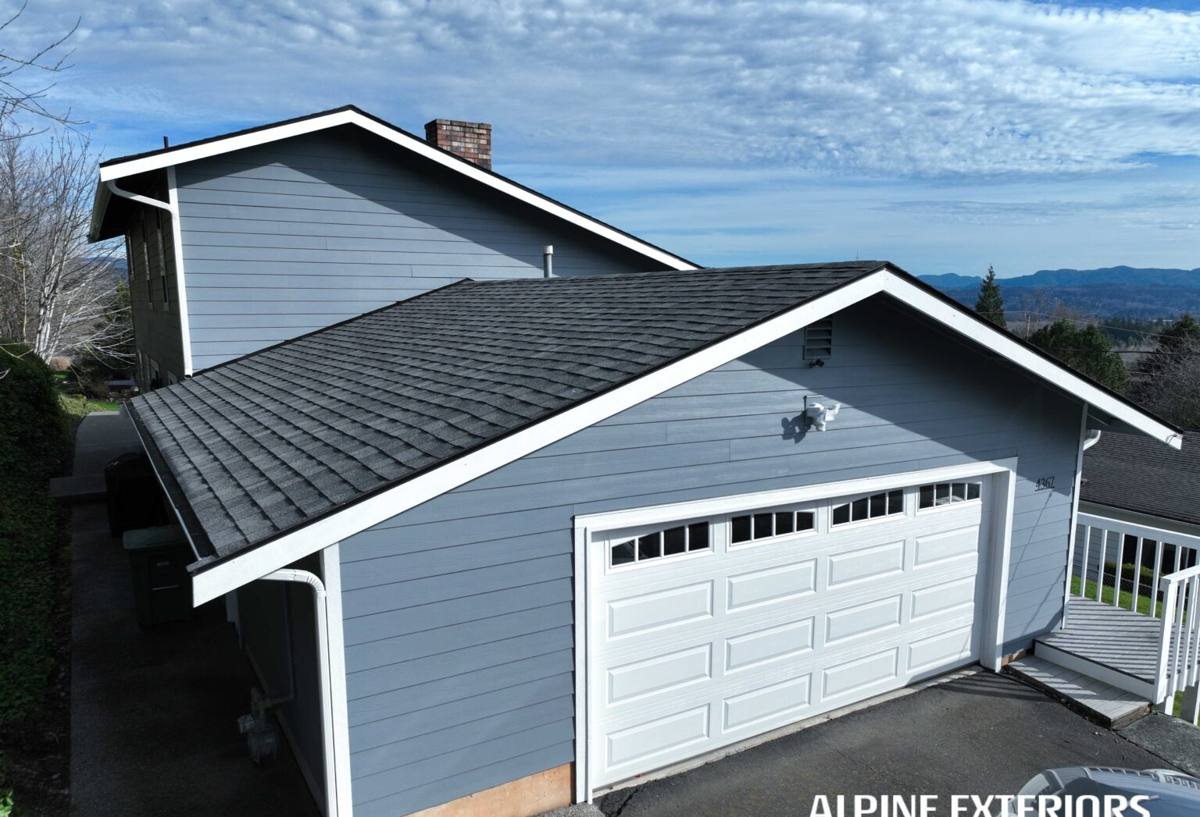
What a Roof Actually Needs to Survive This Climate
Ventilation That Actually Moves Air
Trapped attic moisture is one of the fastest ways to shorten a shingle roof's life, and it's a bigger risk here because the air outside is already damp for so much of the year. Without balanced intake and exhaust ventilation, moisture condenses on the underside of the roof deck, feeds rot in the sheathing, and works its way back up into the shingles from below. A roof can look fine from the ground and still be quietly failing from the inside because the attic was never set up to breathe properly.
Underlayment and Water Protection
With the volume of driving rain Big Lake sees, underlayment isn't a formality — it's the roof's second line of defense when wind-driven water gets under a shingle tab, which happens more often than people assume during a real coastal storm. Synthetic underlayment and self-adhered ice-and-water membrane in the vulnerable spots (eaves, valleys, low-slope transitions) give the roof a real backup layer instead of just a stapled paper barrier.
Flashing Details
Flashing around chimneys, skylights, dormers, and roof-to-wall transitions is where most leaks actually start, not out in the open field of shingles. In a salt-air environment, the metal used for flashing and the fasteners holding it down matter more than they would inland — the wrong material corrodes and opens up seams years before the shingles themselves are due for replacement.
Shingle Options for a Wet, Coastal-Influenced Climate
Not every asphalt shingle product is built the same way, and the differences matter more in a climate like Skagit County's than they would somewhere dry. Here's how the common options generally compare for a home in the Big Lake area:
| Shingle Type | Moss/Algae Resistance | Wind Performance | Typical Fit for Big Lake |
|---|---|---|---|
| Standard 3-tab | Low unless algae-resistant (AR) rated | Lower wind rating | Budget option; needs more frequent moss treatment |
| Architectural / laminated | Good with AR granules | Higher wind rating, better mat thickness | Most common choice for this climate |
| Impact-rated (Class 4) | Good with AR granules | High, plus impact resistance | Worth it on exposed roof planes or where hail/debris is a concern |
Algae-resistant (AR) granules are worth specifying regardless of which shingle line you choose. They don't stop moss growth entirely, but they slow the black streaking and algae growth that's almost unavoidable on a shaded, damp roof in this part of the state.
Why We're Selective About Certain Products
Some shingle lines look identical to the untrained eye but differ in mat thickness, sealant strip design, and how forgiving they are of minor installation variance. We stick to products with a track record of holding their seal in high-wind, high-moisture conditions and a warranty structure that's actually straightforward to use if something goes wrong. That's a professional standard we hold ourselves to, not a knock on every other product on the market — it just means we'd rather install fewer options well than install everything and hope.
Signs a Big Lake Roof Needs a Look
Because moss and moisture-related damage build up gradually, a lot of homeowners don't realize how much wear their roof has until it's well along. Worth checking for:
- Moss growth on north-facing or shaded slopes, especially near the ridge or in valleys
- Granules collecting in gutters or at downspout outlets
- Shingle tabs that look cupped, curled, or lifted at the edges
- Dark streaking that doesn't wash off with normal rain
- Soft spots or sagging when walked (a sign of deck damage underneath)
- Daylight or water stains visible from inside the attic
- Flashing that looks rusted, loose, or separated from the surface it meets
Any one of these on its own isn't necessarily an emergency, but a roof showing several of them at once is usually past the point where a small repair fixes the underlying problem.
How We Approach a Big Lake Roofing Project
We start with an actual inspection, not a drive-by guess — that means getting on the roof (or using a camera where access is limited) to check the deck condition, existing ventilation, flashing points, and how the current roof has aged under this specific climate. From there:
- We identify whether the job is a targeted repair, a partial re-roof, or a full tear-off and replacement, and explain the honest trade-offs of each.
- Any damaged or soft decking gets replaced before new material goes down — shingles installed over a compromised deck fail early no matter how good the shingle is.
- We install underlayment and ice-and-water protection sized to the actual vulnerable areas of the roof, not just the minimum code requirement.
- Ventilation gets corrected or upgraded where the existing setup isn't moving enough air for the attic space.
- Flashing is replaced or reworked at every penetration and transition, using materials suited to this area's moisture and salt exposure.
- Shingles go down to manufacturer spec — proper nailing pattern, exposure, and sealant activation — because a warranty is only as good as the installation behind it.
Moss and Algae: Managing It Instead of Fighting It Forever
No roof in this part of Skagit County is going to be permanently moss-free — the combination of shade, moisture, and mild temperatures is too favorable to moss for that to be realistic. The goal is managing it so it never gets the chance to work its way under shingle tabs and hold moisture against the deck. That means periodic gentle cleaning (not pressure washing, which strips granules and shortens shingle life), keeping gutters and valleys clear so water doesn't pool and feed growth, and trimming back overhanging branches where practical so more of the roof sees daylight. A roof with AR shingles and reasonable upkeep will stay in much better shape over its lifespan than one left alone until moss is visibly thick.
What Drives the Cost of a Shingle Roof in This Area
| Factor | Why It Matters Here |
|---|---|
| Roof pitch and access | Steeper or harder-to-access roofs take longer and need more safety setup |
| Deck condition | Rot from years of moisture exposure means replacing sheathing, not just shingles |
| Shingle tier chosen | 3-tab, architectural, and impact-rated products carry different material costs |
| Ventilation upgrades | Adding proper intake/exhaust venting is often needed on older Big Lake homes |
| Flashing scope | Number of chimneys, skylights, dormers, and wall transitions to flash |
| Tear-off vs. overlay | A full tear-off costs more upfront but is usually the right call once moisture has reached the deck |
We won't quote a number without seeing the roof — anyone who does is either guessing or leaving something out. But those are the real levers that move the price up or down.
Why It Matters That We Already Work in This Area
A crew that's roofed in Big Lake and elsewhere around Skagit County already knows how the lake's microclimate, the shade patterns, and the salt-influenced air behave differently from a job twenty miles inland. That translates into decisions during the actual installation — where extra underlayment makes sense, which flashing metal holds up better under local conditions, how much ventilation an attic really needs given the surrounding tree cover. It's the difference between a roof that's technically up to code and one that's actually built for where it sits.
If you're dealing with an aging shingle roof, visible moss, or just want an honest read on where your roof stands, we're happy to take a look. Reach out for a free, no-pressure estimate using the form below.