 Skagit County
 Why Burlington Homes Need Siding Built for This Climate
Burlington sits low in the Skagit Valley, close enough to Skagit Bay and Padilla Bay that salt-laden air reaches homes even a few miles inland. Add the long, wet Pacific Northwest winters and the moss season that seems to stretch from October into May, and you have a climate that is genuinely hard on exterior siding. Wood-based products absorb moisture and swell. Vinyl can warp in temperature swings and offers nowhere for algae and moss to be scrubbed off without damage. Cheaper fiber cement alternatives can perform reasonably well for a while, but they are not all engineered the same way for this specific mix of driving rain, humidity, and salt exposure.
We install James Hardie fiber cement siding exclusively, and on Burlington homes specifically we spec the HZ5 product line, which is engineered for the freeze-thaw and moisture cycling common in the Pacific Northwest. That is not a marketing detail — it affects how the board is manufactured and how it holds up over decades, not just years.
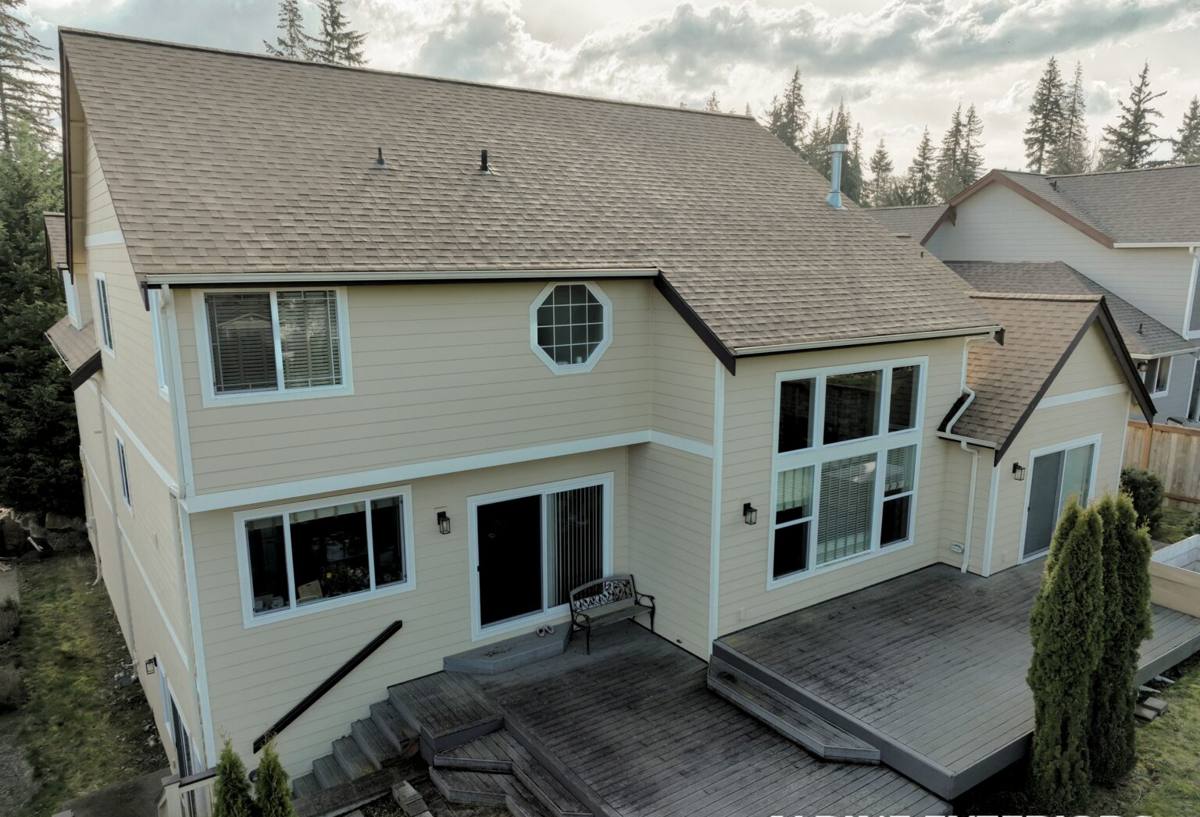
What "Correct" Fiber Cement Installation Actually Involves
Fiber cement siding is only as good as the installation behind it. Most of the siding failures we get called out to inspect in Skagit County are not material failures — they are installation shortcuts that let moisture behind the board. A correct job includes:
- A drainage plane (weather-resistive barrier) installed and lapped correctly, not just stapled up as an afterthought
- A rainscreen gap or furring strategy that lets any moisture that does get behind the siding actually dry out and drain, instead of sitting against the sheathing
- Proper flashing at every window, door, and roof-to-wall intersection — the majority of rot problems start at these transitions, not on open wall sections
- Correct fastener type, spacing, and penetration depth per the Hardie installation manual — under- or over-driven nails void warranty coverage and cause board cracking
- Factory-cut and factory-primed edges kept intact wherever possible, with field cuts properly sealed
- Minimum clearance from grade, decks, and roof lines so the bottom edge of the siding never sits in standing water or snow load
Skipping any one of these steps can look fine on installation day and still cause problems five or ten years later. That is the trap with siding work — bad installation is invisible until it isn't.
Why the Rainscreen Gap Matters Here Specifically
In a drier climate, a rainscreen gap is a nice-to-have. In Burlington, with our extended wet season, it is closer to essential. The gap gives incidental moisture — from wind-driven rain, condensation, or minor flashing imperfections that happen even in good installations — a path to drain and dry instead of wicking into the wall assembly. Homes without this detail tend to show moisture staining, mold, or early paint failure at a much higher rate in our experience working this county.
Moss, Algae, and the Long Wet Season
Skagit County's moss season is long because the conditions that grow moss — shade, moisture, and mild temperatures — persist for most of the year here. Fiber cement itself does not feed moss or algae the way wood does, but any siding, including fiber cement, can host surface growth if it stays damp and doesn't get sun or airflow. Two things matter most for keeping a Burlington home's siding clean over time:
- Ventilation and clearance around foundation plantings and downspouts, so water and shade don't sit against the wall
- A factory-applied finish that resists mildew growth better than field-applied paint, which is one of the real advantages of Hardie's ColorPlus finish
ColorPlus is baked on and cured in a controlled factory environment, which gives it more consistent adhesion and mildew resistance than paint applied on-site after installation. It won't make moss impossible, but it holds up to occasional soft washing far better than a field-primed-and-painted board, and it means you're not repainting the whole house every five to seven years just to keep it looking clean.
Salt Air and Coastal Exposure
Burlington isn't a beachfront town, but its proximity to Skagit Bay and Padilla Bay means homes on the western and southwestern sides of town do see some salt-laden air, especially during winter storms off the Sound. Salt exposure accelerates corrosion on unprotected fasteners and can degrade some finishes faster than inland locations. This is one more reason fastener selection and flashing material matter as much as the siding board itself — we use fasteners and flashing rated for the exposure level of the specific property, not a one-size-fits-all approach across the whole county.
What a Fiber Cement Project Looks Like, Start to Finish
| Stage | What Happens |
|---|---|
| Assessment | On-site inspection of existing siding, sheathing condition, flashing details, and any moisture or rot issues before we quote anything |
| Product selection | Confirm HZ5 board profile, plank exposure, and ColorPlus color for the home; review trim and accessory needs |
| Prep and tear-off | Remove old siding, inspect and repair sheathing, address any rot or moisture damage found underneath |
| Weather barrier and rainscreen | Install house wrap or equivalent barrier, then furring strips or a manufactured rainscreen product for drainage |
| Flashing | Install or replace flashing at windows, doors, and roof intersections to manufacturer and code standards |
| Siding installation | Install Hardie planks or panels per the Hardie installation manual, correct fastener pattern and spacing |
| Trim and finish | Install trim, corner boards, and caulking; final inspection walk-through with the homeowner |
Cost Factors Homeowners Should Understand
We won't quote a number without seeing the house, but here are the factors that actually move the price on a Burlington project, in rough order of impact:
| Factor | Why It Matters |
|---|---|
| Existing wall condition | Rot or moisture damage found during tear-off adds sheathing repair, which is common on homes over 20-25 years old in this climate |
| Home size and complexity | Steep rooflines, multiple stories, and lots of corners or dormers increase labor time |
| Siding profile | Lap siding, board-and-batten, and shingle-style panels have different material and labor costs |
| Trim scope | Full trim replacement (fascia, corner boards, window trim) adds cost but improves the finished look and weather protection |
| Access and site conditions | Tight lots, landscaping, or fencing that limits equipment access can add labor time |
Why a Crew That Already Works Burlington Matters
Siding installation standards don't change by zip code, but the judgment calls do. A crew that regularly works Skagit County homes knows which neighborhoods tend to have older sheathing that needs extra attention, which lots see the most wind-driven rain, and how far to plan clearance for the moss and moisture patterns typical here. That local pattern recognition doesn't replace following the installation manual — it supplements it. We're not guessing at what this climate does to a house; we've seen it, repeatedly, on homes very much like yours.
Why We Only Install James Hardie
We made a standard years ago to install James Hardie fiber cement exclusively, and we stick to it. Hardie is non-combustible, which matters in a state with growing wildfire exposure even on the wetter west side. The HZ product line is specifically engineered for regional moisture and temperature conditions rather than a generic national spec. ColorPlus gives a more durable, consistent factory finish than field-applied paint. And Hardie's transferable warranty is backed by a manufacturer with a long track record, which matters if you sell the home before the warranty term is up. We don't install LP SmartSide, vinyl, or other fiber cement brands — not because there's nothing to say for them, but because after years of installation work in this climate, Hardie is what we're willing to put our name behind.
Signs Your Current Siding May Be Failing
If you're not sure whether it's time to replace, watch for these signs, especially on the sides of the house that take the most weather:
- Soft or spongy spots when you press on the siding, especially near the bottom edge or below windows
- Paint that's peeling or bubbling repeatedly in the same spots even after repainting
- Visible gaps, warping, or buckling in the boards
- Persistent moss or algae growth that comes back quickly after cleaning
- Rising energy bills that may point to a compromised weather barrier behind the siding
- Musty smell or visible mold on interior walls that back up to exterior siding
Any one of these on its own isn't necessarily an emergency, but a few together usually mean it's worth a closer look before winter.
If you're weighing a siding replacement in Burlington, we're glad to come take a look, walk the property with you, and give you a straight assessment of what your home actually needs — no pressure, no upsell. The estimate is free; fill out the form below to get started.