 Skagit County
 Deck Repair Built for Clear Lake's Weather
Clear Lake sits in a pocket of Skagit County that gets more shade, more standing moisture, and a longer moss season than the open valley floor to the west. Decks here take a different kind of beating than decks in town. Tree cover keeps surfaces damp longer after a storm, and the combination of shade and moisture is exactly what wood-decay fungi and moss need to get established. Add in the driving rain that comes through the county most winters and the salt-tinged air that reaches inland from the Sound on a west wind, and you've got a set of conditions that will find every weak point in a deck within a few years if the original build wasn't detailed for it.
We repair decks in Clear Lake regularly, which means we're not guessing at what's failing when we get a call — we've usually seen the same failure pattern on a similar lot a few streets over. That local pattern recognition is worth more than it sounds like on paper: it's the difference between a repair that lasts one summer and one that lasts fifteen years.
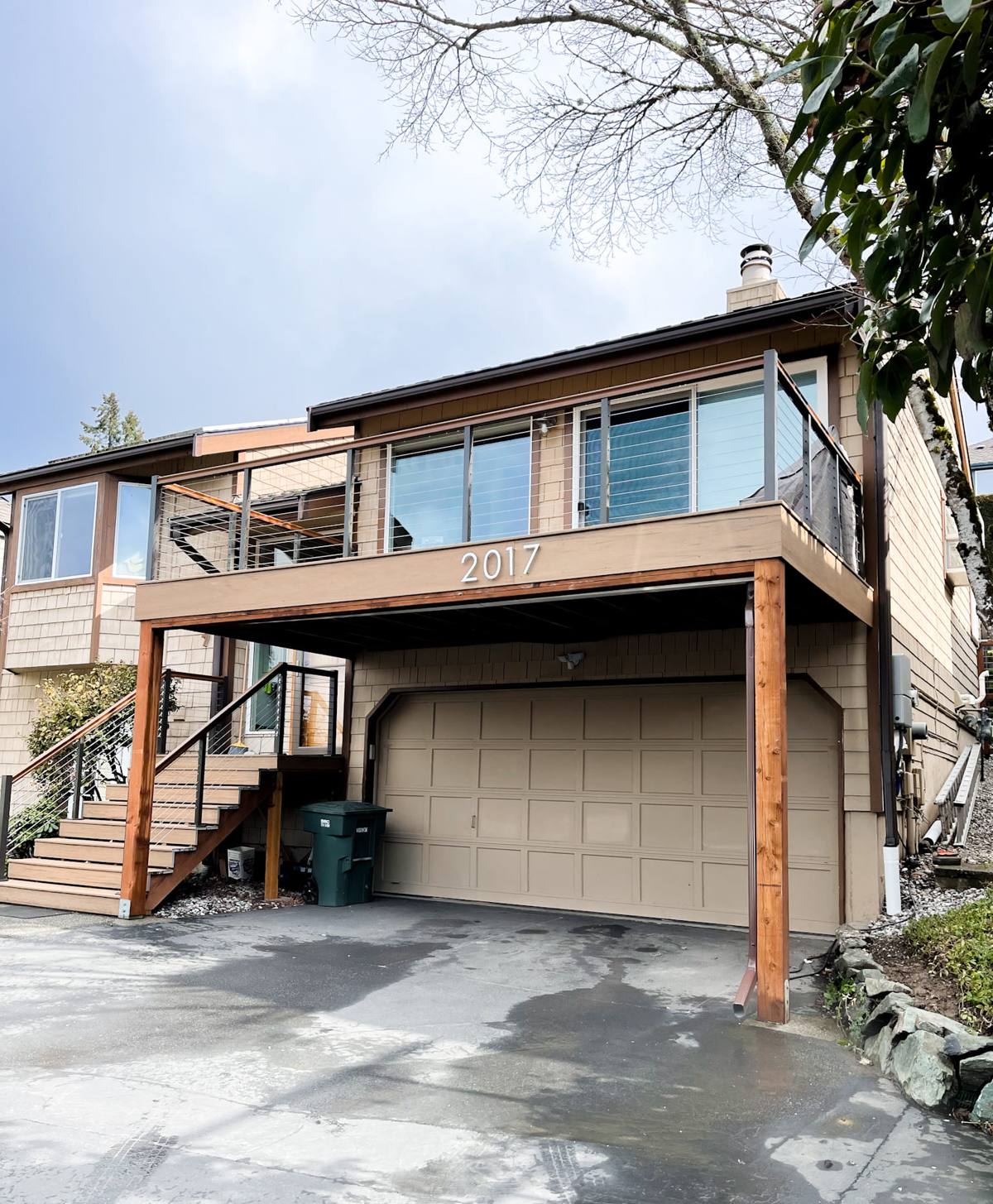
What Actually Fails on Clear Lake Decks
Before we talk about repair, it helps to know what we're usually finding when we pull boards and get underneath a deck in this area.
Ledger Board Rot
The ledger board — where the deck attaches to the house — is the single most common failure point we see, and it's the most serious one. Water gets behind it when flashing is missing, undersized, or was never properly lapped with the house's water-resistive barrier. In a shaded, damp neighborhood like Clear Lake, that hidden moisture doesn't dry out between rain events the way it might on a sun-exposed lot. By the time it shows on the surface as a soft spot or a dark stain, the framing behind it can already be compromised.
Moss and Algae on Decking
Moss on a deck isn't just cosmetic. It holds moisture against the wood surface around the clock, which accelerates rot in the boards themselves and makes the surface genuinely slick and dangerous underfoot — a real concern on stairs and landings. Shaded lots near tree lines are the worst offenders, and Clear Lake has plenty of them.
Post Base and Footing Deterioration
Posts that sit in standing water or wet mulch at the base rot from the ground up. We find this most often on older decks where the post was set directly against or into a concrete footing without a proper post base connector holding it up off the surface.
Fastener Failure and Corrosion
Older decks built with standard galvanized fasteners, especially in combination with newer treated lumber, can see accelerated corrosion. Combined with the salt-laced air that reaches this part of the county, we see nail heads and screw threads that have visibly deteriorated well before the wood around them has.
Guardrail and Stair Movement
Railings that flex or stairs that have started to rack are usually a connection problem, not a wood problem — though the two often show up together once moisture gets into a loose joint.
Our Deck Repair Process
Every repair starts with an honest look at what's actually going on, not just what's visible from the top.
- Inspection from underneath. We get under the deck whenever access allows, because that's where the real story is. Surface staining tells you where to look; it doesn't tell you how deep the damage goes.
- Probe testing on structural members. We check the ledger, rim joists, posts, and beam for soft spots with an awl or screwdriver, not just a visual pass.
- Written scope before any demo. You get a clear list of what's being replaced, what's being repaired, and what's sound and staying, before we touch anything.
- Proper flashing on any ledger work. If we're opening up the ledger connection, it gets correctly flashed and lapped with the house's water barrier — every time, not as an upsell.
- Matched or appropriate materials. Repairs use lumber and hardware rated for the exposure, matched to the existing deck where it makes sense and upgraded where the original build was under-specified for this climate.
- Cleanup and a final walkthrough. We walk the deck with you before we call it done.
Repair vs. Replacement: How We Decide
Not every deck problem needs a full rebuild, and not every deck is worth patching. The honest answer depends on what's failing and how much of the structure it touches.
| Condition | Usually Repairable | Usually Needs Replacement |
|---|---|---|
| Ledger rot | Localized soft spot, framing otherwise sound | Rot has spread into rim joist or house sheathing |
| Decking boards | Isolated cupped or split boards | Widespread rot or cupping across most of the surface |
| Posts and footings | Single post with base rot, footing intact | Multiple posts compromised or footings undersized/cracked |
| Railings | Loose connections, cosmetic wear | Structural posts rotted at the base |
| Framing (joists/beams) | One or two members affected, load path intact | Widespread sag or rot across the frame |
As a rule of thumb: if the problem is contained to boards, rails, or a single connection point, repair is the right call and the more cost-effective one. If rot has worked its way into the primary structural framing, we'll tell you straight that a rebuild is the better long-term investment rather than layering a repair on top of a compromised frame.
What a Correct Repair Looks Like on This Kind of Site
Given Clear Lake's shade cover and moisture exposure, a repair that's just cosmetically sound isn't good enough. A few things we hold to on every job in this area:
- Flashing gets replaced any time a ledger connection is opened up — never reused, never skipped
- Fasteners are matched to the treated lumber being used to avoid the corrosion issues we see with mismatched hardware
- Post bases are set to keep wood off standing water and off direct soil or concrete contact
- Gaps between boards are checked and corrected where needed so water and debris can actually drain instead of pooling
- Any area with heavy moss growth gets treated and cleaned, not just covered over with new boards on top of a damp substructure
- Structural repairs are inspected before decking goes back down, not after
Maintenance That Extends the Life of a Repair
A good repair buys you years, but Clear Lake's climate means a deck here needs more upkeep than one on an open, sun-exposed lot elsewhere in the county.
Seasonal Basics
- Clear leaves and debris from between boards before fall rains set in — trapped debris holds moisture against the wood
- Treat moss growth early, before it establishes and spreads across the deck surface
- Check the ledger flashing and any visible fastener heads once a year for early signs of corrosion or gaps
- Keep gutters and downspouts near the deck clear so runoff isn't draining directly onto or under it
None of this is complicated, but it's the kind of thing that gets skipped, and skipping it in a shaded, damp spot like Clear Lake is exactly how a five-year-old deck ends up needing structural repair instead of a simple board swap.
Why It Matters to Hire a Crew That Already Works This Area
Deck repair advice that's generic to the Pacific Northwest isn't always right for a specific lot in Skagit County. A crew that works Clear Lake regularly already knows which parts of the neighborhood hold moisture longest, which older subdivisions were built with ledger flashing that doesn't meet current standards, and what moss and algae growth actually look like at different stages of severity here versus a drier, more open lot. That local knowledge shows up in faster, more accurate diagnosis and in repairs that account for the site's real exposure instead of a one-size-fits-all approach.
It also matters for permitting and inspection. Structural deck repairs — anything touching the ledger, framing, or footings — can require permit sign-off depending on scope, and a contractor familiar with Skagit County's process handles that as a normal part of the job rather than an afterthought.
Get a Straight Answer on What Your Deck Needs
If your deck in Clear Lake has soft spots, visible moss, a shaky railing, or you're just not sure how much longer it's got, we'll come take a real look — underneath, not just on the surface — and give you an honest answer on repair versus replacement. There's no pressure and no cost to find out. Use the form below to request your free estimate.