 Skagit County
 Deck Building in Concrete, Washington
Concrete sits in the Skagit River valley, tucked against the foothills of the North Cascades, with heavy tree cover, a wet climate, and long stretches of the year where a deck barely sees direct sun. That combination is different from what a deck faces out on the flats or closer to the water — it's less about salt exposure here and more about shade, moisture that has nowhere to evaporate to, and organic debris that never fully dries out. A deck built the way you'd build one in a drier, more open part of the county won't hold up the same way here.
We build and repair decks throughout Skagit County, and Concrete gets its own approach. The wood, the fasteners, the framing details, and the drainage plan all get adjusted for a site that stays damp longer than most.
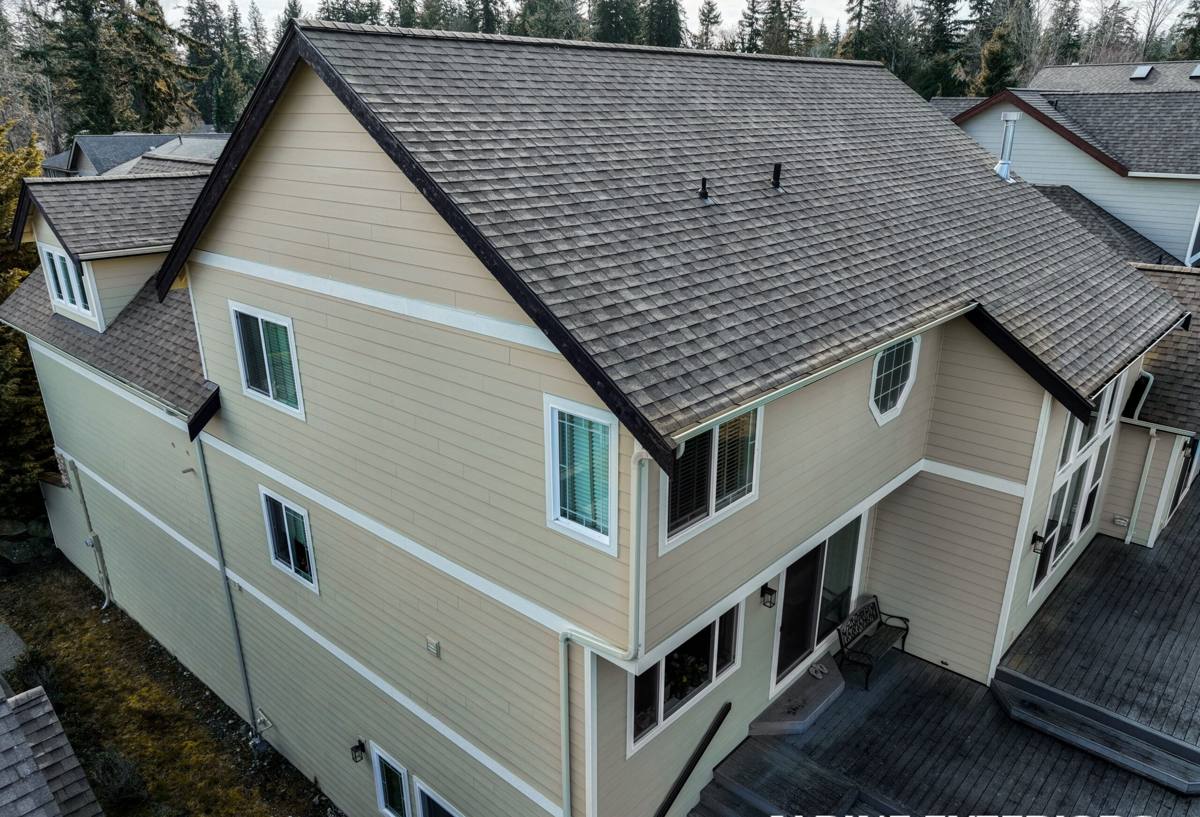
What This Climate Actually Does to a Deck
Homeowners in Concrete usually don't have a mystery on their hands when a deck starts failing — the causes are consistent and predictable once you've seen enough of them:
- Moss and algae buildup on decking boards, especially anywhere shaded by trees or the house itself, which holds moisture against the wood and makes the surface slick.
- Slow-drying joists and ledger boards in areas with poor airflow underneath the deck, leading to rot from the inside out long before the surface looks bad.
- Fastener corrosion where standard hardware wasn't rated for sustained wet exposure — you'll see rust streaks and loosening boards years before the wood itself gives out.
- Debris accumulation in gaps between boards and along the ledger, from the fir, cedar, and maple that surround most properties here — this holds water and accelerates rot at exactly the joints that matter most structurally.
None of this means a deck in Concrete is doomed to a short life. It means the build has to account for shade and standing moisture as design constraints, not afterthoughts.
Why Sun Exposure (or the Lack of It) Matters
A deck on a south-facing, open lot dries out between rain events. A deck tucked under a tree canopy or on the north side of a house may stay damp for days after a storm. In Concrete, that second scenario is common. We look at sun exposure and airflow during the site visit because it changes decisions on decking material, board spacing, and how aggressive the under-deck ventilation needs to be.
Choosing the Right Decking Material
There's no single "best" decking material — there's a best material for a given site, budget, and how much upkeep you're willing to do. For a shaded, damp Concrete lot, here's how the common options compare:
| Material | How It Handles Shade & Moisture | Maintenance | Typical Lifespan |
|---|---|---|---|
| Pressure-treated fir/pine | Prone to moss and mildew in shaded spots without regular cleaning | Annual cleaning, re-sealing every 1-2 years | 15-20 years with upkeep |
| Cedar | Naturally rot- and insect-resistant, but still needs airflow to shed moisture | Periodic cleaning, occasional oiling to maintain color | 20-25 years with upkeep |
| Composite decking | Doesn't absorb water into the board itself, but surface algae/moss still needs washing off | Occasional washing, no sealing or staining | 25-30+ years |
| Modified/thermally treated wood | Dimensionally stable and rot-resistant even in persistent damp conditions | Low — occasional cleaning | 25+ years |
For shaded, tree-heavy lots we lean toward composite or modified wood more often than we would elsewhere in the county, simply because those materials don't feed moss and mildew the way untreated or lightly treated softwood does. That said, plenty of homeowners want the look and feel of real wood, and a well-built cedar deck with the right maintenance routine holds up fine here too. We'll walk you through the honest trade-offs for your specific site rather than pushing one product line.
Structural Details That Matter Here
The parts of a deck you don't see are what determine whether it lasts 15 years or 30. In a climate like Concrete's, a few details get extra attention:
Footings and Ground Clearance
Soil in the Skagit valley holds moisture well, which is good for the landscaping and bad for anything wood sitting close to grade. We set footings below frost depth and hold post bases and framing well clear of the ground so wood isn't sitting in damp soil or leaf litter.
Ledger Board Flashing
Where a deck attaches to the house, the ledger board and its flashing are the single most common failure point we find on older decks in this area — water gets behind the ledger, and because that spot rarely gets sun or airflow, it can rot for years before it's visible from outside. Correct flashing, with proper overlap into the house's weather-resistive barrier, is non-negotiable on every deck we build.
Joist Spacing and Airflow
Tighter joist spacing adds strength, but it also reduces airflow underneath the deck. We balance structural requirements with enough clearance and venting that the underside of the deck can actually dry out between storms — a real consideration in shaded yards where the ground stays damp most of the year.
Fasteners and Hardware
We use fasteners and structural hardware rated for continuous exposure to treated lumber and sustained moisture. Standard hardware that's fine in a dry climate corrodes faster here and becomes a hidden weak point.
Drainage: The Detail Most Decks Get Wrong
Board spacing, deck slope, and where the water actually goes once it hits the surface are design decisions, not accidents. A deck that pitches slightly away from the house, with board gaps sized to shed water rather than trap debris, will shed moss and mildew far better than one that was framed level with tight-butted boards. On decks near the ground or under heavy shade, we also think about where runoff goes underneath — pooling water under a deck is just as damaging as water sitting on top of it.
Our Deck Building Process
- Site evaluation — we look at sun exposure, tree cover, soil drainage, and how the deck will tie into the house before recommending materials or a layout.
- Design and material selection — honest recommendations based on your budget, how the space will be used, and how much maintenance you actually want to do.
- Permitting — Skagit County requires permits for most new deck construction; we handle that paperwork so it's not on you.
- Framing and structural work — footings, ledger flashing, joists, and hardware built to hold up to this specific site's conditions, not a generic spec.
- Decking installation — board spacing and fastening set for drainage and long-term movement, not just a clean look on install day.
- Final walkthrough — we go over maintenance expectations specific to your deck's material and sun exposure before we consider the job done.
Keeping a Concrete-Area Deck in Good Shape
Whatever material you choose, a shaded or damp deck needs a bit more attention than one in full sun. A simple seasonal routine goes a long way:
- Sweep leaves and debris out of board gaps regularly, especially in fall.
- Wash the surface with a deck cleaner or mild detergent at least once a year to knock back moss and algae before it gets established.
- Check the ledger board area and any spots where the deck meets the house for signs of staining or soft wood.
- Trim back tree branches that are keeping sections of the deck shaded and damp longer than necessary.
- Re-seal or re-stain wood decking on the schedule appropriate for that product — don't wait until it's visibly gray and worn.
- Confirm underneath the deck stays ventilated and isn't collecting standing water or debris.
Why Hire a Crew That Already Works in Concrete
Deck building isn't complicated in the abstract — the complications come from building correctly for the specific site and climate in front of you. A crew that mostly works drier, more open parts of the region can still build a deck that looks right on day one, but the framing, flashing, and material choices that keep it right for 20 years come from having actually dealt with what shade, valley moisture, and moss do to decks in this part of Skagit County. We've built and repaired enough decks in and around Concrete to know where the problems show up first, and we build to avoid them from the start rather than fixing them in five years.
If you're planning a new deck, replacing an aging one, or dealing with a deck that's showing early rot or moss problems, we'd be glad to take a look. Reach out for a free, no-pressure estimate — we'll assess your site, talk through material options honestly, and give you a straight answer on what it'll take to build something that holds up here.