 Skagit County
 Concrete's Climate Is Tough on Exterior Siding
Concrete sits up the Skagit River valley, closer to the North Cascades than to the coast. That matters for siding. Homes here don't take the direct salt air that waterfront properties near Anacortes or La Conner deal with, but they share the same driving rain that moves through the rest of Skagit County — often heavier, funneled up the valley by the surrounding terrain — and they add a challenge coastal homes don't have as much of: deep shade. Dense conifer cover and steep hillsides keep siding wet longer after a storm passes, because sun and wind don't reach the walls to dry them out the way they would on a more open lot.
That combination — frequent rain plus slow-drying surfaces — is what drives moss and algae growth on the north- and east-facing walls of a house, and it's what eventually breaks down siding that wasn't built, or installed, for the conditions. It's not a dramatic failure. It's slow: a soft spot behind a downspout, paint that won't hold past a few years, a green film that keeps coming back no matter how many times it's washed off. By the time it's visible from the street, the damage underneath is usually further along than it looks.
Why This Matters More in Concrete Than in Drier Parts of the County
Skagit County covers a lot of ground, from tidal flats to river valley to mountain foothills, and not every part of it puts the same load on a house. A home in Concrete, tucked against trees and getting less direct sun exposure, is going to stay damp longer after rain than a similar home out in open farmland. Siding that's marginal on moisture resistance shows it faster here. That's the practical reason product choice and installation quality matter more in this part of the county, not less.
Why We Install Only James Hardie in This Area
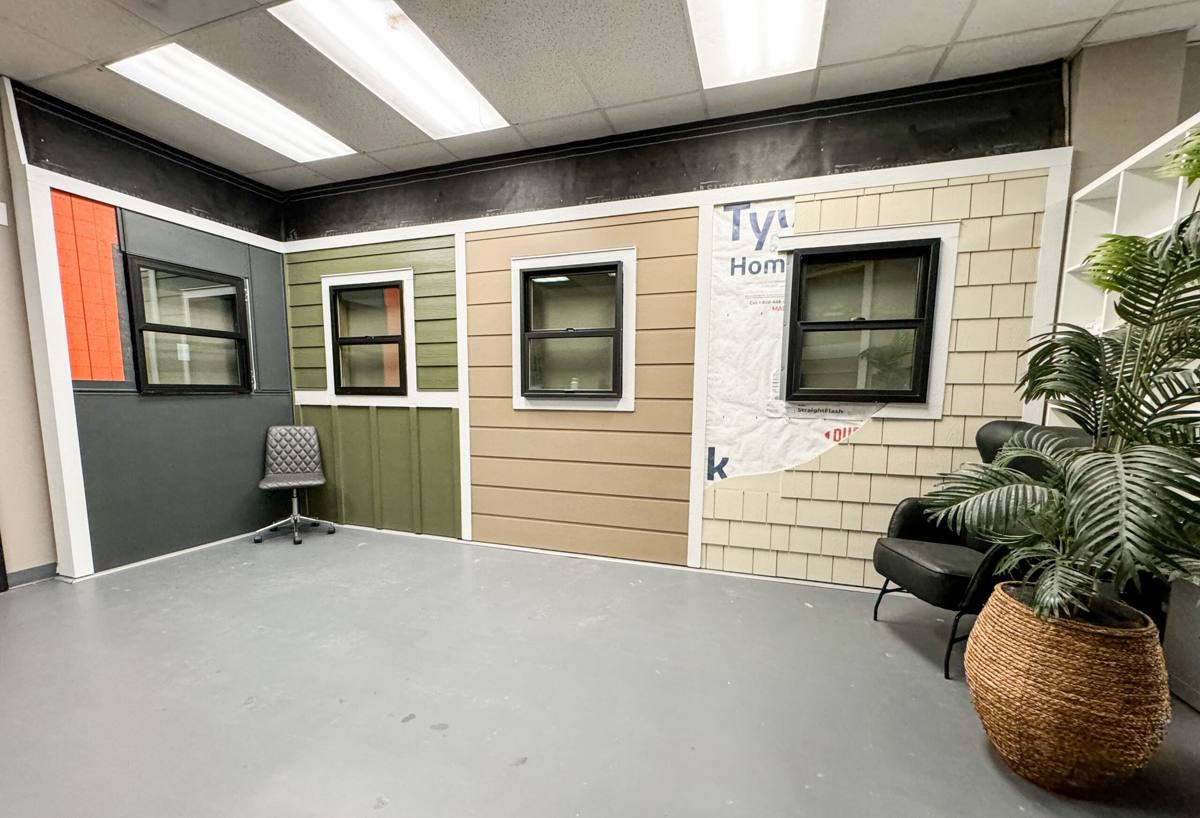
We install James Hardie fiber cement siding exclusively — not vinyl, not LP SmartSide, not cedar or primed spruce, not other fiber cement brands. That's a deliberate standard, and in a climate like Concrete's, the reasoning is straightforward.
Fiber cement is made from cement, sand, and cellulose fibers, cured into a dense, stable board. It doesn't have the organic wood content that gives moss and rot something to feed on, and it doesn't expand and contract with humidity the way wood-based or wood-composite products can. Hardie's HZ5 product line, which is what we spec for this region, is engineered specifically for climates that see sustained moisture and freeze-thaw cycling — which describes the upper Skagit Valley well. It's also non-combustible, which matters given how much of this area sits close to timber and dry-season wildfire risk in the surrounding forest.
The ColorPlus factory finish is the other piece. It's baked on in a controlled environment rather than field-applied, so it holds color and resists fading and peeling far longer than a job-site paint job would — which matters in a spot where a fresh coat of exterior paint doesn't get much sun to cure and doesn't dry fast between rain events. Less repainting means fewer chances for water to get behind a compromised paint film and start a problem you can't see from the ground.
What Correct Installation Looks Like Here
James Hardie siding performs the way it's rated to perform only when it goes on correctly. In a high-moisture, shaded environment like Concrete's, a few details matter more than they would in a drier climate, and they're exactly the details that get skipped on a rushed job:
Drainage and Clearance
Every piece of siding needs a way for water to get out from behind it. That means proper clearance from grade, roof lines, and decks (Hardie specifies a minimum gap, not a suggestion), and a drainage plane behind the siding — typically a weather-resistive barrier with a gap or drainage mat — so any moisture that does get behind the panels has somewhere to go besides the sheathing.
Flashing at Every Penetration
Windows, doors, hose bibs, light fixtures, vents — anywhere the siding is interrupted is a place water can get in if it isn't flashed correctly. In a climate that sees this much sustained rain, a flashing detail that's "close enough" on a drier job will eventually leak here.
Fasteners and Fastening Pattern
Corrosion-resistant fasteners, driven at the correct spacing and depth, keep panels secure without over-driving them (which cracks the board and opens a path for water). We follow Hardie's fastening specification for the specific product and exposure, not a generic pattern.
Sealed Cut Edges and Joints
Factory edges come primed, but every field cut exposes raw material that needs to be sealed before it's closed up. Joints and butt seams get treated the same way. Skipped here, this is one of the most common reasons a Hardie installation underperforms its rating.
None of this is exotic. It's all in Hardie's published installation instructions. The issue isn't that the standard is unclear — it's that meeting it takes more time and care than a crew unfamiliar with wet-climate work is used to giving it.
How We Approach a Siding Project in Concrete
- Walk-through and assessment — we look at the existing siding, sheathing condition, drainage around the foundation, and how much shade and moisture exposure the specific walls of the house actually get, since that varies wall to wall.
- Product and color selection — HZ5 panels or lap siding in the profile and ColorPlus color that fits the home, matched to the exposure of each elevation.
- Tear-off and sheathing check — removing old siding gives us a direct look at the sheathing and framing underneath, which is often where the real story is on an older home with a history of moisture problems.
- Weather-resistive barrier and drainage plane — installed to spec before a single piece of siding goes up.
- Flashing at every penetration — done before siding closes it up, not patched afterward.
- Installation to Hardie's fastening and clearance specifications — including sealed cuts and joints.
- Final walk-through — checking clearances, caulking, and trim details before we call the job done.
Comparing Siding Options for This Climate
We only install Hardie, but homeowners deserve to understand why, in plain terms, rather than take that on faith. Here's how the common options actually stack up against the conditions a home in Concrete faces:
| Siding Type | Moisture/Moss Resistance | Maintenance Burden Here | Notes |
|---|---|---|---|
| James Hardie Fiber Cement | High — non-organic, engineered HZ5 for wet climates | Low — factory finish, occasional wash | What we install; strong fit for shaded, high-rainfall exposure |
| Cedar / Primed Spruce | Low to moderate — organic material, feeds moss and rot | High — regular refinishing, moisture monitoring | Attractive but demands ongoing upkeep in this kind of shade and rain |
| Vinyl | Moderate — won't rot, but seams and gaps trap moisture and debris | Low to moderate | Can warp with temperature swings; doesn't hold up as well in impact or wind-driven rain |
| LP SmartSide | Moderate — engineered wood, still organic at its core | Moderate — sensitive to installation quality and edge sealing | Depends heavily on flawless flashing and sealing to perform long-term |
This isn't a claim that other products are unusable everywhere. It's a statement about fit: in a shaded, high-rainfall river valley, an organic or moisture-sensitive material carries more long-term risk and more upkeep than a non-combustible, factory-finished fiber cement product built for exactly this kind of exposure. That's the trade-off we weighed, and it's why we standardized on Hardie for every job we take on, including here.
Keeping Hardie Siding Looking Right Through Moss Season
Hardie siding is low-maintenance, not maintenance-free. In a climate that stays damp as long as Concrete's does, a little routine care goes a long way:
- Rinse siding with a garden hose once or twice a year, focusing on shaded north- and east-facing walls where moss and algae take hold first
- Keep gutters clear so water isn't overflowing directly onto siding below the roofline
- Trim back tree branches and shrubs that keep siding shaded and damp against the wall
- Check caulking around windows, doors, and trim annually and re-caulk any cracked or missing sections before wet season sets in
- Avoid pressure washing directly at joints and seams — a soft wash is enough and won't force water behind the panels
- Watch for any soft or discolored trim boards, which usually show a moisture problem before the siding itself does
None of this requires a contractor visit every year. It's the kind of upkeep that takes an afternoon and keeps a correctly installed system performing the way it's supposed to for decades.
Why a Crew That Already Works This Area Matters
Installation quality is what determines whether Hardie siding delivers on its warranty and its climate rating — and installation quality depends on a crew understanding the conditions they're building for. A crew that mostly works drier, more open parts of Skagit County or the broader region can still install Hardie competently, but they're less likely to instinctively over-build the drainage plane, double-check flashing at every penetration, or flag a shaded wall that's going to need extra attention. A crew that already works Concrete and similar river-valley communities has seen what happens when those details get skipped, and builds around it as a matter of habit, not an afterthought.
That familiarity also shows up in smaller ways — knowing which walls on a typical lot here get the least sun, planning around the area's rain patterns when scheduling tear-off and installation, and not treating a job in the valley the same way as a job on open, well-drained ground.
What Affects the Cost of a Hardie Siding Job
Every home is different, and we won't quote a number without seeing the house, but these are the factors that generally move the price on a project like this:
| Factor | Why It Matters |
|---|---|
| Tear-off scope | Removing existing siding down to the sheathing takes more labor than installing over a properly prepped surface |
| Sheathing condition | Rot or water damage found during tear-off needs repair before new siding goes on — common on older homes in wet, shaded settings |
| Home size and complexity | Cut-up rooflines, multiple gables, and lots of trim take more time than a simple rectangular footprint |
| Product line and profile | Lap siding, panel siding, and specialty trim carry different material costs |
| Access and site conditions | Steep lots, tree cover, and limited staging area (common in this part of the valley) affect labor time |
Broad ranges get thrown around online, but they rarely account for what's actually underneath the old siding on a given house, which is often the biggest variable. A walk-through gives a real number, not a guess.
Getting Started
If you're weighing a siding replacement on a home in Concrete or elsewhere in Skagit County, we're glad to take a look and give you a straight answer about what your house needs and what it would take to do the job right. Use the form below to request a free, no-pressure estimate.