 Skagit County
 Deck Repair Built for Conway's Weather, Not a Showroom Climate
Conway sits low in the Skagit River delta, close enough to the water that salt air, marine moisture, and heavy seasonal rain are just part of daily life. A deck out here works harder than one in a drier inland town. The wood or composite is almost never fully dry for long, moss and algae get a head start every fall, and any spot where water can pool or hide will eventually cause a problem. Deck repair in this kind of climate isn't just about swapping a rotten board — it's about understanding why that board rotted in the first place and fixing the underlying moisture path, not just the symptom.
We work throughout Skagit County, and Conway decks show a fairly consistent pattern: ledger boards and stair stringers that stay damp longest, fasteners that corrode faster than homeowners expect, and surface moss that homeowners assume is cosmetic but is actually holding water against the wood around the clock. A repair that ignores those patterns tends to fail again within a couple of seasons.
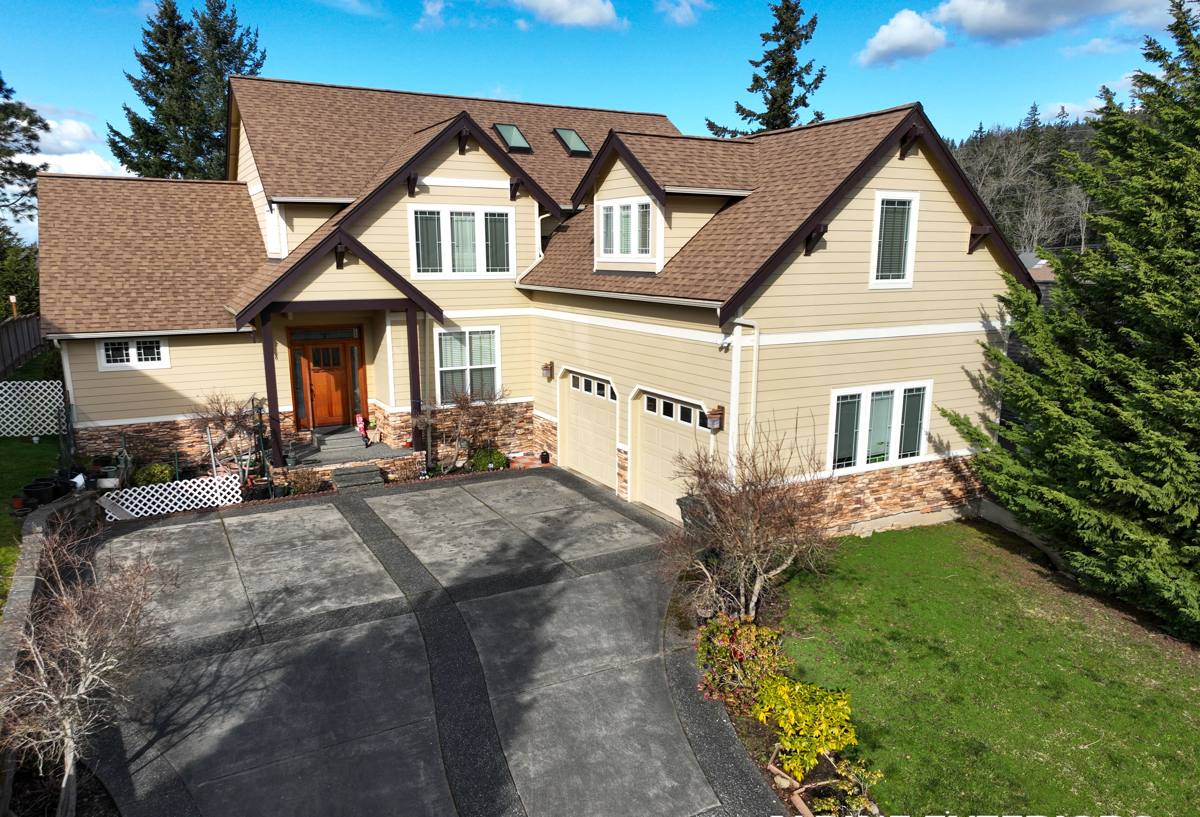
What Conway's Climate Actually Does to a Deck
Salt Air and Metal Fatigue
Proximity to Puget Sound and the tidal reaches of the Skagit River means the air here carries more salt than most people realize. Salt accelerates corrosion in fasteners, joist hangers, and any exposed metal hardware. A deck built with standard, non-marine-grade fasteners can start showing rust streaks and weakened connections years before the wood itself gives out. Once a fastener corrodes, it loses grip strength — and a deck is only as strong as its connections.
Driving Rain and Hidden Moisture
Skagit County storms often come with wind, which pushes rain sideways into places a vertical downpour never would — under railings, behind fascia boards, into the gap where a ledger board meets the house. That driving rain finds every flaw in flashing, every gap in caulking, and every spot where two boards were installed tight against each other with no room to dry. The result is moisture trapped in joints long after the visible surface looks dry.
Moss, Algae, and the Long Wet Season
Western Washington's moss season runs long, and a low-lying, shaded, or river-adjacent property like many in Conway often sees it start earlier and last longer than higher, more open ground. Moss isn't just unsightly — it holds water against the deck surface, blocks sun and air from drying the wood, and its root structure works into the wood grain and fastener heads, gradually loosening connections and softening the surface underneath.
Signs a Conway Deck Needs Repair, Not Just Cleaning
- Boards that feel spongy, soft, or give slightly underfoot
- Visible gaps, cracks, or splitting near fastener locations
- Rust streaking around screws, nails, or joist hangers
- Railings or stair stringers that flex or wobble when pushed
- Persistent moss or algae that returns within weeks of cleaning
- Discoloration or staining where the deck meets the house (ledger board area)
- Gaps between decking boards that have closed up tight, trapping debris and moisture
- Any area where standing water lingers after rain instead of draining off
If you're seeing more than one or two of these, it's worth having someone look at the structure, not just the surface. Surface cleaning can make a failing deck look fine right up until it isn't.
What a Correct Deck Repair Actually Involves
Start With the Structure, Not the Boards People See
Before we touch decking boards, we check the framing underneath — joists, beams, posts, and especially the ledger board connection to the house, since that's the single most safety-critical joint on most decks. In a wet climate like ours, structural problems usually start below the visible surface, so a repair that only replaces what's cosmetically damaged can leave the actual cause untouched.
Match Materials to How They'll Actually Be Used
Repairs get done with fasteners and hardware rated for the exposure they'll see — which in Conway means treating salt air and constant moisture as the normal condition, not the exception. Mixing incompatible metals (say, an old galvanized hanger with new stainless screws) can actually accelerate corrosion through galvanic reaction, so hardware choices matter as much as the wood or composite itself.
Rebuild Drainage and Airflow, Not Just Appearance
A big part of long-term deck repair in a rainy climate is restoring the deck's ability to shed water and dry out between storms — proper board spacing, working flashing at the ledger, and grading or gaps that let water move off the structure instead of pooling in it. A repair that looks good but ignores drainage is a repair you'll be paying for again.
Repair vs. Replacement: How We Help You Decide
Not every deck problem calls for a full rebuild, and not every deck is worth patching indefinitely. We give homeowners a straight assessment based on what the structure actually needs, not what's easiest to sell.
| Factor | Leans Toward Repair | Leans Toward Replacement |
|---|---|---|
| Framing condition | Solid, dry, no soft spots | Widespread rot or soft framing |
| Age of structure | Under 15-20 years, good materials | Original decking near end of typical service life |
| Extent of damage | Isolated boards, railings, or connections | Damage spread across multiple structural areas |
| Ledger board condition | Sound connection, proper flashing | Rot or corrosion at the house connection |
| Moss/moisture history | Manageable with better drainage | Chronic moisture with no realistic fix |
Cost is the other piece of that conversation. Isolated board and railing repairs are typically the least expensive option, mid-range repairs involving structural framing or ledger work cost more due to the labor and hardware involved, and full deck replacement is the largest investment but resets the clock on materials and code compliance. We'll walk you through where your deck actually falls before any work starts.
How We Handle a Deck Repair Visit
- On-site assessment: We inspect the surface, framing, connections, and drainage — not just the obviously damaged spots — since related problems often hide nearby.
- Honest scope and estimate: You get a clear explanation of what's failing, why, and what it will take to fix it correctly, with repair and replacement options laid out if both are reasonable.
- Repair the cause, not just the symptom: Structural issues get addressed before cosmetic ones, and hardware is upgraded where the original fasteners weren't suited to this environment.
- Restore drainage and finish: Board spacing, flashing, and any protective finish are addressed so the repair holds up through Skagit County's wet season, not just through the next dry spell.
- Walkthrough: We show you what was done and what to watch for going forward, including any maintenance that will extend the life of the repair.
Composite vs. Wood Decking: What We Consider in a Repair
When repair or partial replacement involves choosing materials, wood and composite decking each come with real trade-offs in a marine climate. Wood is more affordable up front and easy to repair board-by-board, but it needs regular maintenance — cleaning, sealing, and prompt attention to moss — to hold up against constant moisture. Composite resists rot and doesn't need staining, but it's a bigger investment, some products can trap moisture underneath if ventilation isn't handled correctly during installation, and matching an existing composite line years later can be difficult if the manufacturer has changed their color runs. We'll talk through which fits your deck, your budget, and how much upkeep you actually want to do, rather than pushing one option as universally better.
Why Hire a Crew That Already Works in Conway
A contractor who only occasionally works this close to the water can miss things that are obvious to a crew who sees this environment regularly — how fast moss comes back on a shaded, low-lying lot, which fastener grades actually hold up to salt air over time, and where driving rain tends to find its way into a structure that looks sound from a distance. We're a Skagit County-based crew, and Conway's particular mix of river-delta humidity, marine air, and long wet winters is territory we know well. That familiarity means fewer surprises during the repair and a better chance the fix actually lasts through more than one season.
Get a Straight Answer on Your Deck
If your Conway deck has soft spots, rust stains, persistent moss, or just doesn't feel as solid as it used to, it's worth getting an honest, no-pressure look before problems get worse or more expensive to fix. We'll tell you plainly what we find and what it would take to fix it right. Fill out the form below for a free estimate.