 Skagit County
 Building New in Edison Means Building for the Weather You Actually Have
Edison sits close to the water, out where the fields meet the tideflats and the wind has nothing to slow it down before it reaches your framing. If you're putting up a new home or a major addition here, the windows you choose and how they get installed matter more than they would twenty miles inland. Salt-laden air corrodes hardware that isn't rated for it, driving rain finds any gap in flashing within the first few storms, and the long stretch of gray, damp months every year gives mold and rot a head start on anything installed wrong. New construction is the one time you get to do this right from the studs out — there's no old caulk to fight, no rotted sill to work around. It's also the one time a mistake in the window opening gets sealed behind siding and forgotten until it's a real problem.
This page is about that specific job: setting new-construction windows into new framing in Edison, Skagit County, done to hold up against what this stretch of coastline throws at a house year after year.
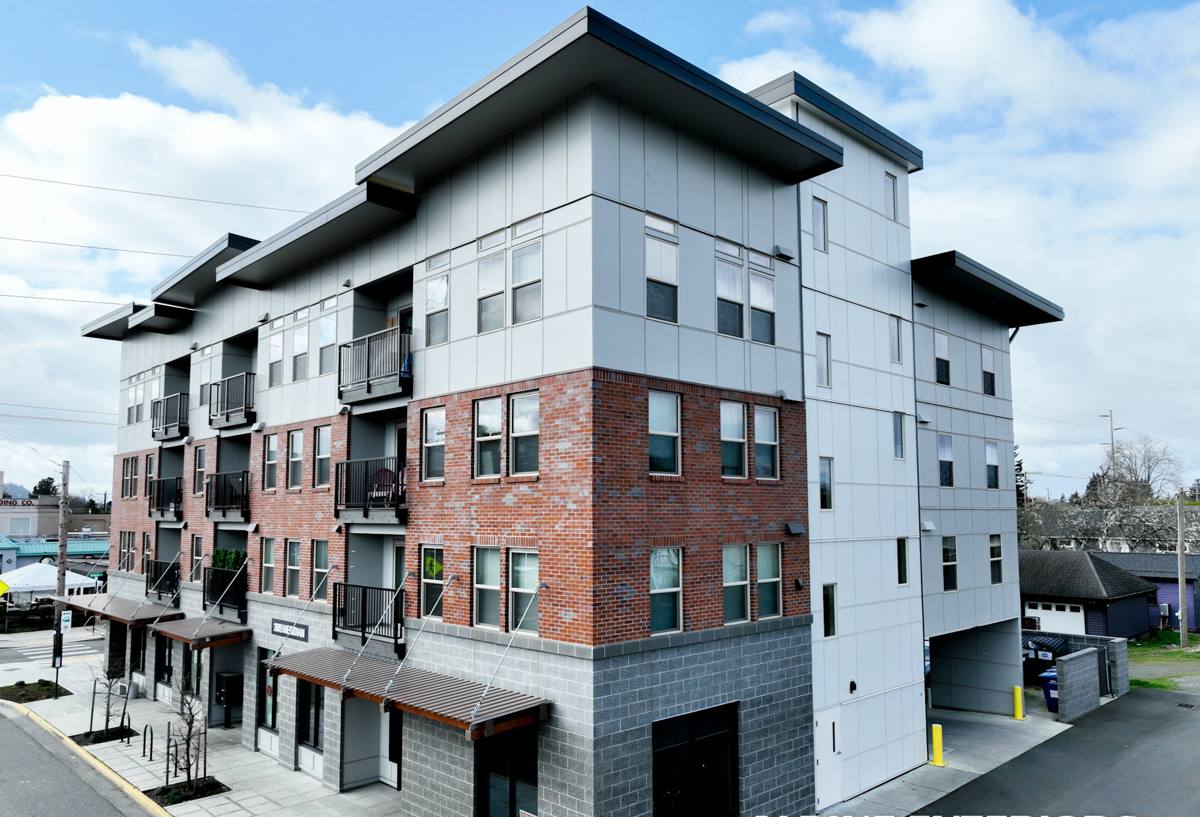
What Edison's Climate Demands From a New Window Install
Salt Air and Corrosion
Being near Samish Bay and the open tideflats means airborne salt is a real factor here, not a coastal-brochure exaggeration. Cheap fasteners, mill-finish aluminum trim, and low-grade cladding hardware corrode faster this close to salt water. We spec corrosion-resistant fasteners and hardware for Edison jobs as a default, not an upcharge — it's cheaper to do once than to replace pitted hardware in five years.
Driving Rain
Storms coming off the water don't fall straight down — they come in sideways, which means water gets pushed up and under things that would stay dry in a calmer climate. New-construction windows give us the chance to build a proper drainage plane and flashing sequence before siding ever goes on, which is the single biggest defense against wind-driven rain finding its way into a wall.
Moss, Mildew, and Long Damp Seasons
Skagit County's wet season runs long, and anywhere moisture can sit — a poorly sloped sill, a gap in caulking, a low spot in flashing tape — moss and mildew will eventually find it. The fix isn't a better caulk gun technique after the fact; it's window and rough-opening details that shed water instead of holding it.
What a Correct New-Construction Window Install Actually Involves
"New construction" windows are built with a nailing fin that gets sealed to the wall's weather-resistive barrier before siding is installed — different from a retrofit or pocket window that goes into an existing opening. Done right, the sequence looks like this:
- Rough opening is checked for square, level, and correct size — before the window ever shows up on site.
- Sill pan flashing goes in first, sloped to drain any water that gets past the window back outside the wall, not into the framing.
- Window is set, shimmed level and plumb, and fastened per the manufacturer's schedule — not just "however many screws looked right."
- Jamb and head flashing integrate with the weather-resistive barrier in the correct shingle-lap order, so water always sheds downward and outward.
- Nailing fin is sealed with flashing tape rated for the application, not general-purpose tape that degrades in a few seasons.
- Interior gaps get low-expansion foam or backer rod and sealant — never packed solid, which can bow the frame.
Every one of those steps is invisible once siding goes up. That's exactly why new construction is the place to get it right — you're not fighting existing trim or paint, and there's no excuse to skip a step because "it's already closed in."
Choosing Windows for an Edison Build
We install a range of quality window lines and don't push one brand as the only answer — the right pick depends on your budget, the home's design, and how exposed the site is to wind and salt spray. What we do steer people toward, consistently, is materials and glazing suited to this specific stretch of coast.
| Factor | Why It Matters in Edison |
|---|---|
| Frame material | Vinyl and fiberglass resist salt-air corrosion better than uncoated aluminum; fiberglass holds up best under repeated wet-dry cycling |
| Glazing (double vs. triple pane) | Double-pane low-E is standard and performs well here; triple-pane adds comfort and noise reduction for sites closer to the water or road |
| Hardware finish | Corrosion-resistant coatings on locks and hinges last longer with salt exposure in the air |
| Sill design | A sloped, self-draining sill sheds wind-driven rain instead of pooling it against the frame |
| Warranty structure | Look for coverage on seal failure (fogging) and hardware, not just glass breakage — fogged seals are the most common failure we see in coastal installs |
We'll walk through these trade-offs with you during the estimate rather than defaulting to whatever's cheapest to move — a window that saves a little up front but corrodes or fogs in eight years costs more in the long run.
Our Process for New-Construction Window Installs
For Edison builds, we work directly with your builder or general contractor's schedule since window install happens at a specific point in the framing sequence — after sheathing and weather-resistive barrier, before siding. Our process:
- Site visit to review the rough openings, plans, and any site-specific exposure (wind direction, proximity to water, tree cover)
- Window selection walkthrough — frame material, glazing package, and hardware suited to the site
- Coordination with your builder's timeline so windows arrive and install without holding up siding or interior work
- Full sill-pan and flashing installation per manufacturer specs, not a generic one-size approach
- Final check of every opening — level, square, sealed, and operating smoothly — before we call it done
We show up with the same crew for the whole job, which matters on a coastal install — flashing details are the kind of thing that go wrong when the person doing the sill pan isn't the same person who did the last twenty in this climate.
Common Mistakes We See (and Correct) in New Construction
- Reverse-lap flashing — installed in the wrong order so water gets funneled behind the barrier instead of over it
- Skipped sill pans — treating a window like it's watertight on its own, which no window is under sustained driving rain
- Over-sealing — caulking every possible gap, including weep holes that are supposed to let trapped water drain back out
- Wrong fastener count or placement — enough to hold the window up isn't the same as enough to meet the wind-load fastening schedule
- Mismatched flashing tape — using whatever's on the truck instead of tape compatible with the specific weather-resistive barrier on the wall
Every one of these is cheap to avoid during new construction and expensive to fix later — usually meaning cutting into finished siding and interior trim to get at it.
Why Hire a Crew That Already Works in Edison and Skagit County
A window crew that mostly works drier inland areas doesn't think about sill pans and salt-rated hardware the same way a crew working the Skagit County coastline every week does. We're not learning this climate on your job — we already know what driving rain off the bay does to a poorly flashed opening, and we build the install to account for it from day one. That's not a sales pitch, it's just what repeated exposure to the same weather patterns teaches you.
We also know the practical side of building in this area: permitting expectations, working alongside other trades on an active build site, and scheduling around the wetter months so window openings aren't sitting exposed longer than necessary.
What This Typically Involves, Cost-Wise
New-construction window pricing depends on window count, size, frame material, and glazing package — there's no honest single number without seeing the plans. In general terms, expect the window units themselves to be the largest cost variable, with labor and flashing materials a smaller but non-negotiable line item — this is not the place to shop for the cheapest install method. We'll give you a clear, itemized estimate once we've reviewed your rough openings and window selections, with no pressure to upgrade beyond what actually makes sense for your site's exposure.
Ready to Talk Through Your Build?
If you're framing a new home or addition in Edison and want windows installed correctly the first time — flashed, sealed, and set up to handle salt air and driving rain for the long haul — we'd be glad to take a look at your plans. Reach out for a free, no-pressure estimate and we'll walk the site with you.