 Skagit County
 Composite Decking Built for Hamilton's River Valley Climate
Hamilton sits low in the Skagit River valley, tucked between forested hillsides that keep the town shaded for long stretches of the day. That's part of what makes it a beautiful place to live, but it's also exactly the kind of setting that's hard on an outdoor deck. Moisture sits longer here than it does out in the open. Morning fog off the river lingers under tree cover. Moss and algae get a head start on any surface that doesn't dry out quickly, and driving rain off the Cascades foothills finds its way into every seam and fastener a builder didn't think through. If you're planning a new deck or replacing a tired one, composite decking is worth a serious look — but only if it's specified and installed with this specific climate in mind, not a generic install from a manual written for a dry-climate state.
We work throughout Skagit County, and Hamilton's combination of shade, humidity, and river-valley moss pressure is something we plan for directly rather than treat as an afterthought.
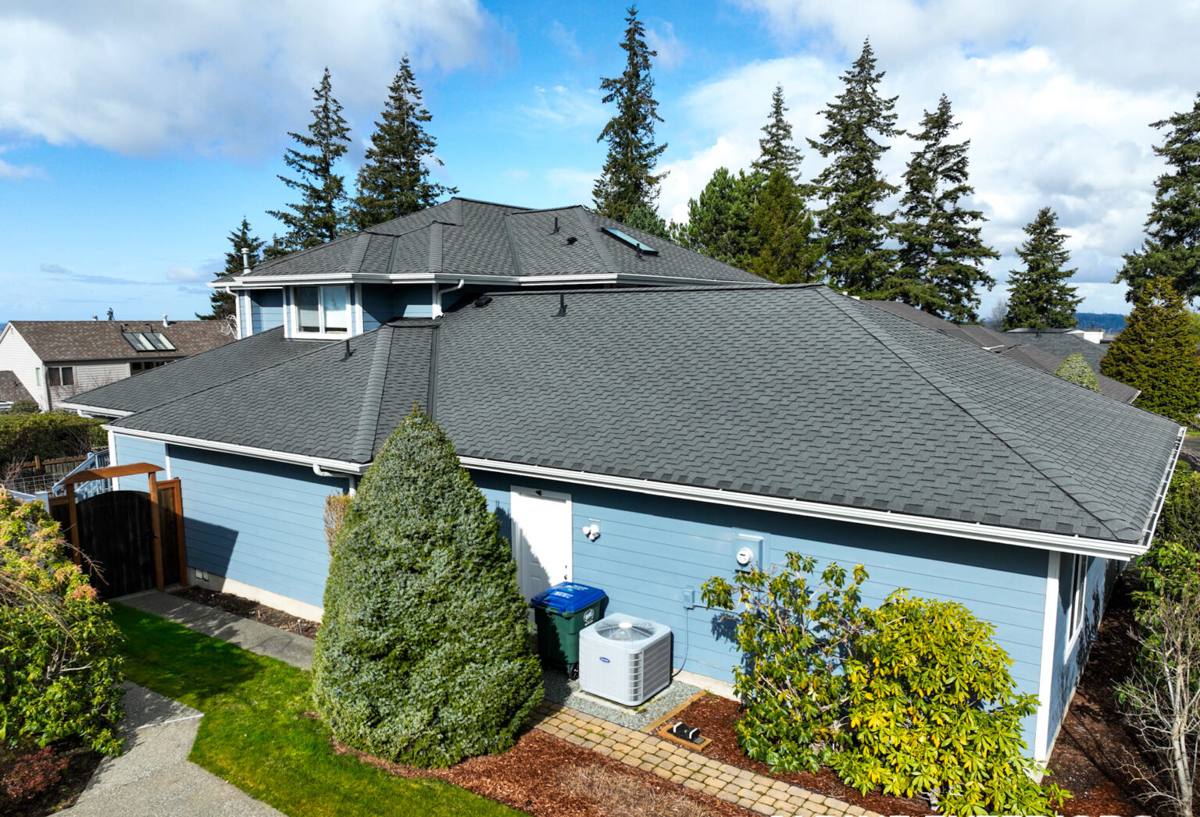
Why Composite Makes Sense for This Neighborhood
Wood decking isn't a bad product — but in a shaded, moisture-heavy spot like Hamilton, it asks a lot of a homeowner. Boards need to be cleaned, brightened, and resealed on a schedule, and if that schedule slips even one season, moss and mildew get a foothold that's hard to fully remove without damaging the wood fibers underneath. Composite decking shifts that burden. The boards don't absorb water the way wood does, they don't need annual staining, and the better composite formulations resist mold and algae growth far more effectively than raw lumber, especially in a spot that doesn't get much direct sun to dry things out between rain events.
That doesn't mean composite is maintenance-free — no outdoor surface truly is in this climate — but it changes the maintenance from a seasonal project into an occasional rinse and sweep.
What Composite Doesn't Solve on Its Own
Composite decking is only as good as what's underneath it. The board surface can resist moss and rot, but if the substructure — joists, ledger board, flashing, fasteners — isn't built to shed water correctly, you'll end up with a deck that looks fine on top while the frame underneath is quietly failing. This is where a lot of decking problems we get called out to inspect actually start: not with the decking material itself, but with a substructure that wasn't protected against the moisture load a shaded Skagit Valley lot actually sees.
What a Correct Composite Deck Install Involves in Hamilton
A deck built for this kind of site needs a few things a generic install checklist won't emphasize enough:
- Joist tape or a comparable moisture barrier on every joist top, so trapped water can't sit against exposed wood under the boards
- Proper board spacing and airflow underneath the deck so moss and algae can't establish in stagnant, shaded pockets
- Ledger board flashing that actually sheds water away from the house rim joist, not just a bead of caulk
- Corrosion-resistant, coated fasteners rated for ground contact and sustained moisture exposure
- Footings sized and set to local frost and soil conditions, not a one-size-fits-all spec
- A layout that accounts for existing shade trees and drainage patterns on the lot, rather than fighting them
Skip any one of these and the deck can still look good going up — the problems usually show up two or three wet seasons later, once moisture has had time to work into places it shouldn't be.
Dealing with Shade and Moss Pressure
Because so much of Hamilton sits under tree cover along the valley, moss and green algae film are the most common complaints we hear from homeowners with older decks, composite or otherwise. A few things matter here more than they would on a full-sun lot:
Board Selection
Not all composite boards handle shade and moisture the same way. Capped composite boards, where the wood-plastic core is fully wrapped in a protective polymer shell, hold up noticeably better against staining and mold growth than uncapped or lower-grade composite in a shaded, damp setting. We'll walk you through what's actually capped versus what's marketed loosely, because the difference matters more in Hamilton than it would in a drier part of the state.
Surface Texture
A heavily grooved or deep wood-grain texture looks great, but in a shady, wet spot those grooves can hold moisture and organic debris longer than a smoother board profile. We'll talk through texture options against how much direct light your specific deck location actually gets.
Gap and Drainage Planning
Board-to-board gap width and under-deck airflow both affect how fast a deck surface dries after rain. On a shaded lot, we lean toward layouts and understructure venting that speed up drying rather than the tightest, most seamless-looking gap possible.
Our Process for a Hamilton Composite Deck Project
- Site walk and assessment — we look at sun exposure, existing drainage, tree cover, soil, and access before recommending anything
- Design and material selection — board brand, color, and profile chosen against your home's exposure and your maintenance preferences, not just aesthetics
- Permitting — Skagit County permitting handled as part of the project, not left for the homeowner to sort out
- Demolition of existing deck (if applicable) — including an honest look at ledger board and framing condition once old decking is off
- Framing and moisture protection — joist tape, flashing, and fastener selection matched to the site conditions
- Composite board installation — hidden fastener systems where the product supports it, for a clean surface with no exposed screw heads to trap moisture
- Final walkthrough — we go over care basics with you before we consider the job done
Composite vs. Wood: An Honest Comparison for This Climate
| Factor | Composite Decking | Wood Decking |
|---|---|---|
| Upkeep in shaded/wet conditions | Periodic rinse and sweep; no staining required | Annual cleaning and resealing recommended |
| Moss and algae resistance | Generally strong, especially with capped boards | Depends heavily on sealant condition and sun exposure |
| Upfront material cost | Higher per square foot | Lower per square foot |
| Long-term cost over 15-20 years | Lower — no repeat sealing/staining costs | Higher when maintenance labor and materials are added up |
| Appearance consistency over time | Color holds steady with quality boards | Grays and weathers unless consistently maintained |
| Repairability | Board replacement straightforward if damaged | Board replacement straightforward, easier to match with reclaimed lumber |
Neither option is objectively "wrong" — it comes down to how much ongoing maintenance you actually want to take on for a deck that sits in a shaded, moisture-prone spot most of the year.
What This Typically Costs
Composite decking generally runs a broad range depending on square footage, board tier, railing choice, height off grade, and how much of the existing structure (if any) needs to be replaced versus reused. Rather than throw out a number that doesn't reflect your actual project, we price it after seeing the site — a deck on a flat, easy-access lot costs meaningfully less to build than one requiring extensive footings, stairs, or structural framing on a sloped lot, which is common along parts of the Skagit River valley.
Signs Your Current Deck Needs Attention
- Persistent green or black film on the surface that returns quickly after cleaning
- Soft or spongy spots when you walk across the boards
- Fasteners that are rusting, popping up, or staining the wood around them
- Gaps or separation where the deck meets the house
- Visible sagging or bounce in the deck frame
- A ledger board area that stays damp longer than the rest of the deck after rain
Any of these are worth a look before they turn into a structural repair rather than a surface one.
Why Local Experience Matters for This Job
A deck built to a spec sheet written for a dry, sunny state doesn't hold up the same way in a shaded Skagit County river valley. We work sites across the county regularly enough to know which lots hold moisture longer, which corners of a property stay damp into summer, and how tree cover changes what a deck actually needs versus what a generic plan calls for. That local pattern recognition is the difference between a deck that looks right on install day and one that's still performing well after several wet Northwest winters.
If you're considering a new composite deck or want an honest opinion on whether your current one needs repair or replacement, we're happy to take a look. Reach out for a free, no-pressure estimate using the form below.