 Skagit County
 Siding That Has to Work Harder in Hamilton
Hamilton sits in the Skagit River valley, tucked between the foothills and the wetter reaches of Skagit County, and that location shapes what a home's siding has to put up with year after year. Homes here deal with long stretches of driving rain, heavy tree cover that keeps things shaded and damp, and a moss season that can stretch from fall through spring. Add in the humid microclimate that settles into the valley overnight, and you have conditions that will find every weak point in a siding system — every gap, every bad seam, every spot where water was allowed to sit instead of shed.
Across Skagit County more broadly, from the salt-air exposure nearer the coast to the wet, shaded valleys around Hamilton, siding does not fail because of one big storm. It fails slowly, from moisture that gets behind the material and never fully dries out between rain events. That is the problem we design every Hamilton installation around, and it is why we are selective about both the material we use and how it goes on the wall.
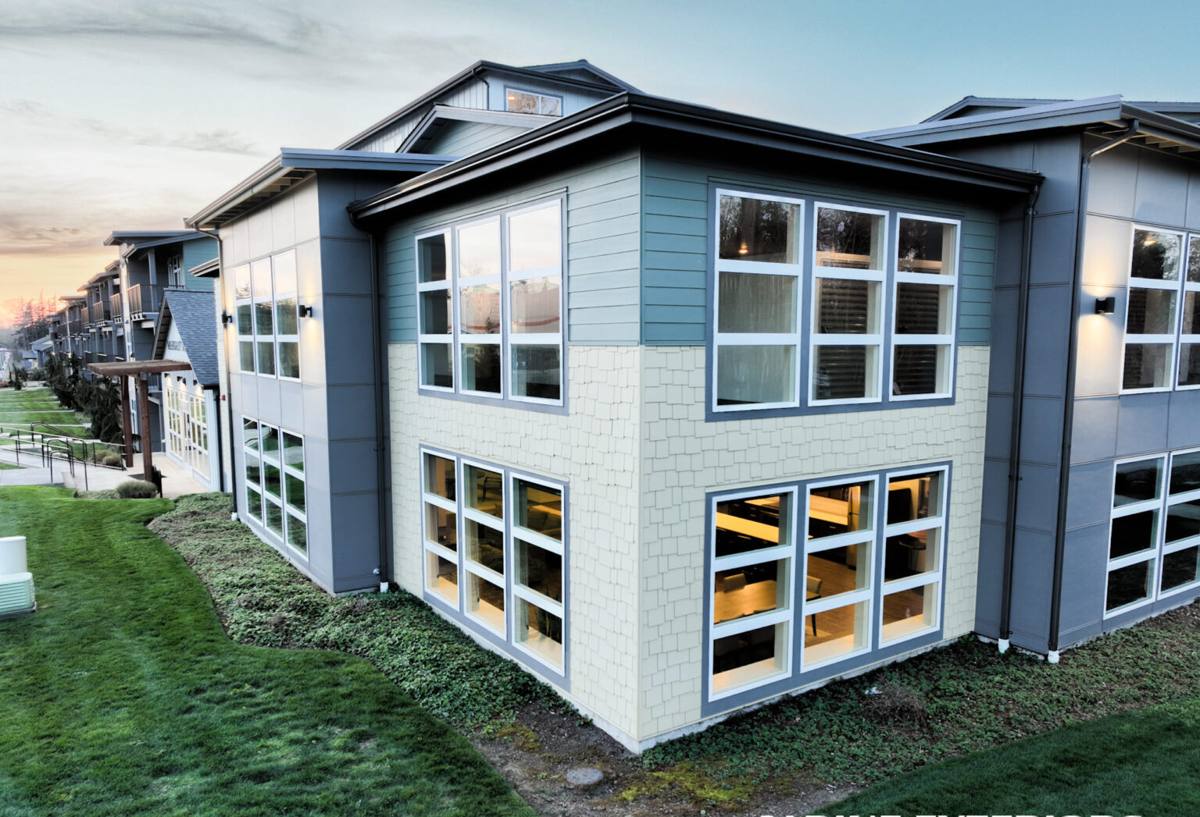
Why We Only Install James Hardie Fiber Cement
We do not install vinyl, LP SmartSide, Cemplank, Allura, primed spruce, or cedar. That is a deliberate standard, not a limitation of what we know how to work with. Vinyl expands and contracts with temperature swings and can warp or crack over time, especially against the kind of driving rain and wind Hamilton gets. Engineered wood products and untreated wood siding are vulnerable to moisture absorption at cut edges and fastener points — exactly the failure mode that shows up first in a climate this wet. Cedar looks great new but demands a maintenance schedule most homeowners can't realistically keep up with once moss and mildew get established.
James Hardie fiber cement is non-combustible, dimensionally stable, and holds its factory-applied ColorPlus finish far longer than field-painted alternatives. It does not feed mold or moss the way wood-based products can, and it does not soften or delaminate when it stays wet for days at a time — which, in Hamilton, it will. We standardized on it because it is the one product we have consistently seen perform to spec in this exact kind of climate, not because it is the only option on the market.
The HZ5 Difference
James Hardie engineers its siding by climate zone, and HZ5 is the formulation built for regions with heavy moisture cycling — freeze-thaw swings, prolonged damp periods, and high humidity. For a Hamilton home, that is not a marketing distinction. HZ5 boards are engineered to resist moisture-related expansion and to hold paint adhesion better in exactly the conditions this valley produces. Installing the wrong climate zone product is one of the more common corner-cuts in this trade, and it is one we do not make.
What a Correct Fiber Cement Installation Actually Requires
Fiber cement is only as good as the installation behind it. Most of the siding failures we get called out to inspect on older homes were not caused by bad material — they were caused by installation shortcuts that let water in behind a product that was otherwise sound. A correct job in a climate like Hamilton's has to get several things right at once:
- Weather-resistive barrier and flashing installed and lapped correctly at every window, door, and penetration before a single board goes up
- Proper clearance between the bottom of the siding and grade, decks, patios, and roof lines so water has somewhere to go
- Correct fastener type, spacing, and placement per Hardie's installation specifications — not generic nailing patterns
- Butt joints and seams sealed or flashed per manufacturer spec, not just caulked and left
- Ventilation gaps maintained where required so the wall assembly can dry between rain events
- Trim and corner details installed to shed water outward rather than channel it behind the cladding
Skip any one of these and you get a wall that looks fine for a season or two, then starts showing streaking, soft trim, or moss colonizing at the seams — usually right where a shortcut was taken.
How We Approach a Hamilton Siding Project
1. On-Site Assessment
We walk the exterior and look at how the specific home sits relative to sun exposure, tree cover, and prevailing weather — a shaded, tree-lined lot in Hamilton needs different moisture management planning than an open one, even a few miles apart.
2. Tear-Off and Substrate Check
We remove the existing siding rather than installing over it. That lets us actually see the sheathing, catch any hidden rot or moisture damage from years of trapped water, and address it before it gets sealed behind new material.
3. Weather Barrier and Flashing
This is the layer that does the real work of keeping water out, and it gets installed to spec before the Hardie boards go up — not treated as an afterthought.
4. Installation to Manufacturer Spec
Fastening, clearances, and joint treatment follow James Hardie's published installation guidelines for the HZ5 climate zone, which is what keeps the transferable warranty intact if the home is ever sold.
5. Final Walkthrough
We go over trim lines, caulking, paint touch-up at cut edges, and site cleanup before calling the job finished.
What Drives the Cost of a Hamilton Siding Project
Every home is different, but the same handful of factors move the price up or down on most jobs we quote in this area:
| Cost Factor | Why It Matters in Hamilton |
|---|---|
| Home size and wall complexity | More corners, gables, and dormers mean more cutting, flashing, and labor time |
| Condition of existing sheathing | Rot or moisture damage found during tear-off has to be repaired before new siding goes on |
| Siding profile and trim style | Lap width, shingle-style panels, and trim detailing all affect material and labor cost |
| Site access and tree cover | Tight lots or heavy landscaping near the house can slow scaffolding, staging, and cleanup |
| Window and trim replacement | Often makes sense to bundle if trim is already deteriorating from moisture exposure |
We walk through these line by line during an estimate so there are no surprises once work starts — a real number based on your home, not a rough guess over the phone.
Moss, Mildew, and Long-Term Maintenance
Even correctly installed siding needs some basic upkeep in a climate like this. Fiber cement's advantage is that the maintenance burden is much lighter than wood or vinyl, but "lighter" does not mean "none." Homeowners in Hamilton should plan on:
- Rinsing siding annually to knock off pollen, algae, and moss spores before they establish
- Keeping gutters clear so overflow doesn't run directly down the wall face
- Trimming back vegetation and tree limbs that keep siding shaded and damp longer than necessary
- Checking caulking at trim and penetrations every couple of years and refreshing where it has pulled away
- Watching for any soft spots near grade or below decks, which usually signal a drainage issue rather than a siding problem
None of this is heavy work, but skipping it entirely will shorten the life of even the best-installed siding in a valley this wet.
Why a Crew That Already Works in Hamilton Matters
Siding crews that mostly work drier, more exposed parts of the county sometimes bring installation habits that don't hold up in a shaded river valley — tighter clearances, less attention to ventilation gaps, assumptions about drying time between coats or coats of sealant that just don't apply here. A crew that regularly works Hamilton and the surrounding Skagit County towns has already seen how the local moisture pattern plays out on real homes over multiple seasons, and adjusts the install accordingly rather than treating every job as identical.
Local, permanent crews also carry accountability that out-of-area or transient contractors don't. If something needs a warranty follow-up two years down the road, you want a company that is still local, still reachable, and still standing behind the work.
Signs Your Current Siding Isn't Keeping Up
If your home already has siding and you're not sure whether it needs attention, a few warning signs are worth taking seriously in this climate:
- Persistent moss or algae streaking that comes back within weeks of cleaning
- Soft or spongy spots when you press on siding near the ground or below rooflines
- Visible warping, buckling, or gaps opening up at seams and corners
- Peeling or bubbling paint, especially on wood or older engineered wood siding
- Musty smells or visible mold on interior walls that back up to exterior siding
Any of these usually means moisture has already gotten past the surface, and it's worth having someone look at what's happening behind the cladding, not just the cladding itself.
If you're weighing a siding project for a Hamilton home, we're happy to walk the property, look at what's actually going on with the current siding, and put together a straightforward, no-pressure estimate — just fill out the form below to get started.