 Skagit County
 Building Decks for La Conner's Waterfront Climate
La Conner sits right on the water, and that changes what a deck has to survive. Homes near the Swinomish Channel and the surrounding Skagit County flats deal with a combination most inland builders never have to plan for: salt-laden air off the water, long stretches of driving rain through fall and winter, and a moss season that can run from October clear into April. A deck built to a generic spec sheet will show it within a couple of seasons — soft spots in the decking, rust bleeding out of fasteners, and a green film that never fully goes away no matter how often it's swept.
We build decks for this specific stretch of Skagit County, and the difference isn't cosmetic. It's in the fastener spec, the gap spacing, the flashing details, and the material choices we steer homeowners toward and away from. This page walks through what actually matters for a custom deck in La Conner, not a generic list of deck features.
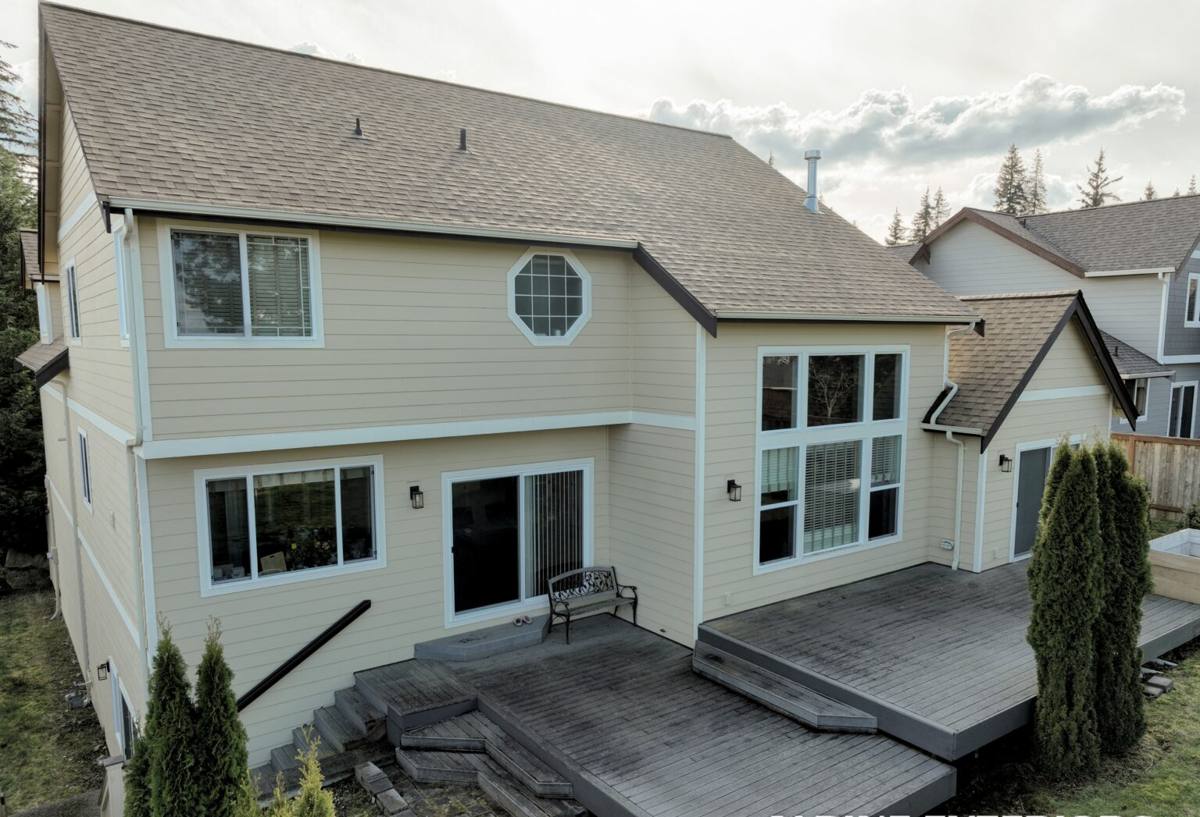
What Salt Air, Rain, and Moss Actually Do to a Deck
Salt Air and Corrosion
Proximity to tidal water means airborne salt settles on everything, including deck hardware. Standard galvanized fasteners and cheap structural connectors corrode faster near the water than they would ten miles inland. Once a fastener starts rusting, it weakens, stains the surrounding wood or composite, and eventually needs to be dug out and replaced — which usually means disturbing boards that were otherwise fine.
Driving Rain and Moisture Intrusion
Skagit County's wet season isn't just steady drizzle — it comes with wind-driven rain that gets pushed sideways into ledger connections, stair stringers, and anywhere two deck components meet without a gap. Water that can't shed or dry out is what rots framing from the inside, long before the surface boards show any problem.
Moss and Algae Growth
Shade, moisture, and mild temperatures are exactly what moss wants, and La Conner has all three for a good chunk of the year. Moss doesn't just look bad — it holds moisture against the decking surface, and on wood it accelerates rot. On any material, a mossy deck surface gets slick and genuinely dangerous, especially on stairs.
Choosing Decking Material for a La Conner Property
There's no single "best" decking material — the right call depends on how close the home is to the water, how much shade the deck gets, and what the homeowner is willing to maintain. Here's how the common options actually perform under Skagit County's coastal conditions:
| Material | Salt Air Performance | Moss Resistance | Maintenance |
|---|---|---|---|
| Pressure-treated fir/hem-fir | Fair — needs sealed/coated fasteners and hardware | Low — porous surface holds moisture, needs regular cleaning | Annual cleaning and periodic sealing |
| Cedar | Good — naturally rot-resistant, but still needs stainless fasteners near water | Moderate — better shedding than fir, still needs seasonal cleaning | Cleaning plus refinishing every few years to hold appearance |
| Composite decking | Very good — doesn't absorb moisture or corrode | Moderate to good, depending on the board's surface texture | Occasional washing; no staining or sealing |
| PVC/capped polymer decking | Excellent — fully sealed surface, nothing for salt to bite into | Good — smooth cap sheds moisture and resists staining | Lowest maintenance of the group; occasional washing |
We're honest about trade-offs on all of them. Composite and PVC cost more up front but remove most of the maintenance burden that wood carries in this climate. Wood costs less initially but only holds up if the homeowner keeps up with cleaning and sealing on a real schedule — skip a year or two near the water and the deck ages faster than it should.
What a Correct Deck Build Involves Here
Framing and Substructure
The framing is what determines whether a deck lasts fifteen years or forty, and it's the part nobody sees once the decking goes down. In this climate we pay close attention to:
- Proper ledger flashing where the deck attaches to the house, so wind-driven rain can't work its way behind the siding
- Joist tape or equivalent protection on top of framing members to keep standing moisture out of the wood
- Stainless or heavy-duty coated structural hardware at every connection, not just where it's visible
- Adequate airflow underneath the deck so the substructure can actually dry between rain events
Fasteners and Hardware
This is where a lot of decks fail early in a salt-air environment. We spec corrosion-resistant fasteners rated for coastal exposure rather than the standard hardware that ships with most framing packages. It costs a little more up front and it's the single biggest factor in whether hardware is still sound a decade from now.
Board Spacing and Drainage
Gap spacing between boards matters more here than in a dry climate — too tight and water and debris sit on the surface and feed moss growth; too wide and the deck feels unfinished and can be uncomfortable underfoot. We set spacing based on the specific material and expected shade/moisture exposure of the site.
Railings and Structural Details
Railings take direct weather exposure and get touched constantly, so hardware choice matters as much here as anywhere else on the structure. Metal railing components near the water need the same corrosion-resistant treatment as the framing hardware, and any wood railing components need the same finish schedule as the decking itself. Stair stringers deserve particular attention — they're structural, they're exposed to the worst of the runoff, and a stringer that starts to soften is a safety issue, not just a cosmetic one.
Our Process for a Custom Deck Build
- On-site assessment — we look at sun exposure, shade patterns, drainage, and proximity to the water to understand what the deck will actually be up against.
- Material and layout conversation — we walk through the honest trade-offs between wood, composite, and PVC for that specific site, and design the layout around how the space will actually be used.
- Permitting — decks in Skagit County, especially near shoreline areas, can require permits depending on size, height, and location relative to the water. We handle this as part of the project rather than leaving it to the homeowner.
- Build — framing first, with all the flashing and hardware details above, then decking, then railings and stairs.
- Final walkthrough — we go over basic care specific to the material installed, so the homeowner knows what upkeep actually looks like.
Permitting and Shoreline Considerations
Because La Conner sits along the Swinomish Channel, some deck projects fall under shoreline-related review depending on setback, elevation, and footprint. We don't guess on this — we check what applies to the specific property before work starts, so there are no surprises partway through the build. Even decks that don't require shoreline review typically still need a standard building permit once they exceed a certain height or size, and we handle that paperwork as part of the job.
Keeping a La Conner Deck Moss-Free and Sound
Even a well-built deck needs some ongoing attention in this climate. A short seasonal routine goes a long way:
- Sweep debris off the deck surface regularly, especially in fall when leaves and needles pile up in corners
- Rinse or wash the surface a couple of times a year to knock back early moss and algae growth before it takes hold
- Check railings and stair connections annually for any looseness or visible rust at hardware points
- Trim back overhanging branches that keep sections of the deck shaded and slow to dry
- Re-seal or re-stain wood decking on the schedule the product calls for — don't stretch it out near the water
- Watch for soft spots underfoot, which usually mean moisture has gotten into the framing below
Why a Crew That Already Works in La Conner Matters
A contractor who mostly builds decks inland, away from tidal air, doesn't have a reason to think about corrosion-resistant hardware or shoreline permitting unless someone tells them to. We work this part of Skagit County regularly, so those decisions aren't an afterthought — they're built into how we spec every job from the start. That matters just as much for a straightforward deck rebuild as it does for a larger custom design, because the framing and hardware choices are the same either way.
If you're planning a new deck or replacing one that's showing its age, we're happy to take a look and give you a straight assessment of what it needs. Reach out for a free, no-pressure estimate using the form below.