 Skagit County
 Why La Conner's Climate Is Hard on Siding
La Conner sits right on the water, and that location is part of what makes it beautiful — and part of what makes siding fail early if it's the wrong material or the wrong installation. Homes here deal with three things at once: salt-laden air off the Swinomish Channel and Puget Sound, driving rain that comes in sideways during winter storms, and a long stretch of the year where humidity, shade, and mild temperatures never really let surfaces dry out. Any one of those is manageable. Together, they're a stress test that a lot of siding products simply don't pass.
Salt Air and Corrosion
Salt air doesn't just affect metal fasteners and flashing — it accelerates the breakdown of paint films, softens caulk faster than inland areas, and speeds up the freeze-thaw-style stress on porous materials as moisture wicks in and out. Siding within a mile or two of open water needs a finish and a substrate that were engineered to handle that, not just standard exterior-grade coatings.
Driving Rain and Water Management
Wind-driven rain off the water doesn't fall straight down — it pushes horizontally into wall assemblies, finding every gap, unsealed joint, and poorly lapped seam. On a home exposed to that kind of weather, the siding itself is only half the job. How it's flashed, lapped, and drained is what actually keeps water out of the wall cavity.
Moss, Algae, and an Extended Damp Season
Skagit County's mild, wet winters and shaded lots (common on tree-lined La Conner properties) create ideal conditions for moss and algae to take hold on north-facing and shaded siding runs. Materials that hold surface moisture, or that have seams and textures where organic growth can gain a foothold, will show it faster here than almost anywhere else in the state.
Why Fiber Cement Is the Right Call for This Environment
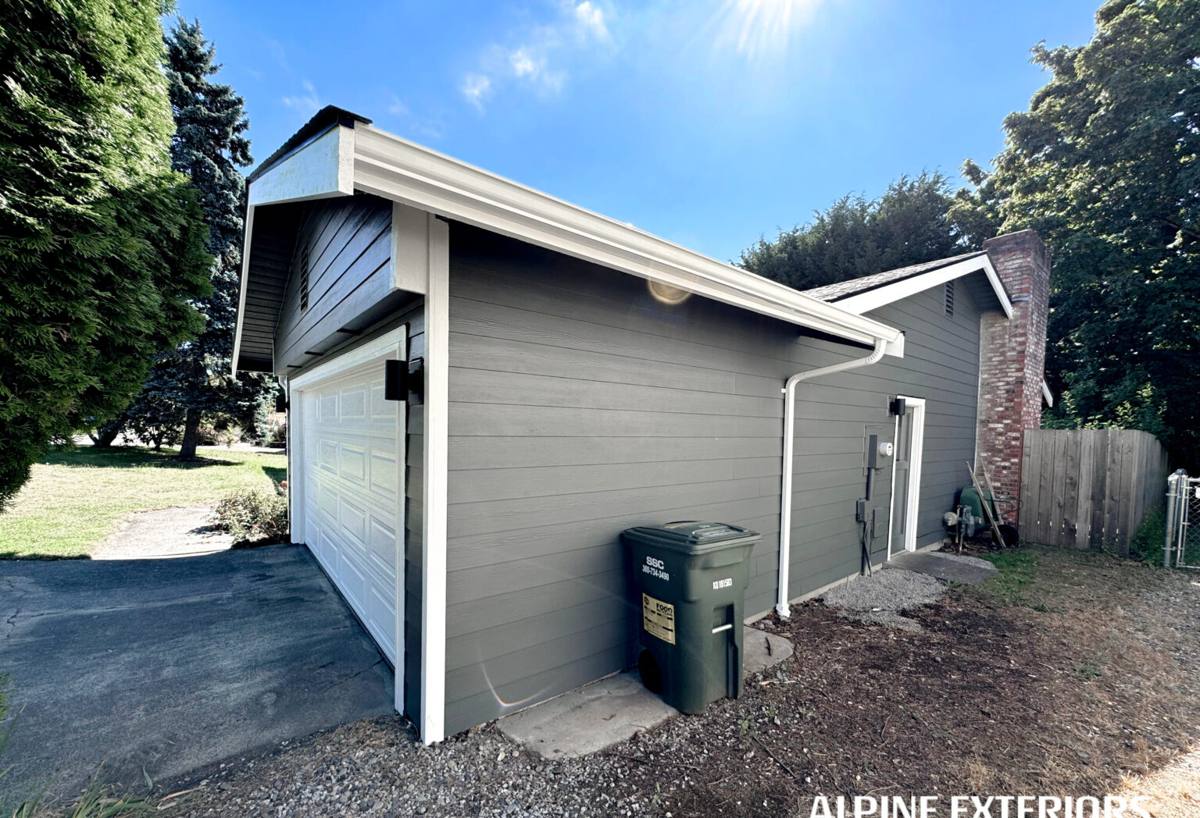
We install James Hardie fiber cement siding exclusively — not vinyl, not LP SmartSide, not primed wood, not other fiber cement brands. That's a deliberate standard, not a lack of options. Fiber cement is made from cement, sand, and cellulose fiber, which means it doesn't rot, doesn't feed insects, and doesn't expand and contract with moisture the way wood-based products do. It's also non-combustible, which matters in a region where wildfire smoke and ember exposure have become a real seasonal concern even west of the Cascades.
Built for This Climate, Not Just "Weather-Resistant"
James Hardie engineers its siding in regional formulations, and the HZ5 product line used in the Pacific Northwest is formulated for our freeze-thaw cycles and sustained moisture exposure — different from what they'd install in Phoenix or Miami. The factory-applied ColorPlus finish is baked on under controlled conditions, which gives it far better adhesion and UV/moisture resistance than field-applied paint, and it holds color and resists the chalking and fading that salt air speeds up on lesser finishes.
What We Don't Install, and Why
Vinyl siding can work loose or warp under sustained wind-driven rain and temperature swings, and its seams give moss and algae more surface area to grip. LP SmartSide and primed wood products are wood-based at the core — well-engineered in some cases, but still vulnerable to moisture intrusion at cut edges and fastener points, which is a real liability in a driving-rain environment. Other fiber cement brands may be chemically similar to Hardie, but we've standardized on one manufacturer so our crews install to one spec, one flashing detail, and one warranty structure, every time — consistency that matters more than it sounds like it should.
What Correct Installation Actually Involves
Fiber cement siding fails early almost exclusively because of installation mistakes, not the material itself. In a high-moisture, salt-air environment like La Conner, the margin for error is smaller than it would be on a dry inland lot.
Water-Resistive Barrier and Flashing
Every project starts with a continuous water-resistive barrier behind the siding, with flashing integrated at every window, door, deck ledger, and roof-to-wall transition — lapped correctly so water sheds outward and down, never into the wall. This is the layer that actually keeps a house dry; the siding is the second line of defense, not the first.
Clearances and Ventilation
Hardie's installation instructions specify minimum clearances from grade, roofing, decks, and horizontal surfaces, plus a gap at the bottom starter course. Skipping these to save a few inches of reveal is one of the most common shortcuts we see on homes we're asked to look at, and it's usually the first place moisture damage shows up.
Fastening and Joint Treatment
Corrosion-resistant fasteners, driven correctly (not overdriven, not underdriven), at the specified pattern — this matters more near salt air, where standard fasteners can corrode and stain or loosen over time. Butt joints get treated and, where possible, backed with flashing rather than relying on caulk alone, since caulk is a maintenance item, not a permanent seal.
Our Process for La Conner Projects
- On-site assessment: We walk the exterior, check existing siding and sheathing condition, and look specifically at wind exposure, shaded/moss-prone elevations, and any signs of past water intrusion.
- Tear-off and inspection: Old siding comes off and we inspect the sheathing underneath — this is where hidden rot or moisture damage from a prior installation often turns up, and it needs to be addressed before anything new goes on.
- Water-resistive barrier and flashing: Installed and integrated at every penetration before a single piece of siding goes up.
- Hardie installation to spec: Correct clearances, fastening, and joint treatment throughout, following James Hardie's published installation requirements for our climate zone.
- Trim, caulking, and touch-up: Factory-finished ColorPlus surfaces need minimal field paint, but cut edges and any touch-up areas are sealed properly.
- Final walkthrough: We go over the completed work with the homeowner and explain what maintenance, if any, the finish requires going forward.
Comparing Siding Options for a La Conner Home
| Material | Salt Air / Moisture Behavior | Moss & Algae Resistance | Ongoing Maintenance |
|---|---|---|---|
| James Hardie Fiber Cement | Engineered (HZ5) for PNW moisture and freeze-thaw exposure | Factory finish resists surface growth better than porous or seamed materials | Low — occasional gentle wash |
| Vinyl | Can warp or loosen under sustained wind-driven rain and temperature swings | Seams and panel joints give growth more surface area | Low, but replacement (not repair) is often the only fix for damage |
| LP SmartSide / Engineered Wood | Wood-based core is vulnerable at cut edges and fastener points if moisture gets in | Moderate — depends on finish upkeep | Moderate — finish needs monitoring over time |
| Primed Wood / Cedar | Natural material, most sensitive to sustained moisture and salt exposure | Lowest without frequent treatment | High — regular refinishing and inspection |
What Drives Cost on a Project Like This
Every La Conner home is different, so we don't quote broad averages without seeing the house, but a few factors consistently move the number:
| Factor | Why It Matters |
|---|---|
| Tear-off condition | Sheathing repair from hidden moisture damage adds cost but is not optional |
| Home size and wall complexity | More corners, dormers, and trim details mean more labor and cut waste |
| Product selection | Lap width, panel style, and ColorPlus color all carry different material costs |
| Site access | Waterfront and tight-lot properties can affect staging and equipment needs |
Maintaining Fiber Cement Siding in a Salt-Air, Moss-Prone Setting
Fiber cement is low-maintenance, not no-maintenance. In this environment, a little attention goes a long way toward getting the full life out of the installation.
- Rinse siding gently once or twice a year, focusing on shaded, north-facing, or tree-covered elevations where moss and algae take hold first
- Keep gutters clear so overflow doesn't run down siding faces and stay damp longer than it should
- Trim back vegetation and tree cover that keeps siding shaded and slow to dry
- Watch caulking at trim and joints for cracking or shrinkage, and have it addressed before it becomes a water entry point
- Have an annual look at any areas near grade, decks, or roof-to-wall transitions, since that's where flashing does the real work
Why Hiring a Crew That Already Works in La Conner Matters
Fiber cement installation instructions are the same on paper everywhere, but a crew that regularly works Skagit County's waterfront and near-waterfront properties has already worked through the judgment calls that come with this specific exposure — how tight to run clearances on a shaded elevation, where extra flashing attention pays off on a home that takes rain straight off the water, which fastener spacing holds up best against salt air over the long run. That's the difference between a technically correct installation and one that's actually built for where the house sits.
If you're considering new siding or need to replace what's on your La Conner home now, we're glad to take a look and walk you through what we'd recommend and why. Reach out for a free, no-pressure estimate — the form below gets you started.