 Skagit County
 La Conner Sits Right Where Weather Meets Water
La Conner's location on the Swinomish Channel gives it a beauty that few other towns in Skagit County can match — but that same waterfront position puts homes here under a specific kind of stress. Salt-laden air moves off the channel and settles on exterior surfaces year-round. Combine that with the long, wet Pacific Northwest winter and the moss and algae growth that comes with it, and you have a climate that is genuinely tougher on siding than most inland neighborhoods just a few miles away. Homes in La Conner don't fail because homeowners neglected them. They fail because the siding wasn't matched to the environment, or it wasn't installed correctly for that environment in the first place.
This page is about one thing: doing siding installation correctly for a La Conner home. Not siding in general, not a generic checklist — what actually matters when the job is happening a few blocks from tidal water in a town that gets driving rain off the water and moss on every shaded surface by late fall.
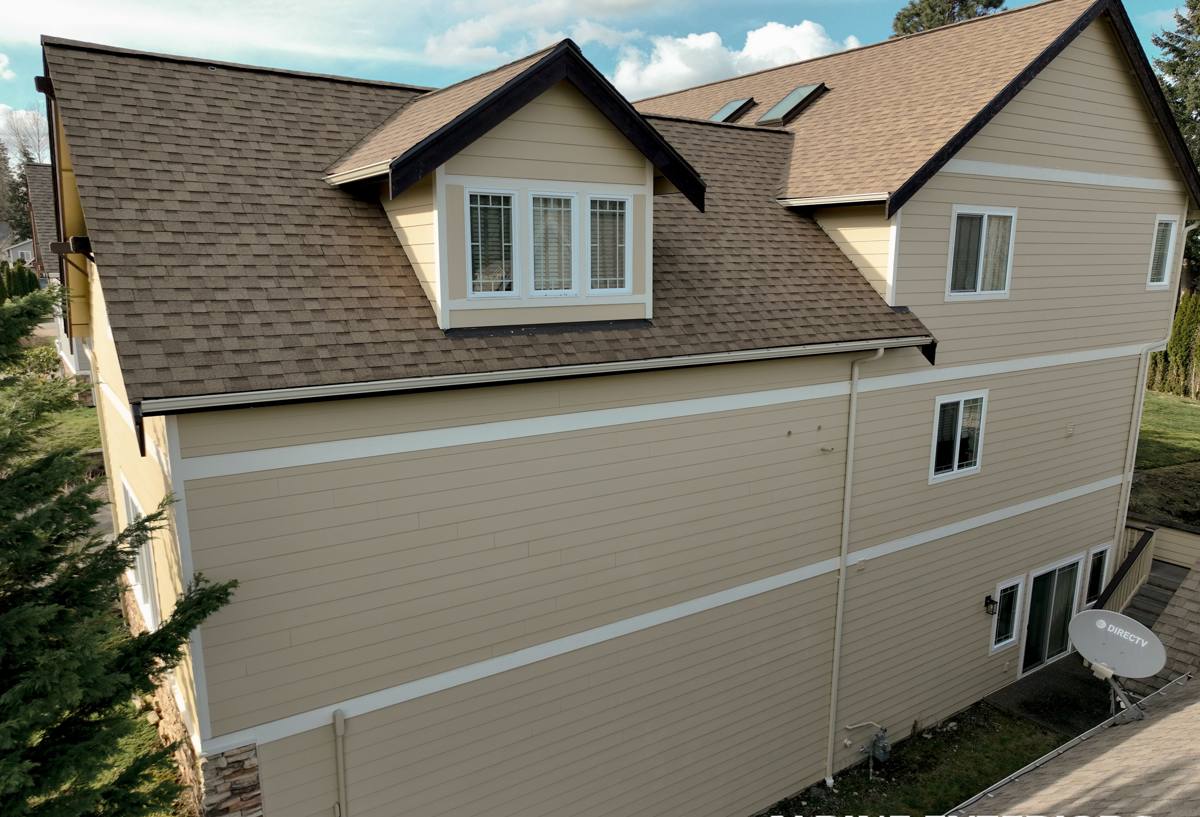
What Salt Air, Rain, and Moss Actually Do to Siding
Salt Air
Airborne salt is corrosive to fasteners, flashing, and any metal trim that isn't rated for coastal exposure. It also accelerates the breakdown of lower-grade paint finishes, which is why houses near the channel often show chalking, fading, and peeling years before comparable homes further inland. Salt exposure doesn't announce itself with one dramatic event — it's a slow, steady wear pattern that shows up first on the windward and water-facing walls.
Driving Rain
Wind off the water doesn't just drop rain straight down — it drives it sideways into wall assemblies, seams, and butt joints. Siding that relies on face-sealed caulk joints instead of proper flashing and drainage details is the first to let moisture behind the cladding in this kind of exposure. Once water gets behind siding and can't drain or dry out, the sheathing and framing underneath are the ones that actually pay the price.
Moss and Algae Season
Skagit County's wet season stretches long, and La Conner's proximity to water keeps humidity elevated even on days without rain. North-facing walls, areas under eaves, and anything shaded by mature trees stay damp for extended stretches. That's exactly the environment moss and algae need to take hold. On absorbent or poorly finished siding, that growth isn't just cosmetic — it holds moisture against the surface and shortens the life of the material underneath it.
What a Correct Installation Involves in This Environment
Siding is a system, not a single product. A house near the Swinomish Channel needs every layer of that system pulled tight, because there's less margin for error than in a drier, more sheltered part of the county.
- Weather-resistant barrier, installed lapped and sealed: the underlayment behind the siding is the actual waterproofing layer — the siding sheds the bulk of the water, the barrier handles what gets through.
- Rainscreen or drainage gap where conditions call for it: a small air gap behind the siding lets any moisture that does get in dry out instead of sitting against the sheathing.
- Corrosion-resistant fasteners and flashing: in a salt-air zone, using standard-grade fasteners is a false economy — they're often the first thing to fail.
- Proper flashing at every penetration: windows, doors, hose bibs, vents, and light fixtures are where driving rain finds its way in if flashing is skipped or done with caulk alone.
- Correct fastener placement and clearances: manufacturer nailing patterns and minimum clearances from grade, decks, and roof lines exist for a reason — skip them and warranty coverage and performance both suffer.
- Factory-applied finish, not field-painted: a finish baked on in a controlled factory environment holds up to UV, salt, and moisture far longer than a field-applied coat, and it doesn't leave seams for water to find.
Any one of these done wrong won't necessarily show up in year one. It shows up in year five or eight, as premature paint failure, soft trim, or moisture damage that costs far more to fix than it would have cost to do right the first time.
Why We Install Only James Hardie Fiber Cement
We don't install vinyl, LP SmartSide, primed spruce, cedar, or other fiber cement brands like Cemplank or Allura. That's a deliberate standard, not a sales position, and it matters more in a town like La Conner than almost anywhere else in the county.
Vinyl softens, warps, and can crack in temperature swings, and it doesn't hold up well to the physical wear that coastal wind and driving rain put on a wall over decades. Wood-based products — cedar and primed spruce — are attractive but need real maintenance discipline to survive constant moisture exposure; skip a re-coat cycle in a wet coastal climate and rot can set in faster than most homeowners expect. LP SmartSide is a treated engineered wood product, and like any wood-based siding, its long-term performance depends heavily on keeping water off the cut edges and away from the substrate — a harder standard to hold consistently in a salt-air, high-rain environment.
James Hardie fiber cement is non-combustible, doesn't rot, and resists moisture intrusion in a way wood-based products structurally cannot. The ColorPlus factory finish is baked on under controlled conditions and carries its own finish warranty, which matters directly here — it's the layer standing between the siding and constant salt exposure. Hardie's HZ5 product line is engineered specifically for climates with extended moisture exposure, which describes the Pacific Northwest generally and the Skagit County waterfront specifically. It's why, after installing a lot of siding in a lot of different conditions, we standardized on one product line instead of offering several.
Our Installation Process
- On-site assessment: we look at wall orientation relative to the water and prevailing wind, existing moisture damage, current siding condition, and any trim, window, or flashing issues that need addressing before new siding goes on.
- Tear-off and sheathing check: old siding comes off and the sheathing underneath gets inspected — this is where hidden moisture damage from a prior installation often turns up, and it needs to be dealt with before anything new goes on top of it.
- Weather barrier and drainage detailing: the housewrap or weather-resistant barrier goes on lapped correctly, with drainage planning appropriate to the wall's exposure.
- Flashing at every penetration: windows, doors, and any wall penetrations get properly flashed before siding closes them in.
- Hardie installation to manufacturer spec: correct fastener type, spacing, and clearances, installed to the specifications that keep the product warranty valid.
- Trim, caulking, and final detail work: the visible finish work that determines how clean the final result looks and how well the seams hold up over time.
- Walkthrough: we go over the finished work with the homeowner before calling the job done.
Signs a La Conner Home Needs New Siding
- Paint that's chalking, peeling, or fading unevenly, especially on water-facing or west walls
- Soft spots or visible warping, particularly near the ground or under windows
- Persistent moss or algae growth that pressure washing doesn't keep off for long
- Visible gaps, cracking, or separation at seams and butt joints
- Rising energy bills that suggest the wall assembly is no longer doing its job
- Interior signs — musty smells or staining on walls that share an exterior with affected siding
What Affects the Cost of a Siding Installation
| Factor | Why It Matters in La Conner |
|---|---|
| Home size and wall complexity | More corners, dormers, and trim details mean more labor and material |
| Current siding condition | Tear-off and any sheathing repair from hidden moisture damage adds time |
| Wall exposure to wind and water | Water-facing walls may need extra flashing and drainage detailing |
| Hardie product line and profile | HZ5 boards, lap width, and trim style all affect material cost |
| Access and site conditions | Tight lots, water proximity, and staging access affect labor time |
We don't quote broad numbers on a page like this because every La Conner home is different — a waterfront lot with full exposure is a different project than a home a few blocks back with more tree cover. A walkthrough gives an honest, specific number.
Why Hiring a Crew That Knows La Conner Matters
Siding installation isn't uniform across Skagit County. A crew used to sheltered inland lots can miss details that matter on a channel-facing wall — drainage planning, fastener corrosion resistance, flashing at penetrations exposed to driving rain. A contractor who has already worked on homes in this specific stretch of the county knows which walls need the extra attention and doesn't have to learn that on your project. That familiarity shows up in fewer callbacks and siding that actually performs the way it's supposed to for the next few decades, not just the next few years.
A Simple Checklist Before You Hire
- Ask what weather-resistant barrier and drainage approach they use for water-facing walls
- Confirm they install to manufacturer fastener and clearance specifications, not just "to code"
- Ask how they handle flashing at windows, doors, and penetrations
- Confirm licensing, insurance, and whether the crew is employees or subcontracted
- Ask what warranty covers the product finish versus the installation labor
- Get specifics on tear-off and how hidden sheathing damage would be handled if found
If your La Conner home's siding is showing wear, or you're planning ahead before it becomes a problem, we're happy to take a look and give you a straightforward, no-pressure estimate. Fill out the form below and we'll walk the property with you and talk through what your home actually needs.