 Skagit County
 Why Decks in Lyman Take a Different Kind of Beating
Lyman sits in the Skagit River valley, and like the rest of Skagit County, it gets a long, wet stretch of weather every year — driving rain that comes sideways in a storm, damp air that never fully clears in the winter months, and a moss season that can start in October and not let go until May. Add in the salt-laden air that moves inland off Puget Sound on a regular basis, and you've got a climate that's genuinely harder on exterior wood structures than most of the country deals with. A deck built the way it would be built in Spokane or Boise doesn't hold up the same way out here.
That doesn't mean decks can't last decades in Lyman — they absolutely can. But it means the details that get skipped by a crew that doesn't know this area (flashing, fastener grade, gap spacing, footing depth) are exactly the details that determine whether your deck is solid in year fifteen or rotting at the ledger board by year seven.
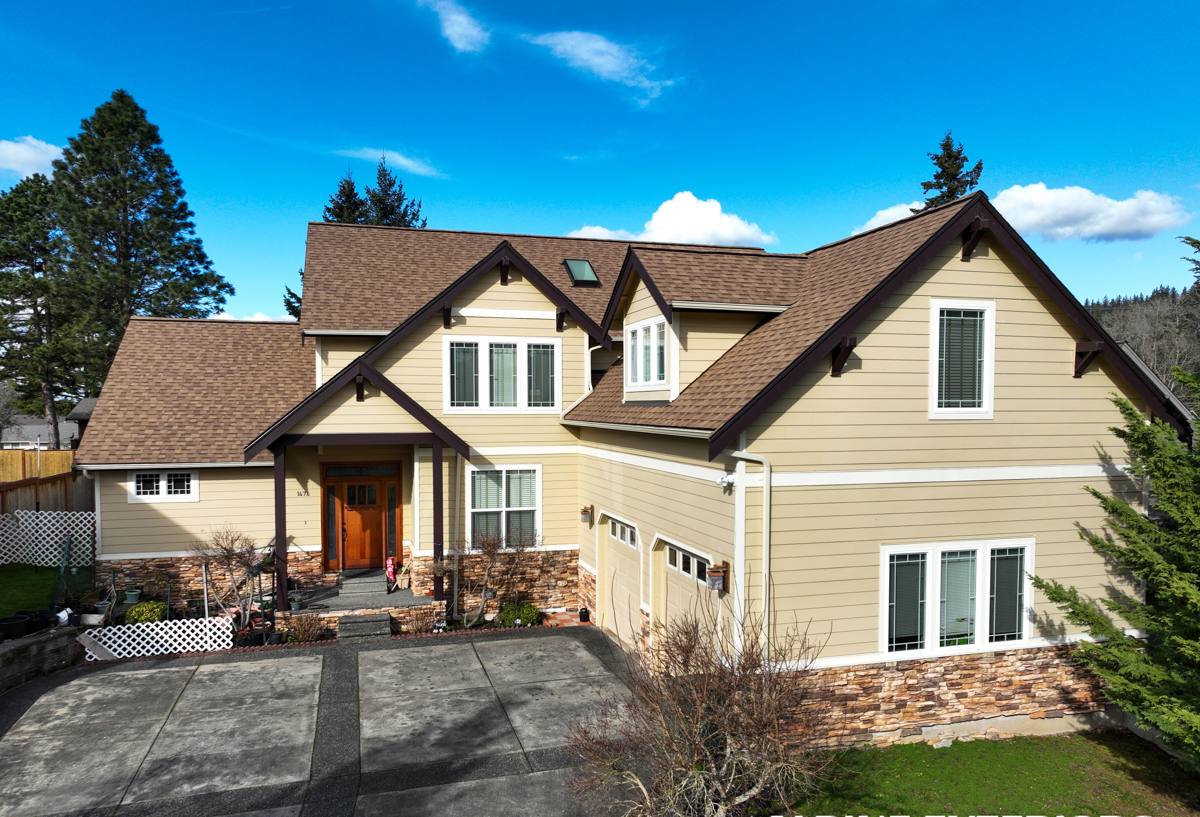
What a Correctly Built Deck Needs Here
A deck is a system, not just a platform of boards. In a climate like ours, three parts of that system matter more than people expect.
Footings and Frost
Skagit County soil holds water longer than sandy or well-drained ground, and footings that are too shallow or poured on wet, disturbed soil are one of the most common causes of a deck that starts to sag or rack out of square within a few years. Footings need to sit below frost depth and bear on undisturbed, compacted soil — not backfill. On a sloped Lyman lot, that can mean deeper or stepped footings than a flat-yard deck would need.
Ledger Board Attachment and Flashing
The ledger board — where the deck attaches to the house — is the single most failure-prone connection on any deck, and it's almost always a water problem, not a structural one. Rain gets behind the ledger, the house sheathing stays wet, and rot sets in where nobody can see it until the deck starts to pull away from the wall. Proper flashing (metal flashing over housewrap, with the siding lapped correctly over the top) keeps water moving away from that joint instead of into it. This is the detail we see skipped most often on decks built by out-of-area crews or DIY jobs.
Fasteners and Hardware
Standard galvanized fasteners can corrode faster than expected in our damp, salt-influenced air, especially in contact with treated lumber, which is chemically corrosive to certain metals. We use stainless steel or coated fasteners rated for ACQ-treated lumber and coastal-influenced climates. It costs a little more up front. It's cheap insurance against streaking, staining, and hardware failure ten years down the road.
Choosing Decking Material for Skagit County Moisture
There's no single "right" decking material — it depends on your budget, how much upkeep you want to sign up for, and how the deck will be used. Here's how the common options actually perform in our climate:
| Material | How it handles our climate | Maintenance | Typical lifespan here |
|---|---|---|---|
| Pressure-treated fir/hem-fir | Good structural performance; needs sealing to resist moisture cupping and checking | Re-stain/seal every 1-2 years | 15-20 years with upkeep |
| Western red cedar | Naturally rot- and insect-resistant; still needs finish to prevent graying and moss growth | Clean and re-oil annually in our wet season | 20-25 years |
| Composite decking | Doesn't absorb moisture or rot; performs very well in damp, mossy conditions | Periodic washing to prevent surface algae/moss film | 25-30+ years |
| Tropical hardwood (e.g., ipe) | Extremely dense and moisture-resistant; heavy, requires precise fastening | Oil periodically to maintain color | 30+ years |
We'll walk you through what makes sense for your budget and how the deck will actually be used — a low-maintenance composite deck for a rental or a busy family, versus a cedar deck if you want that natural look and don't mind the upkeep.
Moss, Mildew, and the Long Wet Season
Moss doesn't just grow on roofs. Given a shaded deck, tight board spacing, and Skagit County's months of damp weather, it will happily colonize decking boards, stair treads, and railing caps too — and it makes surfaces slick, which is a real safety issue on stairs. Correct board spacing (gapping between boards so water and debris can pass through instead of pooling) and a deck surface that drains rather than holds water are both things we account for at the design stage, not something to fix after the fact. Decks built too tight to the ground, or in a heavily shaded spot, will need more frequent cleaning no matter what material you choose — that's just physics, not a defect.
Railings, Stairs, and Code Compliance in Skagit County
Any deck over 30 inches off grade needs a code-compliant guardrail, and stairs have specific rise-and-run and handrail requirements under the residential building code Skagit County enforces. These aren't optional style choices — they're safety requirements, and they're also what a permit inspector will check before signing off. Getting this right the first time avoids delays and rework.
- Guardrails required at 36 inches minimum height for most residential decks over 30 inches above grade
- Baluster spacing that won't allow a 4-inch sphere to pass through
- Consistent stair rise and run, with a graspable handrail on stairs of a certain length
- Structural connections (ledger, footings, joist hangers) sized to the actual load, not guessed at
Most new decks and significant rebuilds in Skagit County require a building permit. We handle that process as part of the job — design drawings, permit submission, and getting the work signed off by inspection — so you're not the one chasing paperwork.
Our Deck-Building Process
Every deck we build in Lyman follows the same sequence, because skipping steps is how corners get cut on the parts you can't see once it's finished.
- On-site consult. We look at your lot, grade, sun exposure, and how you'll actually use the space, and talk through material and layout options.
- Design and permit drawings. We put together plans that meet Skagit County code requirements for footings, framing, and railings.
- Permit submission. We handle the paperwork and coordinate inspections so you don't have to.
- Footings and framing. Footings poured to proper depth on undisturbed soil, ledger flashed correctly, framing built to spec with corrosion-resistant hardware.
- Decking, railing, and finish work. Boards installed with correct gapping, railings set to code, and any staining or sealing done before we call it complete.
- Final walkthrough and inspection. We walk the finished deck with you and make sure it passes final inspection cleanly.
Maintenance Checklist for Lyman Homeowners
A well-built deck still needs some seasonal attention in our climate. This is the short list we give every customer:
- Sweep debris off the deck regularly in fall — wet leaves trapped between boards accelerate rot and feed moss
- Wash the surface at least once a year to remove algae and moss film before it gets a foothold
- Check and re-seal wood decking (cedar or pressure-treated) every 1-2 years, more often on shaded sections
- Inspect the ledger board area annually for staining or soft wood, especially after a wet winter
- Keep gutters and downspouts near the deck clear so runoff isn't draining directly onto or under it
- Check fasteners and railing connections yearly for corrosion or looseness
Why Hiring a Crew That Already Works in Lyman Matters
A lot of deck problems we get called to fix started with a crew that builds mostly in drier climates, or a one-off DIY project that didn't account for how much water this area sees. Knowing to flash a ledger board correctly, size footings for our soil, and pick fasteners that won't corrode in a few years isn't exotic knowledge — but it only shows up in the finished work if the crew building it deals with these conditions regularly. We work throughout Skagit County, including Lyman and the surrounding river valley, and we build decks assuming the driving rain and moss season are coming every year, because they are.
Getting Started
If you're planning a new deck or need to know whether an existing one is sound, we're happy to take a look and give you a straightforward, no-pressure estimate — no hard sell, just an honest read on what your project needs and what it'll cost. Fill out the form below and we'll get in touch.