 Skagit County
 Siding Installation in Lyman: What the Skagit Valley Climate Actually Demands
Lyman sits up the Skagit Valley, where the weather pattern is a little different from the coastal towns downriver. You still get the marine air moving in off Puget Sound, but you also get the valley's own microclimate — heavier rain shadow effects some seasons, damp cold air pooling along the river corridor, and a moss season that seems to start earlier and last longer than it does just a few miles away. Add in the salt-laden air that reaches inland through the Skagit Valley on prevailing winds, and you have a combination that is genuinely hard on exterior materials: constant moisture cycling, organic growth that holds water against the wall, and driving rain that finds every gap in a poorly flashed installation.
Siding installation in this environment isn't just about picking a product and nailing it up. It's about understanding how water moves across a wall system here, where moss and algae are going to want to take hold, and how a house built or re-sided without those realities in mind ends up with rot, paint failure, or siding replacement years earlier than it should.
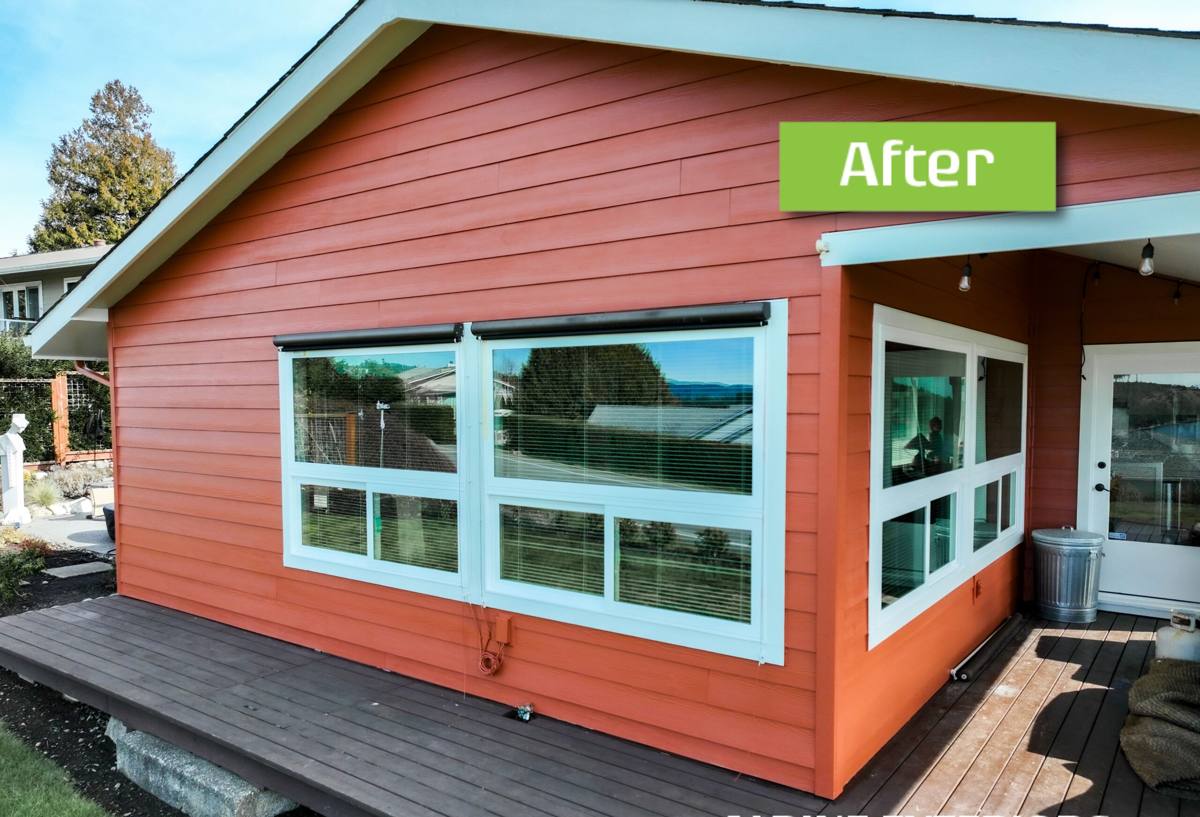
Why We Install Only James Hardie Fiber Cement
We don't install vinyl, LP SmartSide, Cemplank, Allura, primed spruce, or cedar. That's a deliberate standard, not a lack of options. Each of those products has legitimate strengths, but none of them holds up as consistently as James Hardie fiber cement does under the specific stresses Lyman and the broader Skagit Valley put on exterior walls:
- Vinyl expands and contracts significantly with temperature swings and can warp or crack in sustained cold snaps; it also traps moisture behind it if not detailed correctly, which is a real risk in a valley that stays damp for months at a time.
- LP SmartSide is an engineered wood product — well-regarded in the right application, but wood-based siding is more sensitive to sustained moisture exposure at cut edges and butt joints, which matters a lot in a climate with a long wet season and heavy moss growth.
- Cedar and primed spruce are natural wood. They look great new, but they need consistent maintenance — recoating, caulking, moss treatment — to keep water out over time. In a valley with this much annual moisture, that maintenance burden is steep.
- Cemplank and Allura are also fiber cement, and reasonable products, but we've standardized on one manufacturer so our crews install one system correctly, every time, rather than splitting attention across product lines with different install specs, trim details, and warranty terms.
James Hardie's fiber cement is non-combustible, dimensionally stable across temperature and moisture swings, and available in ColorPlus factory-finished color that resists fading and doesn't need to be painted after install. For a house in Lyman, that stability matters more than it might somewhere drier — the material isn't fighting the climate, it's built to sit in it.
The Right HardiePlank Line for This Elevation and Exposure
James Hardie makes climate-engineered HZ product lines suited to different regions. For homes up the Skagit Valley, where humidity, driving rain, and cooler temperatures are the norm, we spec the HZ10 line, engineered for cooler, wetter climates like ours. That's not a marketing detail — the formulation and moisture resistance built into HZ10 is part of why fiber cement performs well here instead of just adequately.
What a Correct Siding Installation Actually Involves
The siding itself is only part of the system. Most siding failures we get called out to look at — regardless of the original material — trace back to what's underneath and around the siding, not the siding panels themselves. A correct installation includes:
Weather-Resistive Barrier and Drainage Plane
A properly lapped and sealed weather-resistive barrier behind the siding, with a drainage gap that lets any moisture that does get behind the cladding find its way back out instead of sitting against the sheathing. In a valley climate with sustained damp periods, this drainage plane is not optional — it's the difference between siding that sheds incidental moisture and a wall assembly that slowly rots from the inside.
Flashing at Every Penetration
Windows, doors, hose bibs, light fixtures, deck ledgers — every penetration through the siding is a place water can get in if it isn't flashed correctly. Skagit Valley's driving rain, especially in fall and winter storms, puts real pressure on these details. Kick-out flashing at roof-to-wall intersections and proper head flashing above windows are two of the most commonly skipped details on rushed jobs, and two of the most common places we find rot when we tear off old siding.
Fastening, Clearances, and Fiber Cement-Specific Details
James Hardie has published installation specs for fastener type and spacing, minimum clearance from grade, roofing, and decks, and caulking at butt joints and trim. Installing fiber cement outside those specs doesn't just risk cosmetic problems — it can void the manufacturer's warranty. This is exactly why we run one product line: our crews know the HardiePlank and HardieTrim install spec cold, rather than juggling install requirements for five different siding brands.
Moss and Algae Considerations
Given how long moss season runs here, we pay particular attention to keeping the bottom edge of the siding clear of soil, mulch, and landscaping that holds moisture against the material, and to maintaining proper clearance and drainage so water doesn't pool anywhere on the wall. ColorPlus finish resists staining better than field-painted surfaces, but siding still needs airflow and drainage working in its favor.
Our Process, Start to Finish
- On-site assessment. We look at the existing siding (if there is any), check for moisture damage or rot at penetrations and the base of walls, and evaluate what's driving the need for new siding.
- Written estimate. A clear scope covering tear-off (if applicable), any sheathing or framing repair needed, weather barrier and flashing work, HardiePlank or HardiePanel installation, trim, and finish details.
- Tear-off and inspection. Once old siding comes off, we inspect the sheathing underneath. This is often where hidden moisture damage from years of a failing wall system shows up, and we'll walk you through anything we find before covering it back up.
- Weather barrier, flashing, and drainage plane. This layer goes in correctly before a single piece of Hardie touches the wall.
- Siding and trim installation to James Hardie's spec, including fastener pattern, clearances, and joint treatment.
- Final walk-through where we go over the finished work with you directly.
Comparing Siding Options for a Lyman Home
| Material | How it handles sustained valley moisture | Maintenance over time | Our position |
|---|---|---|---|
| James Hardie fiber cement | Dimensionally stable, engineered HZ10 line for cool/wet climates | Low — ColorPlus finish, no repainting needed for years | What we install |
| Vinyl | Can warp/gap with temperature swings; moisture can get trapped behind it | Low material upkeep, but poor moisture tolerance if detailing fails | Not installed by us |
| LP SmartSide | Engineered wood — sensitive to sustained moisture at cut edges/joints | Moderate — needs caulking/coating upkeep | Not installed by us |
| Cedar / primed spruce | Natural wood — absorbs moisture without diligent upkeep | High — recoating, caulking, moss treatment | Not installed by us |
What Drives Siding Installation Cost
| Factor | Why it matters |
|---|---|
| House size and wall complexity | More corners, gables, and dormers mean more cutting, trim, and labor |
| Tear-off vs. new construction | Removing old siding and repairing hidden damage adds time before new siding starts |
| Sheathing/framing repair | Rot found during tear-off has to be fixed before siding goes back on — this varies house to house |
| Siding profile and trim detail | Lap width, panel vs. plank, and trim complexity all affect material and labor |
| Color and finish | Factory ColorPlus finish vs. field-painted affects both cost and long-term maintenance |
We give straightforward, itemized estimates rather than a single vague number — you should know what you're paying for before work starts.
Signs Your Lyman Home May Need New Siding
- Visible cracking, warping, or soft spots you can press into with a finger
- Paint that keeps failing faster than it should between repaints
- Moss or algae that returns quickly after cleaning, especially on north-facing or shaded walls
- Staining or discoloration that tracks with where water runs off the roof
- Visible gaps at trim, corners, or window and door edges
- A musty smell or soft drywall on interior walls that back up to exterior siding
- Siding that's original to a home more than 20-25 years old with no major re-side since
Why a Crew That Already Works Lyman and the Skagit Valley Matters
Siding installation done right depends on understanding the specific conditions a house is going to face — and that's regional knowledge, not generic knowledge. A crew that regularly works siding jobs in Skagit County has already seen how moss builds up on valley homes, where driving rain tends to find weak flashing, and how salt-influenced air moving up from the Sound behaves differently than it does on the immediate coast. That experience shows up in the small decisions on a job site: where to add extra flashing, how tight to keep clearances, which walls need extra attention to drainage. It's the difference between a crew that installs siding and a crew that installs siding for this valley specifically.
After Installation: Keeping It Looking Right
One of the real advantages of James Hardie with a ColorPlus factory finish is how little upkeep it needs compared to painted wood or field-finished siding. That said, no siding is maintenance-free in a climate like this. A periodic rinse to keep moss and organic buildup from taking hold, keeping gutters clear so water isn't overflowing onto walls, and keeping landscaping from crowding the base of the siding will all extend the life of the installation well beyond what a neglected wall system achieves.
If your Lyman home's siding is showing its age, or you're planning ahead before a bigger problem develops, we're happy to come take a look and give you a straightforward, no-pressure estimate — just fill out the form below.