 Skagit County
 Why March Point Roofs Wear Out Differently
March Point sits out on the water, tucked between Similk Bay and the refinery flats along the Swinomish Channel, and that location changes what a roof has to put up with compared to homes farther inland in Skagit County. The air off the water carries salt, the wind comes in with fewer trees to break it, and the moisture sits longer because the peninsula rarely gets the same afternoon sun exposure as homes up on higher, more open ground. A roof out here isn't just shedding rain — it's fighting slow corrosion on every exposed metal component, dealing with wind-driven rain that gets pushed sideways under normal laps and flashings, and hosting moss and lichen for a bigger chunk of the year than most of the county sees.
None of that means a roof in March Point needs to be exotic or overbuilt. It means the details that get skipped on an easy inland job — fastener choice, underlayment coverage, flashing laps, ventilation balance — are the details that decide whether a roof looks and performs well at year 15 or starts showing problems at year 7.
What "Correct" Actually Means for a Roof Replacement Here
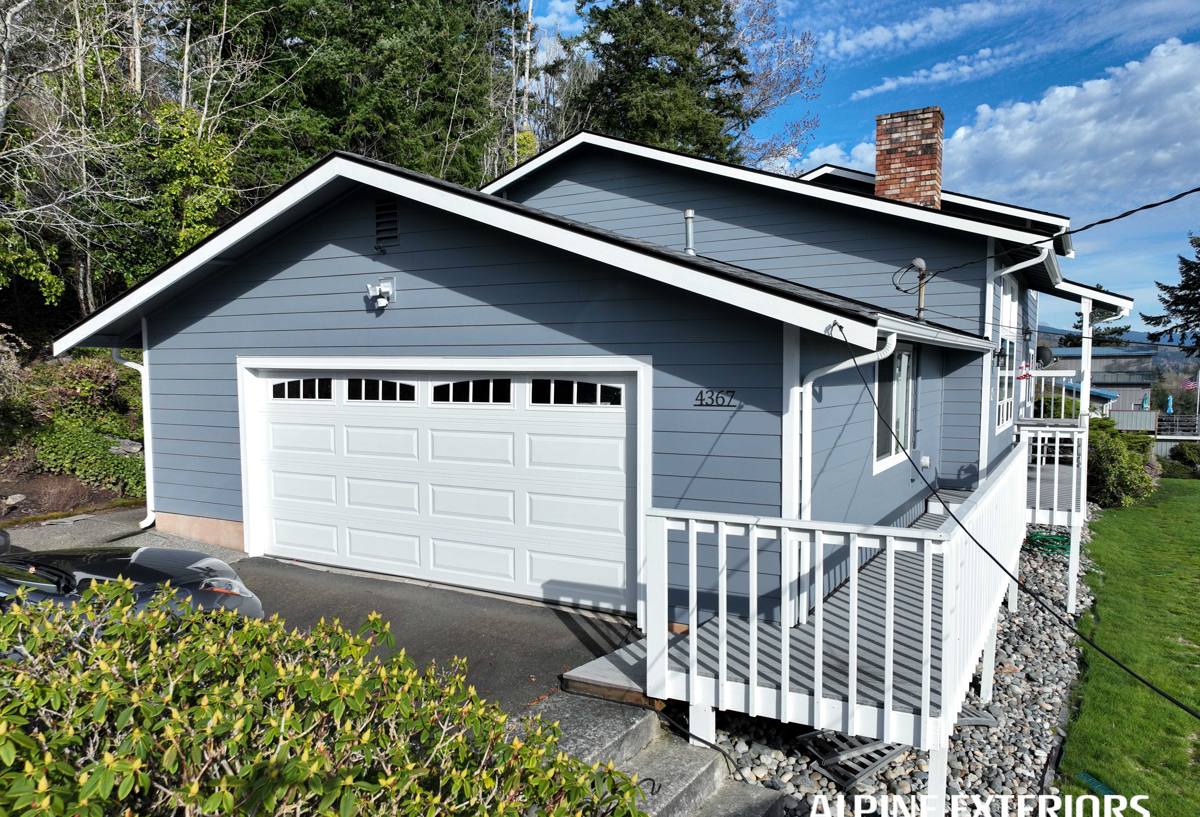
A new roof installation is more than stripping old shingles and nailing down new ones. Done right, it's a full system: deck inspection and repair, ice-and-water or synthetic underlayment sized to the actual exposure, corrosion-resistant fasteners and flashings, proper intake and exhaust ventilation, and a finish material matched to how much wind, salt, and shade the specific roof plane will see. Skip any one of those and the shingles on top can still look fine while the roof underneath is quietly failing.
On a salt-air peninsula like March Point, we pay particular attention to three things that get overlooked on a lot of roofs:
- Fastener and flashing metal — plain galvanized steel corrodes faster this close to salt water; we spec fasteners and flashing metals rated for coastal exposure rather than the cheapest stock option.
- Underlayment coverage at vulnerable areas — valleys, eaves, and low-slope transitions get self-adhered waterproof underlayment, not just felt, because wind-driven rain here doesn't always run downhill the way it does on a calm inland roof.
- Sealed and shimmed penetrations — every pipe boot, vent, and skylight curb is a spot where driving rain can find a way in; each one gets sealed to hold up under sideways wind, not just vertical rainfall.
Roofing Materials That Make Sense for This Environment
There's no single "best" roofing material for every March Point home — it depends on the roof's slope, how exposed it is to wind and salt spray, and what the homeowner wants to budget for both installation and upkeep. Here's how the common options actually compare for a coastal Skagit County property:
| Material | Coastal/Salt-Air Performance | Moss Resistance | Typical Lifespan Here |
|---|---|---|---|
| Architectural asphalt shingle | Good with coated, corrosion-resistant fasteners and flashing | Moderate — needs periodic cleaning and good ventilation | 20–30 years |
| Standing seam metal | Excellent when properly coated/finished for coastal use | High — sheds moss growth better than textured surfaces | 40–60+ years |
| Cedar shake | Fair — needs diligent maintenance near salt air and shade | Low — moss and moisture retention are the main long-term issue | 20–30 years with upkeep |
| Synthetic/composite shingle | Good — engineered materials resist salt-driven degradation well | Moderate to high depending on product | 30–50 years |
We're honest with homeowners about the trade-offs. Cedar shake looks great and has a long history in the Pacific Northwest, but on a shaded, salt-exposed roof plane it demands more upkeep than most people want to keep up with — moisture sits in the wood longer here than it does on a drier, sunnier roof, which shortens its practical service life unless someone stays on top of cleaning and treatment. Metal costs more up front but shrugs off moss and salt exposure better than almost anything else we install. Asphalt remains the most common choice because it balances upfront cost, appearance, and durability reasonably well — as long as it's installed with coastal-grade fasteners and flashing rather than standard inland spec.
How Our Installation Process Works
Every roof replacement we do in March Point follows the same sequence, because skipping steps is where roofs fail early:
1. Inspection and Scope
We get on the roof (or use elevated/drone inspection where access is limited) and check the deck, existing flashing, ventilation setup, and any trouble spots — soft decking, rusted flashing, undersized vents — before we ever write a quote. This is also when we look at how exposed the roof is to prevailing wind and salt spray, since that affects material and fastener recommendations.
2. Tear-Off and Deck Assessment
Old roofing comes off down to the deck. Any water-damaged or rotted sheathing gets replaced — this is the point where hidden problems from old flashing leaks or ice-dam damage show up, and it's far cheaper to fix them now than to bury them under a new roof.
3. Underlayment and Flashing
We install underlayment matched to the roof's exposure — self-adhered waterproofing at eaves, valleys, and low-slope sections, synthetic underlayment across open fields. New flashing goes in at every wall intersection, chimney, skylight, and valley, using metal and fasteners suited to the salt-air environment rather than whatever is cheapest.
4. Ventilation Check
We confirm intake (soffit/eave) and exhaust (ridge or roof vents) are balanced. A roof that traps warm, moist attic air performs worse in this climate — it accelerates moss growth from below and can shorten shingle life from the underside, which is easy to miss since the damage isn't visible from the ground.
5. Roofing Material Installation
Shingles, metal panels, or shakes go on per manufacturer spec and local code, with attention to nailing patterns, exposure, and starter courses — the parts of an install that are invisible once finished but determine wind resistance and water-shedding performance for the life of the roof.
6. Final Walkthrough and Cleanup
We walk the finished roof, check all penetrations and edges, and do a full site cleanup — magnetic sweep for stray fasteners, debris hauled off, gutters checked for roofing debris that can cause clogs.
Moss, Shade, and Roof Longevity in Skagit County
Moss season runs long here, and March Point's tree cover and marine humidity give moss a head start compared to drier, more open parts of the county. Moss itself doesn't just sit on a roof looking bad — it holds moisture against the roofing surface, lifts shingle edges as it grows, and can work its way under flashing over time. A roof with good ventilation, adequate sun exposure where the layout allows it, and a surface texture that doesn't trap organic debris will fight moss far better than one without those things.
We can't change how much shade a roof gets, but we can make sure the roofing system doesn't make the moss problem worse — proper ventilation reduces the moisture buildup that moss thrives on, and material choice (smoother-surfaced shingles or metal over deeply textured shakes) matters more here than it would on a drier, sunnier inland roof.
Signs a March Point Roof Needs Replacement, Not Another Repair
Repairs make sense for isolated problems. A full replacement is the right call once the damage or age is widespread. Watch for:
- Granule loss heavy enough that you can see bare, shiny patches on asphalt shingles
- Shingles that are curling, cracking, or missing across multiple roof planes, not just one spot
- Daylight or water stains visible in the attic, especially near valleys or chimney flashing
- Persistent moss or dark staining that comes back within a season or two of cleaning
- Rusted, lifted, or missing flashing around chimneys, vents, or wall intersections
- A roof approaching or past the upper end of its material's expected lifespan, especially if it's never had ventilation upgrades
- Visible sagging along the ridge or roof plane — a sign of deck or structural issues, not just surface wear
What Drives the Cost of a New Roof Here
Every roof is priced on its own specifics, but the factors that move the number up or down are consistent:
| Cost Factor | Why It Matters in March Point |
|---|---|
| Roof size and number of planes | More material and more valleys/hips mean more labor and flashing detail |
| Deck condition | Rot from prior leaks means sheathing replacement, which adds cost but prevents a short-lived roof |
| Material choice | Metal and composite systems cost more upfront but need less coastal maintenance long-term |
| Access and wind exposure | Steep or highly exposed roofs need more safety setup and take longer to install correctly |
| Ventilation upgrades | Adding or correcting intake/exhaust venting adds modest cost but pays off in roof lifespan |
We give straightforward, itemized estimates so homeowners can see exactly what's driving the price — no vague lump-sum numbers that hide what's actually being done.
Why Hiring a Crew That Already Works in March Point Matters
A roofing crew that regularly works this part of Skagit County already knows which fastener and flashing specs hold up against the salt air, how much ventilation a shaded peninsula roof actually needs versus a textbook inland number, and which roof details on local homes tend to fail first. That local pattern recognition means fewer surprises during tear-off and a roof that's built for the conditions it will actually face — not a generic spec pulled from a manual written for a drier, calmer climate zone.
It also matters for permitting and code compliance. Skagit County has its own permitting process for roof replacements, and a crew that pulls permits here regularly knows what inspectors are looking for, which keeps the job moving instead of stalling on avoidable paperwork issues.
Warranty and Long-Term Care
A new roof is a long-term investment, and how it's covered matters as much as how it's installed. We're upfront about what's covered under manufacturer material warranties versus our own workmanship warranty, and we explain the difference clearly rather than letting the two blur together in a sales pitch. We also give homeowners simple, practical maintenance guidance afterward — things like keeping gutters clear and knowing when a moss treatment or gentle cleaning is worth scheduling — so the roof performs the way it's supposed to for its full expected lifespan.
If your March Point roof is showing its age, dealing with recurring moss, or you just want an honest read on whether repair or replacement makes more sense, we're happy to take a look. Fill out the form below for a free, no-pressure estimate — we'll walk the roof, explain what we see, and give you a straightforward recommendation with no upsell pressure attached.