 Skagit County
 Metal Roofing in Sedro-Woolley: Built for the Weather We Actually Get
Sedro-Woolley sits in the Skagit Valley, ringed by timber and close enough to Puget Sound that the same marine-driven weather pattern that soaks the rest of Skagit County reaches inland too. That means long stretches of steady rain, heavy tree cover that keeps roofs shaded and damp, and a moss season that can run most of the year in the wetter months. A roof here isn't just shedding the occasional storm — it's managing near-constant moisture exposure for months at a time, and the roofing material and installation details that hold up on a dry-climate roof don't always hold up here.
Metal roofing has become a popular answer for homeowners in this area because, done correctly, it handles sustained wet weather better than most alternatives. It doesn't absorb water, it sheds moss growth more easily than a rougher surface, and a quality system can outlast two or three cycles of asphalt shingles. But "metal roofing" covers a wide range of products and installation quality, and the difference between a roof that performs for 40+ years and one that leaks in year five almost always comes down to details most homeowners never see until something goes wrong.
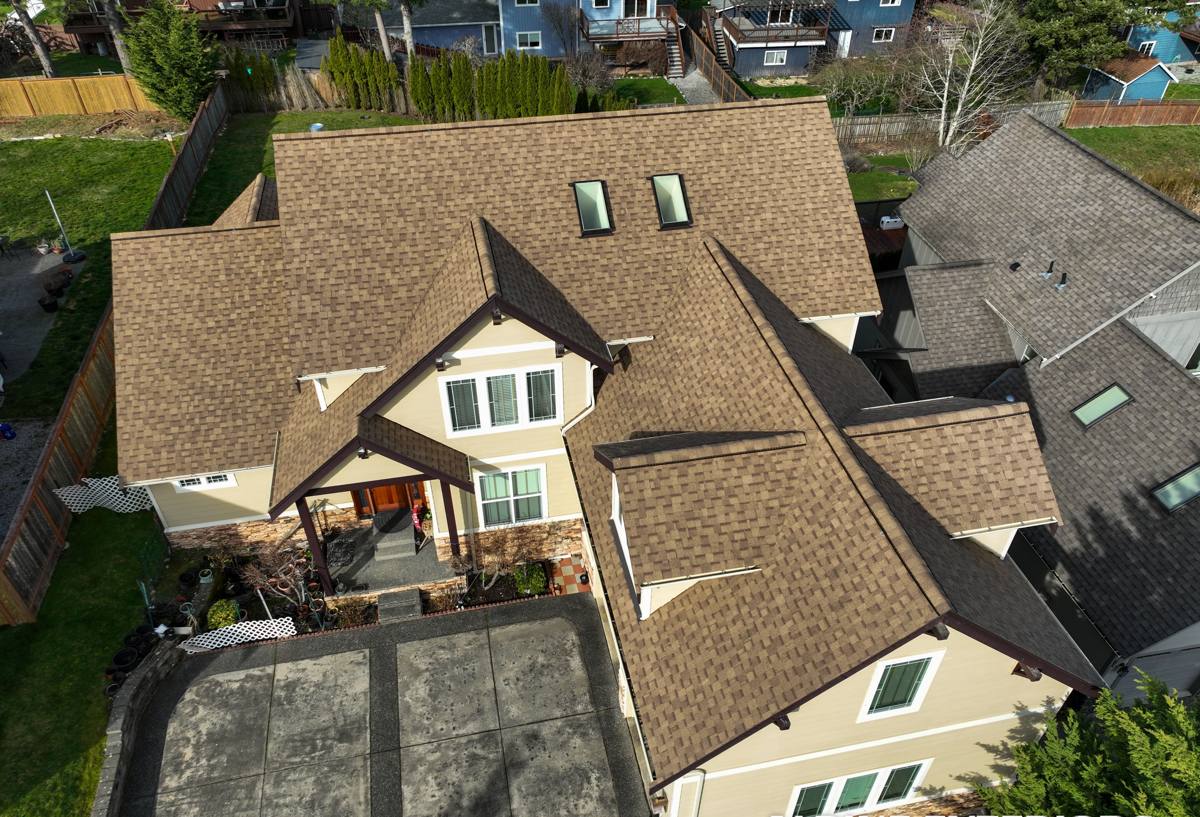
What Sedro-Woolley Roofs Are Up Against
Sustained Moisture, Not Just Storms
The bigger risk in this climate isn't a single hard rain — it's water sitting against a roof surface for days or weeks at a stretch. Any gap in underlayment, any fastener that isn't sealed correctly, any flashing detail that relies on caulk instead of proper lapping, becomes a slow leak path over a wet season rather than an immediate failure. That's why installation quality matters more here than in drier parts of the state.
Moss and Organic Growth
Shaded, tree-lined lots common around Sedro-Woolley hold moisture longer and give moss more time to establish. On composition roofing, moss roots into the granule surface and lifts shingles as it grows. Metal doesn't give moss the same foothold, but valleys, low-slope sections, and areas where debris collects can still grow moss on a metal roof if those areas aren't detailed and maintained correctly.
Regional Marine Air
Skagit County's proximity to Puget Sound means homes throughout the region — including inland communities like Sedro-Woolley — deal with a marine-influenced climate that keeps humidity elevated even between rain events. That steady dampness is part of why fastener and coating quality matter more here than they would in a dry inland climate.
What a Correct Metal Roof Installation Actually Involves
A metal roof is only as good as what's underneath it and how it's fastened. The panels themselves get most of the attention, but the components that actually keep water out are less visible.
- Underlayment: A synthetic, high-temp underlayment rated for the moisture exposure metal roofs see, not a basic felt product that degrades under sustained dampness.
- Ice and water shield at vulnerable points: Eaves, valleys, and roof-to-wall transitions get self-adhered membrane, not just underlayment, since these are where standing water and wind-driven rain concentrate.
- Fastener pattern and type: Correct spacing and gasketed screws rated for the panel profile — over-driven or under-driven fasteners are one of the most common causes of early leaks on exposed-fastener systems.
- Flashing detail work: Chimneys, skylights, vents, and wall intersections need custom-formed flashing that laps correctly with the panel system, not generic trim and sealant.
- Ventilation: Proper intake and exhaust airflow so moisture doesn't condense against the underside of the panels or in the attic space below.
Skipping any one of these doesn't usually cause an immediate problem — it causes a problem two, five, or ten winters later, after the labor to fix it has gone up and the interior damage has already started.
Comparing Metal Roofing Options for This Climate
| Panel Type | Typical Lifespan | Cost Position | Best Suited For |
|---|---|---|---|
| Standing seam (concealed fastener) | 40–60+ years | Higher upfront cost | Homes wanting the fewest long-term maintenance points; fasteners are hidden and not exposed to weather cycling |
| Exposed-fastener panel | 25–40 years | Moderate cost | Budget-conscious projects; requires periodic fastener inspection since screws and gaskets are the main wear point |
| Metal shingle / shake profile | 30–50 years | Moderate to higher cost | Homeowners wanting a traditional roofline appearance with metal's durability |
None of these is a universally "correct" choice — the right one depends on the roof's slope, the home's style, and how much long-term maintenance the homeowner wants to take on. What we won't do is put an exposed-fastener system on a low-slope section where standing water will stress the seams every winter, or use trim details that look fine on day one but aren't built for decades of this region's rain cycle.
Cost Factors Beyond the Panel Itself
| Factor | Why It Affects Price |
|---|---|
| Roof pitch and complexity | More valleys, dormers, and penetrations mean more custom flashing labor |
| Tear-off vs. overlay | Removing existing roofing adds labor but lets us properly inspect and repair the deck underneath |
| Decking condition | Rot or soft spots found during tear-off need to be replaced before any new roofing goes on |
| Panel gauge and finish | Heavier-gauge steel and better paint finishes cost more but hold up longer against this climate |
Our Process for Metal Roofing Projects in Sedro-Woolley
- On-site inspection: We look at the existing roof, deck condition, ventilation, and any trouble spots — not just measure the roof from a satellite photo.
- Written estimate: A clear breakdown of materials, labor, and what's included, so there are no surprise line items added mid-project.
- Material selection: We walk through panel type, gauge, and finish options based on the home's roofline and the homeowner's budget and priorities.
- Tear-off and deck check: Old roofing comes off, the deck gets inspected, and any repairs are handled before new material goes down.
- Installation: Underlayment, flashing, and panels installed to manufacturer specification and the details this climate actually requires.
- Final walkthrough and cleanup: We review the finished roof with the homeowner and make sure the property is cleared of debris and old material.
Signs Your Roof Needs Attention
Metal roofing is durable, but no roof is maintenance-free, and older roofing of any kind in this climate tends to show warning signs before it actually fails. Worth checking for:
- Moss buildup in valleys or shaded roof sections, especially where debris collects
- Rust streaking or discoloration around fasteners or flashing on an existing metal roof
- Sagging or soft spots visible from the ground or in the attic
- Water stains on interior ceilings, particularly after a heavy rain stretch
- Granule loss or curling on aging asphalt shingles being considered for replacement
- Gutters that consistently overflow or hold standing debris
Catching these early is almost always cheaper than waiting. A small flashing repair or moss treatment now is a fraction of the cost of repairing water-damaged decking or framing after a slow leak has been running for a season or two.
Why a Local Skagit County Crew Matters
Roofing crews that work outside this region sometimes install products and details that are correct for a drier climate but not for ours. A crew that regularly works in Skagit County knows which flashing details actually hold up through a wet winter, which panel systems perform on the low-slope additions common on older Sedro-Woolley homes, and how to sequence a tear-off around our rain patterns so the deck isn't left exposed longer than it should be.
There's also a practical side to hiring local: permitting familiarity with the jurisdictions covering Sedro-Woolley and unincorporated Skagit County, faster response if a warranty question comes up, and a crew that isn't driving in from out of the area and disappearing once the invoice is paid.
What to Ask Before Hiring Any Roofing Contractor
- Are you licensed and insured to work in Washington, and can you provide proof?
- What underlayment and flashing details do you use, specifically, for this climate?
- What's the manufacturer's warranty, and what's your own labor warranty separately?
- Can I see other metal roofing work you've completed in this area?
- How do you handle deck repairs if rot is found during tear-off?
Maintenance That Extends the Life of a Metal Roof Here
Metal roofing needs far less upkeep than asphalt, but a little attention goes a long way in this climate:
- Clear debris from valleys and gutters at least once a year, more often on tree-heavy lots
- Have moss or algae growth treated before it spreads, rather than after it's established
- Check exposed fasteners periodically on exposed-fastener panel systems for backing out or gasket wear
- Keep overhanging branches trimmed back to reduce shade, debris, and moss pressure on the roof surface
If you're weighing a metal roof for a Sedro-Woolley home, or you're not sure whether your current roof needs repair or full replacement, we're happy to take a look and give you a straightforward, no-pressure estimate. Use the form below to get started.