 Skagit County
 Why Siding Replacement Looks Different in Sedro-Woolley
Sedro-Woolley sits where the Skagit Valley opens up between the foothills and the tidal flats, and that location cuts both ways. Homes here get a mix of marine-influenced air pushing up the valley from Skagit Bay and the Sound, plus the wetter, cooler microclimate that settles along the river corridor. The result is siding that stays damp longer than siding thirty miles inland, and that gets a steady coating of salt-laden moisture even though the coastline itself isn't visible from most yards. Add in a moss and algae season that can run from October into May most years, and you have a set of conditions that will find every weak point in a siding system — lap joints, caulk lines, end cuts, anywhere water can get behind the surface and sit.
Siding replacement in this kind of climate isn't just a cosmetic upgrade. It's a chance to fix the moisture pathways that caused the original siding to fail, and to install a product and a system that's actually built for sustained dampness rather than the occasional rain event. We've replaced enough siding around Skagit County to know which failure patterns show up here again and again, and we build every job around avoiding them.
What Salt Air, Driving Rain, and Moss Actually Do to Siding
Salt-Influenced Air
You don't have to live on the waterfront to feel salt air's effects. Prevailing winds carry moisture off Skagit Bay and Puget Sound inland, and that moisture carries dissolved salts that accelerate corrosion on fasteners, flashing, and any exposed metal trim. Over years, corroding fasteners loosen, siding panels shift, and gaps open up that let water behind the cladding — right where you can't see it happening.
Driving, Wind-Driven Rain
Sedro-Woolley gets weather systems that come through with real wind behind the rain, not just a straight-down drizzle. Wind-driven rain gets pushed sideways into laps, seams, and trim joints that would shed water fine in a calmer climate. If those joints aren't detailed correctly — proper lap overlap, correct caulking at butt joints, flashing above windows and doors — water works its way behind the siding and into the wall assembly.
Moss and Algae Season
Shaded north and west walls, tree cover, and long stretches of overcast, damp weather add up to a moss and algae season that's longer here than in drier parts of the state. Moss holds moisture directly against the siding surface for weeks at a time. On products that aren't dimensionally stable or that absorb water into their core, that sustained dampness leads to swelling, softening, and eventually rot. On siding with a factory-cured finish resistant to mildew growth, it's mostly a matter of an occasional wash.
What a Correct Siding Replacement Job Involves
Pulling off old siding and nailing up new panels isn't a replacement — it's a cover-up if the substrate underneath isn't addressed. A correct job in this climate goes through the same sequence every time:
- Full removal of the old siding down to the sheathing, so hidden rot, soft spots, and prior water damage are actually visible and repaired, not sealed over
- Inspection and repair of sheathing and framing — any water-damaged OSB or plywood gets cut out and replaced before anything new goes up
- Installation of a code-compliant weather-resistive barrier, lapped correctly from bottom to top so water sheds outward at every seam
- Proper flashing at every window, door, and roof-to-wall intersection, since these are the highest-risk spots for wind-driven rain intrusion
- Rainscreen or drainage gap detailing where called for, giving any moisture that does get behind the siding a path to drain and dry out instead of sitting against the wall
- Correct fastening pattern and fastener spec for the siding product, since under- or over-driven nails are one of the most common causes of early failure
- Factory-finished trim and siding installed to the manufacturer's climate zone specifications, not generic instructions
Skip any one of those steps and the new siding is only as good as the layer underneath it — which, in a wet climate, is exactly what tends to fail first.
Why We Install James Hardie Fiber Cement and Nothing Else
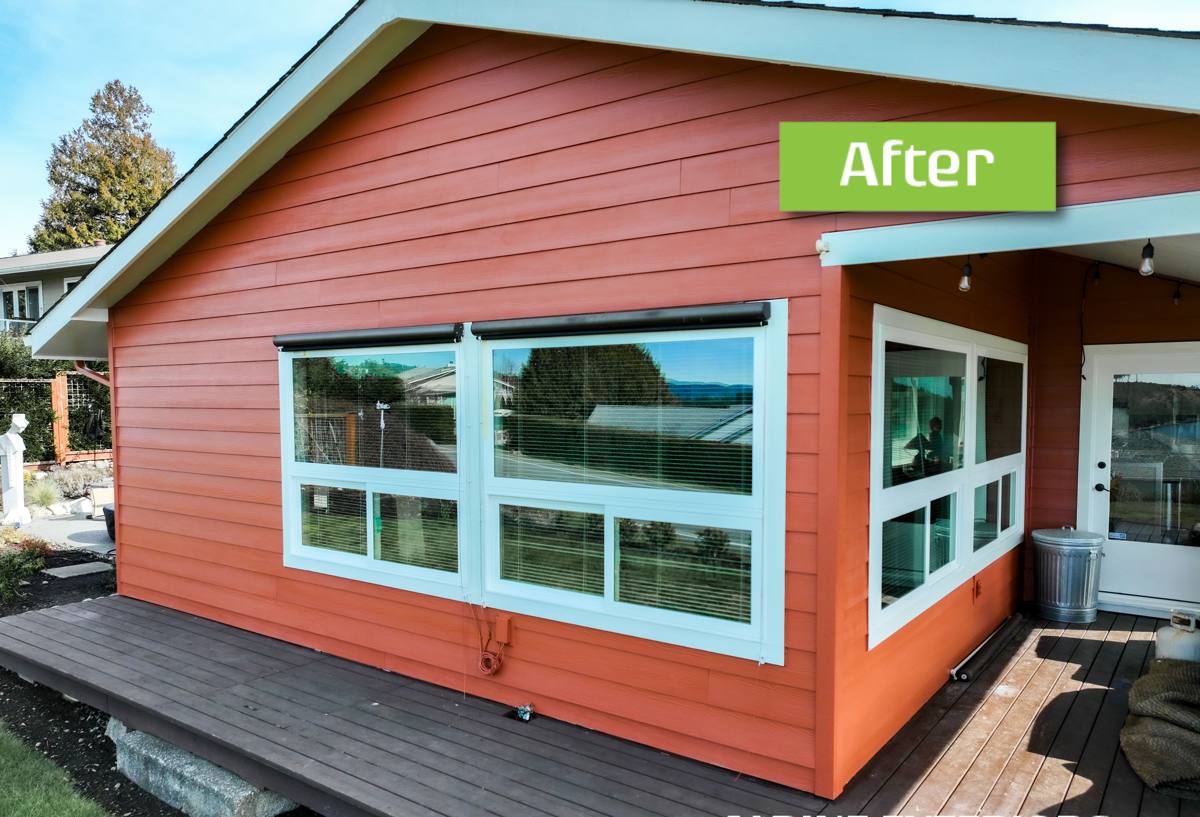
We standardized on James Hardie fiber cement for every siding replacement we do, including here in Sedro-Woolley, and we don't install vinyl, LP SmartSide, or other engineered wood products. That's not a marketing position — it's a practical one, built around what actually holds up in Skagit County's combination of salt air, driving rain, and moss.
Fiber cement is non-combustible and dimensionally stable, meaning it doesn't expand, contract, or absorb moisture into its core the way wood-based products can. James Hardie's ColorPlus finish is factory-applied and cured under controlled conditions, which gives it better color retention and mildew resistance than field-applied paint — a real advantage during a moss season that keeps walls damp for months. Hardie also engineers its HZ5 product line specifically for climates like ours, with formulations aimed at moisture and freeze-thaw performance rather than a one-size-fits-all national spec. The warranty is transferable and backed by a large, established manufacturer, which matters to homeowners planning to sell within the warranty period.
None of this means other products are without merit — vinyl is inexpensive and low-maintenance in mild climates, and engineered wood siding has made real strides in weather resistance. But we've seen how Skagit County's specific mix of salt air, wind-driven rain, and prolonged dampness stresses siding, and fiber cement installed correctly holds up better against that combination than the alternatives we'd otherwise be installing. That's the whole reason we made the switch and stayed with it.
Comparing Siding Options for a Sedro-Woolley Home
| Factor | James Hardie Fiber Cement | Vinyl | Engineered Wood (LP SmartSide-type) |
|---|---|---|---|
| Moisture tolerance in sustained damp conditions | High — non-combustible, dimensionally stable | Good on its own, but seams and J-channels can trap water | Improved with resin treatment, but still wood-based at the core |
| Salt air / corrosion exposure | Fastener corrosion is the main risk; product itself doesn't corrode | Low direct impact, but trim and fasteners still corrode | Similar fastener risk as fiber cement |
| Moss and algae resistance | Factory finish resists mildew growth; occasional wash needed | Can host algae/mildew in shaded, damp areas | Requires diligent field-applied coating maintenance |
| Typical lifespan when correctly installed | 30+ years | 20-30 years, more variable | 25-30 years, install-sensitive |
| Warranty structure | Long-term, transferable manufacturer warranty | Varies widely by manufacturer and grade | Manufacturer warranty, often with maintenance conditions |
Signs Your Sedro-Woolley Home Needs Siding Replacement
A few patterns show up consistently on homes we inspect in this area:
- Soft or spongy spots when you press on the siding, especially near the bottom courses or under windows
- Persistent moss or algae growth that comes back within weeks of cleaning, particularly on north- and west-facing walls
- Bubbling, peeling, or chalking paint that keeps recurring no matter how often it's repainted
- Visible gaps opening up at butt joints or around trim, often from corroded or backed-out fasteners
- Warping, buckling, or panels that no longer sit flat against the wall
- Rising energy bills alongside visibly aging siding, which can point to moisture-compromised insulation behind the cladding
Any one of these on its own might just need a repair. Several at once, especially combined with siding that's already fifteen-plus years old, usually means replacement is the more cost-effective path than chasing repairs year after year.
How Our Process Works
We start with an in-person inspection of the home, not just the siding surface but the trim, flashing, and any areas where we can already see moisture issues from the exterior. From there we give you a straightforward written estimate that spells out scope, product line, color, and timeline — no pressure, no inflated urgency.
Once a project is scheduled, removal and sheathing repair happen first, so we know exactly what we're building on before ordering final materials. Installation follows manufacturer specs for our region, with attention to the flashing and drainage details that matter most given Skagit County's rain patterns. We walk the finished job with you before calling it complete, and we stand behind our installation work in addition to the manufacturer's product warranty.
Local Familiarity Matters More Than It Sounds
A crew that already works Sedro-Woolley and the surrounding Skagit County area isn't guessing at how the climate behaves here — they've seen which walls take the worst of the wind-driven rain, which orientations grow moss fastest, and which older installation shortcuts tend to fail first in this environment. That local track record shows up in the details: where extra flashing gets added, how drainage gaps get planned, and which fastener specs actually hold up against the salt-influenced air moving through the valley. It also means faster response if something needs a look after the job is done, since we're not traveling in from out of the area.
If your siding is showing wear, or you're planning ahead for a home you intend to keep for the long term, we're glad to walk the exterior with you and give you an honest read on what it needs. Reach out for a free, no-pressure estimate using the form below.