 Skagit County
 Mount Vernon's Siding Problem Isn't Like Everywhere Else
Mount Vernon sits in the Skagit River valley, close enough to Puget Sound and Skagit Bay that salt-laden air is a regular visitor, and low enough in the valley that fog, drizzle, and standing humidity linger longer than they do a few miles inland. Add a wet season that stretches from fall through spring and a shoulder season where moss and algae get a running start on any surface that stays damp, and you have a climate that is genuinely hard on exterior siding. This isn't a marketing exaggeration — it's the reason siding choices that hold up fine in a dry inland climate can fail early here.
Homes in and around Mount Vernon deal with three compounding stresses: airborne salt that accelerates corrosion of fasteners and metal trim, wind-driven rain that gets pushed sideways into wall assemblies rather than falling straight down, and a long damp season that gives moss, mold, and algae months of favorable growing conditions on north-facing and shaded walls. Any one of these is manageable. All three at once, applied year after year, is what separates siding that lasts twenty-plus years from siding that starts showing problems in five.
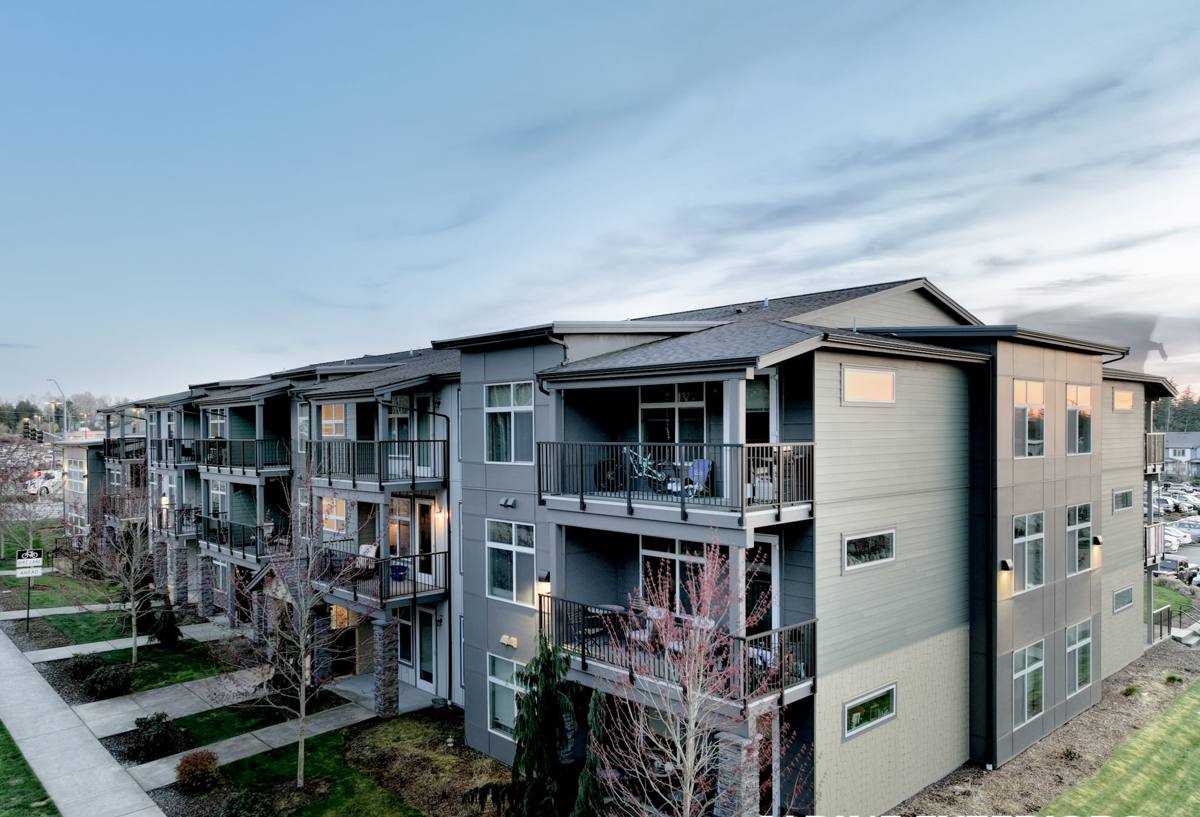
What "Correct" Siding Installation Actually Means Here
A siding installation is more than screwing panels to a wall. In a climate like Skagit County's, the installation details matter as much as the material itself. Here's what a correct job includes, regardless of which product goes on the wall:
- A continuous weather-resistant barrier behind the siding, lapped correctly so water sheds downward and outward, never inward
- Properly flashed windows, doors, and any wall penetrations, with flashing that directs water out onto the surface of the siding, not behind it
- Correct fastener placement and spacing, using fasteners rated for the material and the coastal environment
- Adequate clearance between the bottom edge of the siding and grade, decks, patios, and roof lines, so splashback and ponding water don't sit against the material
- Rainscreen or drainage gap detailing where the assembly calls for it, so any moisture that does get behind the siding has somewhere to go
- Caulking and sealant used only where it belongs — sealing the wrong joints traps moisture instead of keeping it out
Skip any one of these and the material underneath becomes almost irrelevant — water will find the gap. This is why we treat installation technique as inseparable from product selection. A premium material installed with shortcuts will fail faster than a mid-grade product installed correctly.
Why Driving Rain Changes the Calculus
Straight-down rain is easy for almost any siding system to manage. Wind-driven rain, which is common during Skagit Valley storms coming off the Sound, pushes water horizontally and even upward at lap joints, window heads, and corner trim. That's where installation detail — not the marketing claims on a product box — determines whether a home stays dry.
Why We Install James Hardie Fiber Cement — and Nothing Else
We standardized on James Hardie siding for every job we do, including here in Mount Vernon, and we don't install vinyl, LP SmartSide, primed spruce, cedar, or other fiber cement brands like Cemplank or Allura. That's a deliberate professional standard, not a sales pitch, and it's worth explaining honestly.
Fiber cement is a mix of cement, sand, and cellulose fibers, which makes it non-combustible and dimensionally stable — it doesn't expand and contract with humidity swings the way wood-based products do, and it doesn't soften or warp when it stays damp for extended periods. That stability matters directly in a climate where "damp for extended periods" describes several months of the year. James Hardie's HZ5 product line, in particular, is engineered for climates that see freeze-thaw cycling and sustained moisture exposure, which fits the Skagit Valley's winter pattern.
The ColorPlus factory finish is another piece of the reasoning. It's baked on in a controlled factory environment rather than field-applied, which gives more consistent coverage and better adhesion than job-site painting, and it comes with its own finish warranty. In a coastal-influenced climate where sun, salt, and moisture all attack a painted surface, finish durability isn't a cosmetic detail — it's a maintenance-interval decision that affects what a homeowner has to deal with five and ten years down the road.
We're not going to claim other products are junk — they're not, and each has scenarios where it's a reasonable choice. But for the specific combination of salt exposure, driving rain, and moss-friendly humidity that Mount Vernon homes face, we've made a professional call that fiber cement, installed correctly, is the product we're willing to put our name behind.
How Siding Materials Compare in This Climate
| Material | Moisture behavior | Salt air / coastal exposure | Maintenance burden |
|---|---|---|---|
| James Hardie fiber cement | Dimensionally stable, doesn't warp or rot when wet | Non-combustible, holds factory finish well | Low — periodic washing, repaint only when desired |
| Vinyl | Doesn't absorb water but can warp or buckle with heat/cold swings | Can chalk and fade faster under sun and salt exposure | Low, but color is baked in — no refinishing option |
| Wood / cedar / primed spruce | Absorbs moisture, prone to rot and swelling in sustained damp | Salt accelerates weathering and finish breakdown | High — regular repainting, sealing, moss and rot monitoring |
| Other fiber cement brands | Similar base material properties to Hardie | Varies by product line and finish system | Depends on finish warranty and product line |
How Moss and Algae Fit Into the Decision
Skagit County's long damp season gives moss and algae a real foothold, especially on north- and east-facing walls that get less direct sun. No siding material is fully immune to surface growth — moss and algae will colonize almost anything that stays damp long enough — but the finish and surface texture affect how easily it takes hold and how easily it washes off. A factory-applied finish designed for exterior durability sheds and cleans differently than a field-painted or bare wood surface that's already absorbing moisture into the substrate. Regular gentle washing (never high-pressure blasting directly into siding joints) is part of realistic maintenance for any home in this valley, but starting with a material and finish that resists moisture absorption reduces how often that maintenance is actually needed.
Our Installation Process
- On-site assessment — we look at your home's specific exposure: which walls face prevailing wind and rain, where moisture problems already show up, and the condition of the existing wall assembly underneath
- Tear-off and inspection — removing old siding lets us check sheathing, framing, and existing moisture barriers for hidden damage before anything new goes on
- Repair and prep — any rot, damaged sheathing, or compromised framing gets addressed before siding installation begins, not covered up
- Weather barrier and flashing — a correctly lapped weather-resistant barrier and properly integrated flashing at every window, door, and penetration
- Hardie installation to spec — panels, fasteners, and clearances installed to James Hardie's published installation requirements, which is also what keeps the manufacturer warranty intact
- Final detailing — trim, caulking only where appropriate, and a final walkthrough
Signs a Mount Vernon Home Needs New Siding
A few patterns show up consistently on homes we look at in this area:
- Soft or spongy spots when you press on wood-based siding, especially near the bottom courses
- Persistent moss or algae staining that returns quickly after cleaning
- Visible warping, buckling, or gaps opening up between panels
- Paint that's peeling or bubbling rather than just fading
- Rising heating bills or drafts that suggest the wall assembly behind the siding is compromised
- Visible rust streaking from old fasteners, a sign the fastening system is failing
Any of these is worth a real inspection rather than a spot repair, since surface symptoms often point to moisture that's already reached the sheathing.
Questions Worth Asking Any Siding Contractor
| Cost factor | Why it moves the price |
|---|---|
| Amount of tear-off and disposal | More layers or damaged material underneath means more labor before new siding even starts |
| Sheathing or framing repair | Hidden rot found during tear-off adds material and labor not visible in an initial estimate |
| Home shape and trim complexity | Dormers, multiple gables, and lots of corners take more time than a simple rectangular wall |
| Siding profile and finish selection | Different Hardie profiles and ColorPlus finishes carry different material costs |
| Access and site conditions | Steep lots, limited staging area, or multi-story walls affect scaffolding and labor time |
Why Local Skagit County Experience Matters
A crew that already works Mount Vernon and the surrounding Skagit Valley knows which walls on a typical home take the worst of the wind-driven rain, understands how moss behaves through a local wet season, and isn't guessing at how salt air off the Sound affects fastener and finish longevity over time. That local pattern recognition shows up in the small decisions — where to add extra flashing attention, which details to double-check on a north wall — that a crew unfamiliar with this specific climate might not think to prioritize.
If you're weighing a siding replacement or new construction siding for a Mount Vernon home, we're happy to walk the property, look at your specific exposure, and talk through what correct installation looks like for your situation. Reach out for a free, no-pressure estimate — there's no obligation, and it's a useful conversation to have even if you're still deciding on timing.