 Skagit County
 Asphalt Shingle Roofing Built for Skyline's Conditions
Skyline sits close enough to the water that salt air is part of daily life, and that changes what a roof has to survive. Add Skagit County's long wet season, driving rain that comes in sideways off Puget Sound, and months of shade and moisture that keep moss growing year-round, and you have a climate that is genuinely harder on a roof than most inland parts of Washington. An asphalt shingle roof installed the way it's meant to be installed can handle all of that for decades. One that was rushed, underventilated, or flashed with shortcuts usually starts showing problems inside five to eight years.
This page is about asphalt shingle roofing specifically for homes in and around Skyline — what the local climate demands, what a correct job actually involves, and how we approach the work when we're up on your roof.
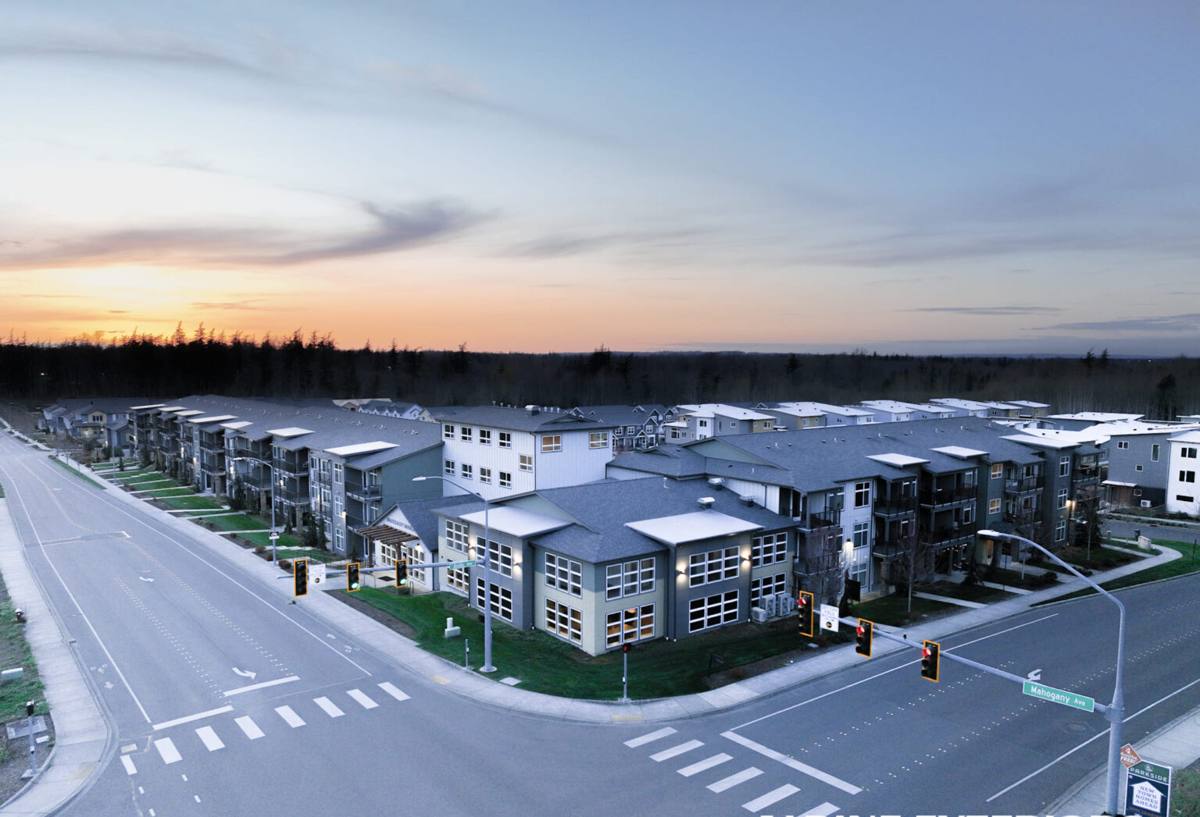
What Skagit County's Climate Actually Does to a Roof
Salt Air
Homes closer to the water deal with airborne salt that settles on roofing, siding, and metal fasteners. Over time it accelerates corrosion on exposed nail heads, flashing seams, and any hardware that isn't rated for coastal exposure. It's not dramatic — you won't see it happen — but it's cumulative, and it's one of the reasons we pay attention to fastener and flashing material on every Skyline roof rather than defaulting to whatever's cheapest.
Driving Rain
Wind-driven rain doesn't just fall straight down — it pushes sideways and upward under shingle tabs, into vents, and around anything that penetrates the roof deck (chimneys, plumbing stacks, skylights). A roof that only handles vertical rainfall well can still leak in a storm if the underlayment, flashing, and shingle overlap weren't built with wind-driven moisture in mind.
Moss Season
Skagit County's shaded, damp winters are close to ideal growing conditions for moss, and moss doesn't just sit on a roof — it holds moisture against the shingle surface, works into the granule layer, and can lift shingle edges over time. Left unchecked for multiple seasons, moss growth shortens the practical life of an asphalt shingle roof more than almost anything else in this region.
Choosing the Right Shingle for a Skyline Home
Not every asphalt shingle product is built the same way, and in a climate like this, the differences matter more than they would somewhere dry. Here's how the common shingle classes compare for coastal Skagit County conditions:
| Shingle Type | Typical Lifespan | Wind Rating | Best Fit For |
|---|---|---|---|
| 3-Tab (economy) | 15–20 years | Lower | Budget-driven projects, secondary structures |
| Architectural / Laminate | 25–30 years | Higher, class-dependent | Most Skyline homes — the standard we recommend |
| Impact-Resistant Architectural | 25–30+ years | Higher, often storm-rated | Homes wanting added durability and possible insurance credit |
| Algae-Resistant (copper/zinc granules) | Same as base shingle, with better appearance retention | Same as base shingle | Shaded, moss-prone lots — a strong fit for many Skyline properties |
For most homes in this area, we steer people toward a laminate architectural shingle with algae-resistant granules. The upfront cost difference over a basic 3-tab is modest, and the payoff — better wind performance, better appearance retention in a moss-friendly climate, and a longer real-world service life — is worth it on a coastal property that will spend most of its year wet.
What a Correct Asphalt Shingle Installation Involves
The shingle itself is only part of the system. Most roof failures we get called out to inspect aren't shingle failures — they're installation shortcuts underneath the shingle. A correct job includes:
- Deck inspection and repair — any soft, delaminated, or water-damaged sheathing gets replaced before anything new goes down. Roofing over bad decking just hides the problem.
- Ice and water shield at vulnerable points — eaves, valleys, and roof penetrations get a self-adhering waterproof membrane underneath the shingles, not just felt paper.
- Synthetic underlayment across the field — a secondary water barrier that matters when wind-driven rain gets past the shingle surface.
- Proper flashing — new step flashing at walls and chimneys, new counterflashing where needed, and new pipe boots rather than caulking over old, cracked ones.
- Balanced ventilation — intake at the eaves and exhaust at the ridge, sized to the attic, so moisture doesn't get trapped under the deck and rot it from underneath.
- Correct nailing pattern — the right number of nails, in the right location on each shingle, driven flush (not overdriven or underdriven) — this is the single biggest factor in wind performance.
- Starter strip and hip/ridge cap details — done to manufacturer spec so the wind and hail warranty actually applies.
Skip any one of these and the roof might look fine for a year or two. In this climate, the gaps show up as leaks, premature granule loss, or moss taking hold faster than it should.
Our Process, Start to Finish
- On-roof inspection. We walk the roof (or use a drone when access is limited), check the deck condition where visible, look at flashing, ventilation, and moss/algae growth, and take photos to review with you.
- Honest scope and estimate. We tell you what's actually needed — repair, partial recover, or full replacement — and why, in plain terms, along with a written estimate.
- Material selection. We walk through shingle class and color options suited to your home and this climate, not just whatever's in stock.
- Scheduling around the weather. Roofing in Skagit County means working around the wet season. We plan install windows to avoid leaving a deck exposed during an active storm system.
- Tear-off and deck check. Old roofing comes off, the deck gets inspected in daylight, and any damaged sheathing is replaced before underlayment goes down.
- Installation to spec. Underlayment, flashing, ventilation, and shingles installed in the order and manner outlined above.
- Cleanup and magnetic sweep. Debris and nails cleared from the property, gutters checked for roofing debris.
- Final walkthrough. We review the finished roof with you before calling the job done.
Repair, Recover, or Full Replacement?
Not every roof problem needs a full tear-off. Here's a general framework for how we think about it:
- Repair makes sense when damage is isolated — a few storm-damaged shingles, a failed pipe boot, a flashing leak — and the rest of the roof is sound and has years of life left.
- Recover (a new layer over existing shingles) is rarely something we recommend on this coast. It traps moisture against the old layer and hides the deck, which is exactly the wrong move given how much water this region sees.
- Full replacement is the right call when the shingles are past their practical life, when there's evidence of deck damage, when moss has caused widespread granule loss, or when you're seeing multiple leak points rather than one isolated failure.
A quick self-check before you call anyone:
- Are shingles cupping, curling, or missing granules in patches?
- Is moss visibly lifting shingle edges, not just sitting on the surface?
- Do you see daylight or water stains in the attic near the roof deck?
- Are there soft spots when the roof is walked?
- Is the roof 20+ years old with no major work done?
Two or more "yes" answers usually means it's time for a real inspection, not just a patch.
Maintenance That Actually Extends Roof Life Here
A little seasonal attention goes a long way in this climate:
- Moss control — soft washing or manual moss removal (not aggressive pressure washing, which damages granules) on a regular schedule, ideally before moss has a chance to establish.
- Gutter clearing — clogged gutters back water up under the roof edge, which is one of the most common causes of eave rot in this area.
- Attic ventilation checks — confirming vents aren't blocked by insulation or debris, since trapped moisture damages a roof from underneath where you can't see it.
- Post-storm visual checks — after a significant wind event, a quick look (or a call to us) for lifted or missing shingles before a small problem becomes a leak.
Why a Crew That Already Works Skyline Matters
A roofer who works this specific stretch of Skagit County already knows what the salt exposure, the rain angle, and the moss cycle do to a roof here, because they've seen it repeatedly, not read about it. That shows up in small decisions — the fastener grade we spec, how we detail flashing on a valley that catches wind-driven rain, how aggressively we recommend moss treatment for a shaded lot versus a sunny one. It's not a different product; it's a more accurate read on how that product needs to be installed and maintained in this specific environment.
If you'd like an honest look at your roof — repair, recover-versus-replace advice, or a full replacement quote — we're glad to come take a look. The estimate is free, there's no pressure, and you'll get a straight answer either way. Just fill out the form below to get started.