 Skagit County
 Board & Batten Siding Built for Skyline's Climate
Board and batten siding has a clean, vertical-line look that works well on farmhouse-style homes, modern builds, and gable accents alike. It's one of the most requested siding profiles we install in Skagit County, and Skyline homeowners in particular tend to like it for its strong shadow lines and the way it reads from the road. But the look is only half the story. In this part of the county, board and batten has to hold up against salt air moving in off the water, long stretches of driving rain, and a moss season that can run most of the year on shaded elevations. A batten profile that isn't detailed and installed correctly will show problems faster than lap siding does, because every vertical seam is a potential path for water if it's not handled right.
This page walks through what board and batten actually needs to perform well on a Skyline home, what a correct installation involves, and why we install it exclusively in James Hardie fiber cement rather than the wood or engineered wood alternatives.
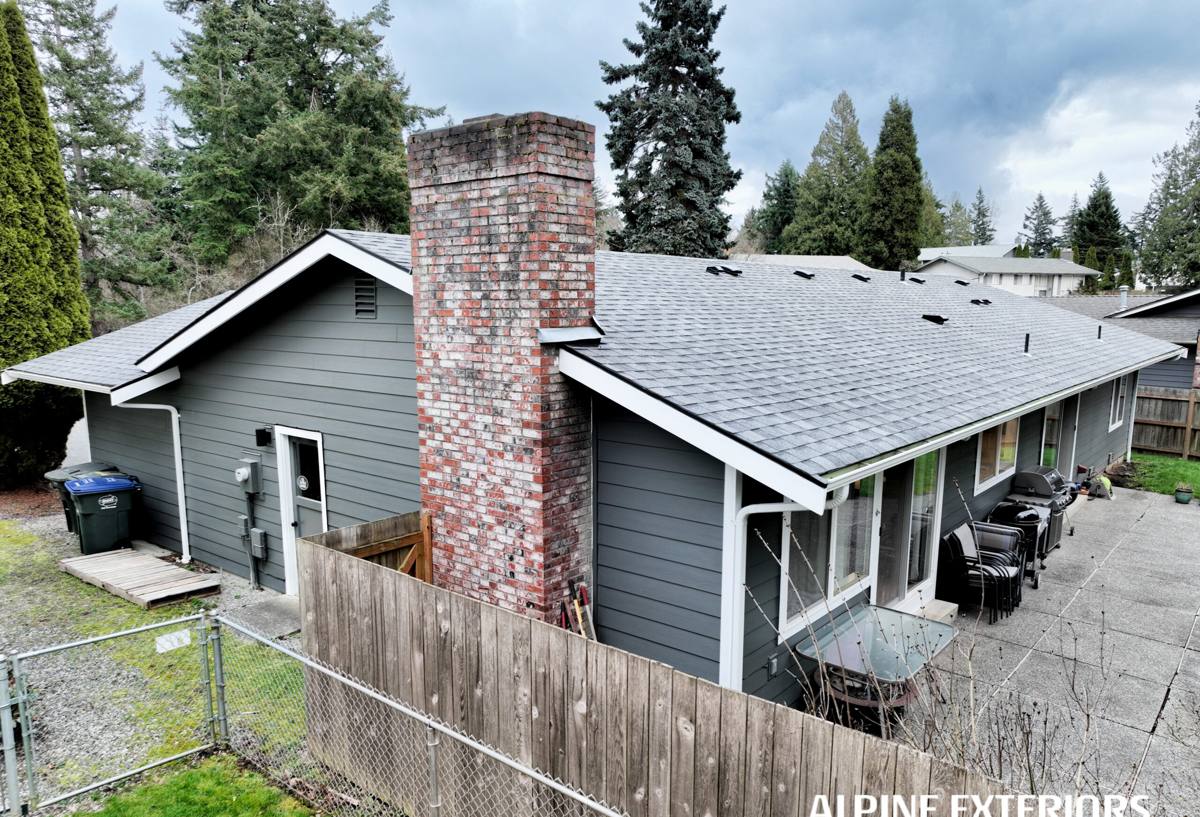
Why Skagit County Conditions Are Hard on Board & Batten
Salt Air and Corrosion
Homes closer to the water deal with airborne salt that settles on siding, trim, and especially fasteners. Over time, salt exposure accelerates corrosion on lower-grade nails and screws, and it can stain or degrade coatings that aren't rated for coastal exposure. Board and batten has more exposed fastener lines than a standard lap profile, so fastener quality and placement matter more here, not less.
Driving Rain and Wind-Driven Moisture
Skagit County gets weather systems that push rain sideways, not just straight down. That matters a lot for a vertical siding profile, because wind-driven rain finds its way behind battens and into any gap where flashing or caulking was skipped. A batten system depends on consistent water-shedding at every seam — there's no forgiving lap overlap doing the work for you the way there is with horizontal siding.
Moss, Algae, and Prolonged Dampness
Shaded north- and east-facing walls in this region can stay damp for days after a storm, which is exactly the environment moss and algae need to take hold. Wood-based siding products absorb that moisture into the substrate itself, which is how rot gets started from the inside out, often before it's visible from the ground. Fiber cement doesn't behave the same way, which is a big part of why we standardized on it for this profile specifically.
What Correct Board & Batten Installation Actually Involves
Board and batten looks simple — vertical boards with battens covering the seams — but the installation details are where the profile succeeds or fails over a 15- to 20-year window. A correct install includes:
- A properly detailed water-resistive barrier behind the entire assembly, with all penetrations sealed before the first board goes up
- Correct fastener spacing and embedment per the manufacturer's install guide — not "close enough," because under-driven or over-driven fasteners are a leading cause of early failure
- Rain-screen or drainage gap detailing so any moisture that does get behind the siding has somewhere to go and dry out
- Batten placement wide enough to allow for material movement without cracking the finish
- Properly flashed and kick-out details at every roof-wall intersection, window head, and deck ledger
- Factory-finished color and caulking that's rated for the exposure the wall actually gets, not a one-size-fits-all approach
Skip any one of these and the siding can look fine for a year or two while a moisture problem builds behind it unnoticed. That's the pattern we see most often on re-side calls: the failure isn't the profile, it's a shortcut taken somewhere in the details above.
Why We Install This in James Hardie, Not Wood or Engineered Wood
Board and batten is traditionally a wood siding style, and a lot of contractors still install it in cedar, primed spruce, or engineered wood products. We don't. On Skyline homes specifically, the combination of salt air, sustained dampness, and heavy rain is a tough environment for any wood-based product, no matter how well it's finished at the factory. Wood and engineered wood siding can perform fine in drier climates or on well-protected elevations, but they ask more of the homeowner in terms of ongoing maintenance, and they're less forgiving of the small installation gaps that inevitably happen on any job.
James Hardie fiber cement is non-combustible, doesn't absorb moisture the way wood-based products do, and holds a factory-applied ColorPlus finish that's engineered to resist fading and hold up against sun and moisture cycling. Hardie also builds climate-specific HZ product lines, which matters in a region that swings between wet winters and drier summers. For a vertical board and batten profile specifically — where every seam is a moisture-management decision — we want a substrate that isn't going to swell, cup, or rot if a seal ages out before a homeowner notices.
Comparing Siding Options for a Board & Batten Look
| Factor | James Hardie Fiber Cement | Cedar / Primed Wood | Engineered Wood (LP-type) |
|---|---|---|---|
| Moisture behavior | Does not absorb water into the substrate | Absorbs moisture; prone to rot if seals fail | Resists moisture better than raw wood, but seams remain a risk point |
| Coastal / salt air durability | Strong, factory-finished | Requires diligent maintenance and refinishing | Moderate; finish and edge sealing are critical |
| Maintenance | Low — occasional wash, repaint not required for years | High — regular refinishing and sealing | Moderate — edge sealing and paint touch-up over time |
| Fire resistance | Non-combustible | Combustible | Combustible |
| Warranty structure | Long-term, transferable | Varies, often product-only | Varies by manufacturer |
Color and Finish Choices for Skyline Homes
Board and batten's vertical lines show color choice differently than lap siding does — the contrast between board and batten (or a monochrome look) tends to read more dramatically. James Hardie's ColorPlus finish is baked on at the factory under controlled conditions, which gives more consistent coverage than field-applied paint, and it holds up better against the fading that heavier UV exposure and salt air can cause over time. We'll walk through the current color and trim options during your estimate and talk through what tends to hold up best on the elevations your home actually faces.
Our Process for a Skyline Board & Batten Project
- On-site assessment — we look at existing siding condition, moisture history, exposure on each elevation, and any trouble spots around windows, decks, or roof intersections
- Detailed proposal — scope, product selection, color, and a clear breakdown of what's included, with no vague allowances
- Prep and moisture barrier — removal of failing siding, inspection of sheathing for hidden damage, and installation of a correctly detailed water-resistive barrier
- Installation to manufacturer spec — correct fastening, flashing, and batten spacing, checked as the work progresses rather than only at the end
- Final walkthrough — we go over the finished work with you before calling the job done
Because we work in Skagit County regularly, we already know which details matter most on which types of lots — waterfront-adjacent exposure, tree-shaded north walls, and open exposure to prevailing weather all call for slightly different attention, and we plan for that from the first site visit rather than treating every job identically.
Why Local Experience Matters for This Profile
Board and batten punishes inexperience more than most siding profiles do, because the failure points are less forgiving and less visible early on. A crew that's installed it across a range of Skagit County exposures — from more sheltered lots to homes taking the full brunt of driving rain — has already seen where the corner-cutting shows up years later, and builds around it from day one. That local track record is worth more than a lower bid from a crew that hasn't worked this specific climate before.
What to Ask Before Hiring for a Board & Batten Project
- Will the installer follow the manufacturer's published fastening and clearance specs, or their own shortcuts?
- What water-resistive barrier and flashing details are included, specifically, at roof lines and penetrations?
- Is the crew installing to a written scope, or verbal promises?
- What does the warranty actually cover — material only, or workmanship too?
- Has this crew installed board and batten in this area before, on similarly exposed homes?
If a contractor can't answer these clearly and specifically, that's worth noticing before you sign anything.
If you're considering board and batten siding for a home in Skyline, we're happy to walk the property with you, look at your specific exposure, and put together a straightforward, no-pressure estimate. There's a form below — reach out and we'll get you scheduled.