 Skagit County
 Alger's Siding Climate Is Harder on a House Than It Looks
Alger sits in one of the more exposed pockets of Skagit County — close enough to Samish Bay and the Puget Sound shoreline that salt-laden air is a constant, and low enough in elevation and tree cover that moisture lingers on exterior walls far longer than it would in a drier inland town. Add the region's long, wet fall-through-spring stretch and the shade from surrounding evergreens, and you get a siding environment that punishes anything that isn't built for it: near-constant humidity, driving horizontal rain during winter storms, and a moss season that can run eight months or longer on north- and west-facing walls.
None of that is unusual for this part of Washington. What is worth paying attention to is how much that combination narrows the field of siding products that actually hold up here without turning into an annual maintenance chore. We install James Hardie fiber cement exclusively, and a big part of why is that it's engineered specifically for climates like this one.
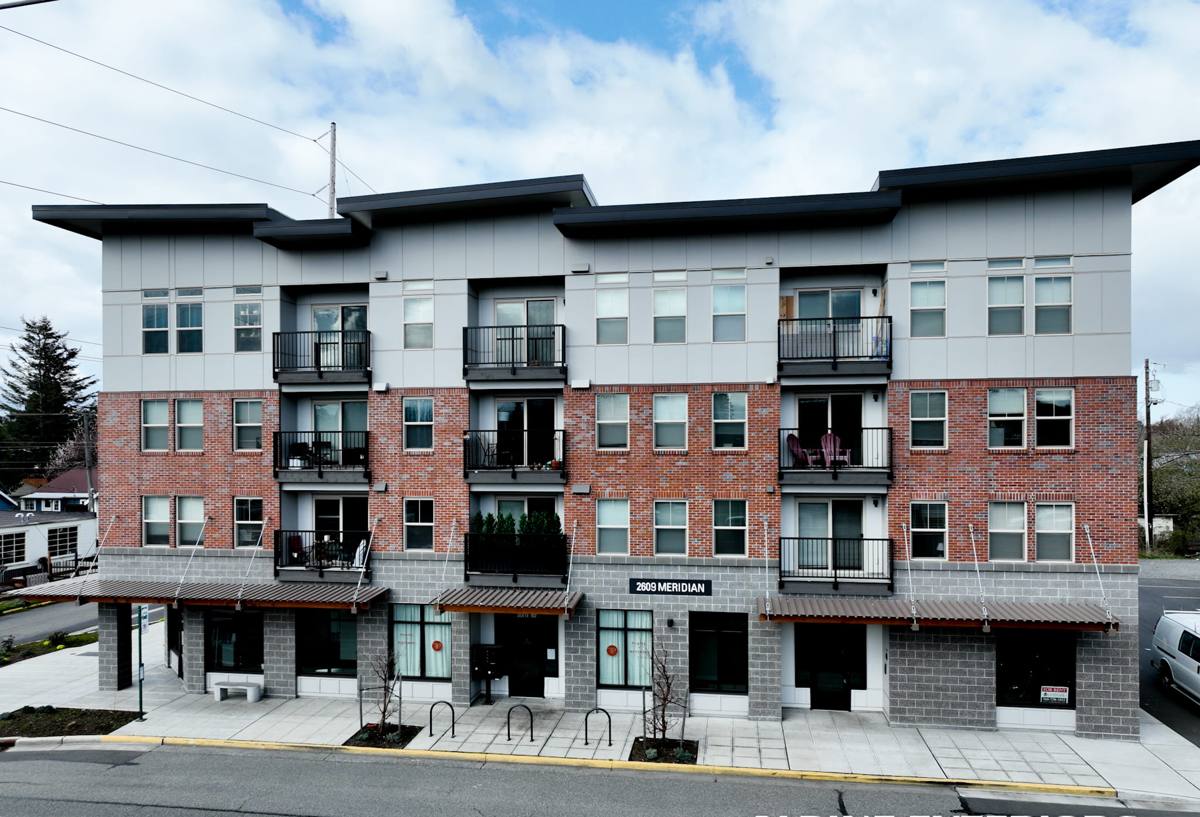
What Alger Homes Actually Need From Their Siding
Before talking about products, it helps to be specific about what a house in this area is being asked to survive every year:
- Salt exposure: airborne salt from Samish Bay and the greater Puget Sound accelerates corrosion on fasteners, trim, and any material that relies on a thin protective coating rather than a stable core.
- Driving rain: winter storms in this part of Skagit County frequently come with sustained wind, which pushes water sideways into seams, laps, and butt joints rather than letting it simply run down the face of the wall.
- Prolonged dampness: shaded, tree-lined lots common around Alger keep siding wet longer after a storm than an open, sun-exposed lot would, which is exactly the condition moss and mildew need to establish.
- Moss and algae growth: a moss season that runs most of the year means siding either sheds it easily or slowly develops a foothold that traps moisture against the substrate.
Any siding product can survive one of these on its own. Skagit County's coastal microclimates ask a wall to handle all four at once, indefinitely, without repainting or resealing every few years.
Why This Rules Out Some Common Products
This is also why we don't install vinyl, LP SmartSide, or bare cedar in this area. Vinyl expands and contracts with temperature swings and can warp or crack in sustained wind-driven rain over time. Engineered wood products like LP SmartSide perform well in many climates but rely on an intact factory coating to resist moisture — any gap in that coating, from a nail miss to a cut edge left unsealed, becomes a point where the wood substrate can start absorbing water. Cedar is a beautiful, honest material, but it needs regular refinishing to keep performing in a climate this wet, and skipping a cycle costs you fast. None of these are bad products in the abstract — they're just the wrong fit for the specific combination of salt air, driving rain, and year-round dampness that defines Alger's exterior conditions.
Why James Hardie Fits This Climate
James Hardie fiber cement is made from cement, sand, and cellulose fibers — an inherently non-combustible, moisture-stable material rather than a coating over a moisture-sensitive core. It doesn't rot, it doesn't provide a food source for moss and mildew the way wood-based products can, and it holds its shape through wet-dry cycles instead of swelling or warping. For a coastal Skagit County property, that stability matters more than almost any other siding attribute, because the failure mode we see most often on other products here isn't one dramatic event — it's slow, cumulative moisture damage that shows up as soft spots, peeling paint, or trim rot years down the road.
Hardie also engineers specific product lines for different climate zones, and the Pacific Northwest — including Alger — falls under their HZ5 designation, built around resistance to moisture and freeze-thaw cycling rather than the extreme heat formulations used in the Southwest. That's not a marketing distinction; it changes the composition of the board itself.
ColorPlus Factory Finish
Most Hardie installations we do use ColorPlus Technology — a finish baked onto the board at the factory in multiple coats, under controlled conditions, rather than a site-applied paint job. In a climate where a fresh coat of field-applied paint might only get a narrow weather window to cure properly, a factory finish that's already cured and warrantied against fading and cracking is a meaningful advantage. It also means the color is consistent across every board, with no visible touch-up lines from field painting.
Matching the Product to the House
Not every Hardie system looks or performs the same, and part of doing this right in Alger is picking the right combination for the specific house and its exposure.
| Hardie Product | Typical Use | Why It Fits Alger |
|---|---|---|
| HardiePlank lap siding | Most common residential application | Traditional look, proven track record in wet coastal climates, wide range of exposures and textures |
| HardiePanel vertical siding | Accent walls, gables, modern facades | Fewer horizontal laps means fewer potential water-entry seams on wind-exposed elevations |
| HardieShingle | Accent gables, Craftsman-style details | Decorative detail without the maintenance burden of real cedar shingles in a damp climate |
| HardieTrim boards | Corners, window and door trim, fascia | Non-combustible, moisture-stable trim that won't rot the way primed wood trim does at joints |
The elevations facing prevailing wind and the wettest, shadiest sides of a property often warrant closer attention to flashing detail and, in some cases, a different exposure or panel choice than the more sheltered elevations — something a generic install plan won't account for.
What a Correct Installation Actually Involves
James Hardie siding performs the way it's engineered to only when it's installed to the manufacturer's specifications. In a climate that's actively testing every seam and fastener year-round, shortcuts show up faster than they would somewhere drier. A correct install includes:
- Proper water-resistive barrier: a continuous, correctly lapped weather barrier behind the siding, not just around it.
- Rainscreen or drainage gap where called for: a small air gap behind the siding lets any moisture that does get past the surface drain and dry out instead of sitting against the wall sheathing.
- Correct fastener type and placement: corrosion-resistant fasteners driven at the manufacturer's specified location and depth — critical in a salt-air environment where the wrong fastener metal can start corroding within a few seasons.
- Flashing at every horizontal transition: window heads, door heads, roof-to-wall intersections, and butt joints all need flashing detail that directs water outward, not into the wall assembly.
- Minimum clearances: proper gaps between siding and roofing, decks, and grade so the bottom edge of the siding isn't sitting in standing water or splash-back.
- Caulked and sealed joints where specified: using a sealant rated for the exposure, not a generic caulk that will fail in a year or two of driving rain.
- Field-cut edge sealing: any cut end of ColorPlus board needs the factory-matched touch-up or edge sealer applied so bare fiber cement isn't left exposed to moisture.
Every one of those steps is invisible once the job is finished — which is exactly why the difference between a correct install and a rushed one doesn't show up on day one. It shows up in year five or six, in a coastal climate like this one, as staining, corrosion streaks, or moisture intrusion at a joint that was never properly flashed.
Our Process for an Alger Siding Job
| Step | What Happens |
|---|---|
| 1. On-site assessment | We walk the whole exterior, check current siding and trim condition, note wind-exposed and shaded elevations, and look at existing flashing and moisture points. |
| 2. Written estimate | A clear scope covering product lines, colors, trim details, and any repair work uncovered during removal — no vague allowances. |
| 3. Substrate check | Once old siding comes off, we inspect sheathing and framing for rot or moisture damage before anything new goes up. Any damaged material gets repaired first. |
| 4. Barrier and flashing install | Weather-resistive barrier, drainage provisions, and flashing at every penetration and transition, done before the first Hardie board goes on. |
| 5. Siding installation | Installed to James Hardie's fastening and clearance specifications, elevation by elevation, with extra attention to wind- and rain-exposed sides. |
| 6. Trim, caulking, and touch-up | Trim boards, corner details, and factory-matched sealing of any field-cut edges. |
| 7. Final walkthrough | We review the finished job with the homeowner and cover basic care for the specific product and color installed. |
What Drives the Cost of a Hardie Project in Alger
| Factor | Why It Matters Here |
|---|---|
| Home size and elevation count | More wall area and more corners/transitions mean more flashing detail and labor. |
| Current siding removal and disposal | Older siding, especially anything with hidden moisture damage, can add substrate repair work. |
| Sheathing or framing repair | Coastal moisture exposure sometimes means rot is found once old siding comes off — this is priced once it's actually visible, not guessed in advance. |
| Product mix | Lap siding alone costs less than a job mixing lap, panel accents, and shingle detail. |
| Trim scope | Full HardieTrim replacement at corners, windows, and fascia adds cost but removes a common weak point. |
| Access and site conditions | Tree cover, slope, and setback from the road all affect labor time on a given property. |
We don't quote broad numbers without seeing the house — the range between a straightforward re-side and one that uncovers substrate repair is too wide to be useful as a generic figure. What we can say is that a correctly installed Hardie system, in this climate, is priced to be a long-term answer rather than a product you're replacing again in a decade.
Living With Hardie Siding in a Moss-Prone, Salt-Air Climate
Correctly installed Hardie siding is low-maintenance, not no-maintenance. A short seasonal routine keeps it performing the way it's designed to in this climate:
- Rinse siding periodically, especially shaded and north-facing walls where moss and algae get the most opportunity to establish.
- Keep gutters clear so overflow doesn't run down the wall face and concentrate moisture on one section of siding.
- Trim back vegetation and tree limbs that hold shade and moisture directly against the wall.
- Check caulked joints every year or two and re-seal any that have cracked or pulled away.
- Address any impact damage or chipped edges promptly with factory-matched touch-up so bare fiber cement isn't exposed to moisture.
Compared to repainting cedar or patching engineered wood trim, this is a modest routine — but skipping it entirely in a climate this wet still shortens the life of any exterior, Hardie included.
Why It Matters That We Already Work in Alger
Siding specs written for a national market don't always account for a specific microclimate. A crew that already works Alger and the surrounding coastal pockets of Skagit County knows which elevations on a typical local lot take the worst of the wind-driven rain, how long moss season actually runs on a shaded north wall here versus a more open site inland, and how salt exposure near Samish Bay affects fastener and flashing choices over time. That's the difference between an installation that technically meets manufacturer spec and one that's actually tuned to survive the conditions a house in this specific area deals with year after year.
If you're weighing a siding replacement or repair in Alger, we're glad to come look at the house, walk you through what we'd recommend and why, and put together a straightforward written estimate — no pressure, no obligation. Use the form below to get started.