 Skagit County
 Asphalt Shingle Roofing Built for La Conner's Waterfront Climate
La Conner sits close enough to the water that salt air is part of daily life, and that changes what a roof has to deal with year-round. Add in the driving rain that comes through Skagit County in the fall and winter, plus a moss season that can run most of the year in shaded, north-facing spots, and you have a climate that is genuinely harder on a roof than most inland areas of Washington. Asphalt shingle roofing can absolutely hold up here, but only if it is specified, installed, and maintained with these conditions in mind. A roof that would perform fine in a drier, inland town can fail early in La Conner if it was installed the same way.
This page covers what a correctly done asphalt shingle roof needs in La Conner specifically, what our process looks like, and why working with a crew that already knows this stretch of Skagit County matters more here than it might elsewhere.
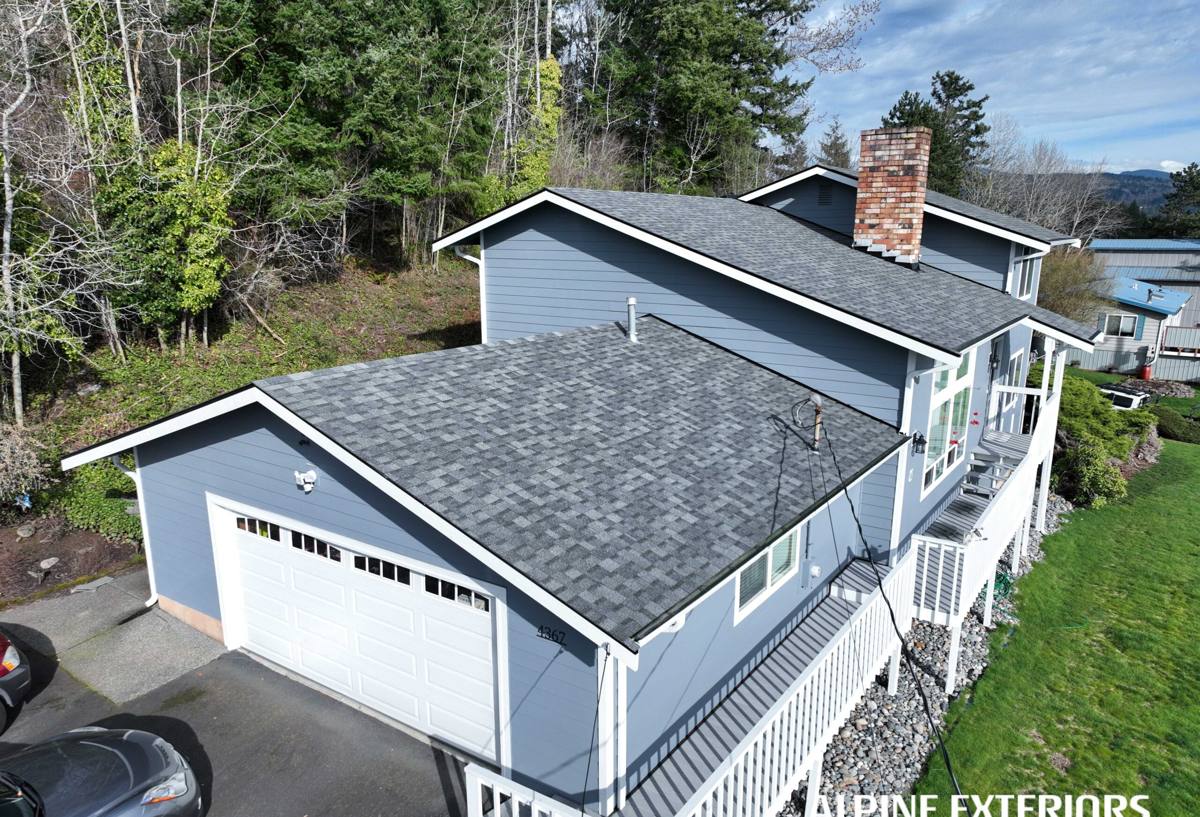
Why Salt Air, Rain, and Moss Are a Tough Combination
Salt Air and Metal Components
Asphalt shingles themselves are not particularly vulnerable to salt, but the metal components that go along with them are. Nails, flashing, vents, and drip edge that aren't rated for coastal exposure can corrode faster near the water than they would a few miles inland. Once fasteners or flashing start to fail, water finds its way underneath the shingles even if the shingles themselves still look fine on the surface.
Driving Rain
Skagit County storms often bring rain sideways off the water, not just straight down. That kind of wind-driven rain tests details that a calm-weather roof might never need to rely on: how deep the shingle overlaps are, how tight the flashing is around penetrations, and whether the underlayment can handle water that gets pushed uphill under the shingle edge before it drains back out.
Moss and Shade
Between tree cover and the moisture that sits in the air near the water, moss finds a foothold quickly on north-facing slopes and anywhere a roof stays shaded most of the day. Moss holds water against the shingle surface, works its way under shingle edges as it grows, and can lift shingles enough for wind and rain to get underneath. Left alone for a few seasons, moss growth is one of the more common reasons we see asphalt shingle roofs fail early in this area.
What a Correctly Installed Roof Needs Here
None of this requires exotic materials — it requires getting the standard details right, every time, because the margin for error is smaller in this climate than in a drier one.
- Corrosion-resistant fasteners and flashing — hot-dip galvanized or stainless steel nails and flashing hold up far better near the water than standard-grade hardware.
- Full underlayment coverage, including synthetic underlayment or ice-and-water shield in valleys and along eaves, so wind-driven rain has a second line of defense if it gets past the shingles.
- Properly sealed flashing at every roof-to-wall transition, chimney, and penetration — these are the spots wind-driven rain finds first.
- Balanced attic ventilation so moisture from inside the home doesn't condense against the underside of the roof deck, which speeds up rot and shortens shingle life from below.
- Algae-resistant (AR) shingles in shaded or north-facing areas, which slow down the organic growth that leads to moss.
Signs Your La Conner Roof Needs Attention
Because of the moss and salt exposure here, problems can develop faster and less visibly than homeowners expect. Watch for these:
- Moss or dark streaking on north-facing or shaded slopes
- Granules collecting in gutters or at downspout outlets
- Shingle edges that look lifted, curled, or cupped
- Rust staining around flashing, vents, or nail heads
- Soft spots or sagging when walked on (a sign of deck moisture)
- Daylight visible through the roof deck from inside the attic
- Water stains on interior ceilings after a heavy rain
Any one of these on its own isn't necessarily an emergency, but it's worth a look before the next wet season. We're happy to do that assessment as part of a free estimate, whether or not you end up needing a full replacement.
Choosing the Right Shingle for This Environment
Not every asphalt shingle product is a good fit for a coastal, moss-prone climate. The table below outlines the general tiers we work with and how they hold up to La Conner's conditions.
| Shingle Type | Typical Lifespan | Moss/Algae Resistance | Best Use in La Conner |
|---|---|---|---|
| Standard 3-tab | 15–20 years | Low unless AR-rated | Budget projects on sunnier, less shaded roofs |
| Architectural (dimensional) | 25–30 years | Moderate to good with AR coating | Most homes; better wind and impact resistance |
| Premium/designer architectural | 30+ years | Good with AR coating | Steep-slope, highly visible, or heavily shaded roofs |
Across all tiers, we push for algae-resistant (AR) shingles as the default in La Conner rather than an upgrade — given how common shaded, moss-prone rooflines are here, it's a small cost difference that pays off in fewer callbacks and a longer-lasting roof.
Our Installation Process
Assessment and Planning
We start with an on-site look at the existing roof, deck condition, ventilation setup, and sun/shade exposure on each slope. That last part matters more in La Conner than in most towns — a roof with heavy shade on one side often needs different shingle placement or added ventilation on that slope specifically.
Tear-Off and Deck Inspection
We remove the old roofing down to the deck and check for soft spots, rot, or moisture damage before anything new goes down. Covering over a compromised deck is one of the most common shortcuts that leads to early failure, and it's not something we do.
Underlayment and Flashing
Full underlayment coverage goes down first, with ice-and-water shield at eaves, valleys, and other vulnerable spots. New flashing goes in at every roof-to-wall junction, chimney, and vent penetration, using corrosion-resistant materials given the coastal exposure.
Shingle Installation
Shingles go down to manufacturer nailing specs using corrosion-resistant fasteners, with attention to overlap and sealing along eaves and rakes where wind-driven rain puts the most pressure.
Ventilation Check
We confirm intake and exhaust ventilation are balanced before calling the job finished. Good ventilation is invisible when it's working and expensive to fix later when it isn't.
Ventilation and Moisture: The Part You Don't See
A shingle roof's visible surface is only half the story. Underneath, attic ventilation controls how much moisture builds up against the roof deck from inside the house. In a climate as damp as Skagit County's, poor ventilation accelerates deck rot, shortens shingle life, and can contribute to the same moss and algae growth we're trying to prevent on the outside. We check this on every project, not just new installs — a lot of premature roof problems we get called out for trace back to ventilation that was never sized correctly in the first place.
Maintenance in a Moss-Prone, Salt-Air Environment
Asphalt shingle roofs in La Conner benefit from more regular attention than the same roof would need in a drier inland climate. A simple annual routine goes a long way:
- Clear moss growth gently — no pressure washing, which strips granules and shortens shingle life
- Keep gutters and downspouts clear so water isn't sitting against the eaves
- Trim back overhanging branches to reduce shade and debris buildup
- Have flashing and fasteners checked periodically for corrosion, especially closer to the water
- Address small leaks or lifted shingles promptly rather than waiting for a bigger problem
Why a Crew That Already Works La Conner Matters
A roofing crew that works Skagit County regularly already knows which slopes in this area tend toward moss, which flashing details wind-driven rain exposes first, and which fastener grade actually holds up near the water instead of learning it on your roof. That local pattern recognition shows up in fewer callbacks and a roof that's built for the conditions it will actually face here, not for a generic climate spec sheet. It also means a crew that can respond quickly if a storm causes damage, rather than one working from out of the area on an unfamiliar schedule.
Get a Free, No-Pressure Estimate
If your asphalt shingle roof in La Conner is showing moss, aging shingles, or you're just not sure how much life it has left, we're glad to take a look. The estimate is free, there's no pressure to move forward, and you'll get a straight answer about what your roof actually needs. Use the form below to get started.