 Skagit County
 Why Alger Roofs Wear Out Differently Than Roofs Inland
Alger sits close enough to Samish Bay and the Puget Sound air corridor that salt-laden moisture is a real factor in how roofing materials age here, even though the community itself feels tucked into the trees. Add in the heavy tree canopy that shades much of the area, the long wet season that runs from fall through spring, and Skagit County's reputation for moss growth on north-facing and shaded roof slopes, and you get a combination that's harder on a roof than a typical dry-climate installation. Salt air accelerates corrosion on exposed metal fasteners, flashing, and vents. Constant dampness feeds algae and moss in shaded valleys and under tree cover. And driving rain off Samish Bay finds every weak seam, nail pop, and undersized flashing detail a roof has.
None of this means a roof in Alger has to fail early. It means the installation has to account for these conditions from the start — material choice, fastener selection, flashing detail, and attic ventilation all matter more here than they would in a drier, less shaded part of the state.
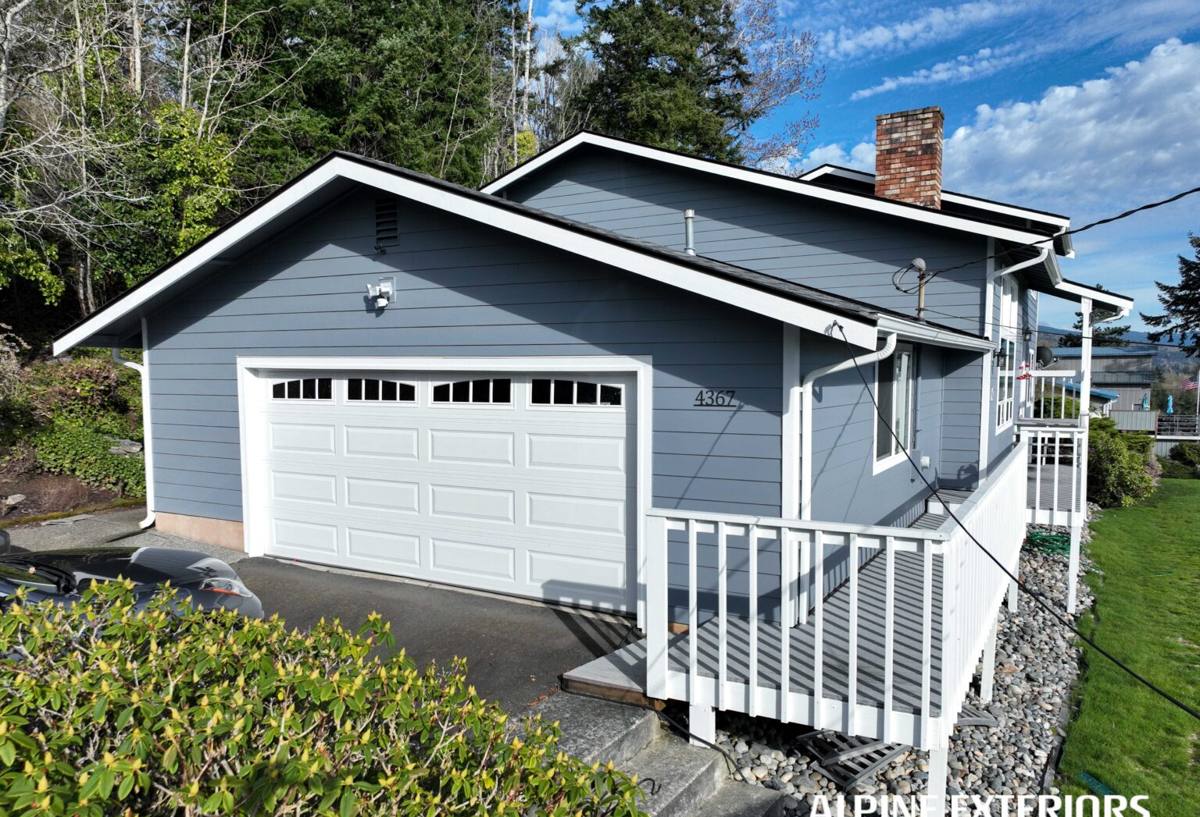
Signs a New Roof Installation (Not Just a Repair) Is the Right Call
Skagit County homeowners often ask us to look at a roof expecting a patch job, only to find the underlying problem is bigger than a repair can fix. Some signals that point toward full replacement rather than another round of patching:
- Granule loss heavy enough that you're finding shingle grit in gutters and downspouts every season
- Moss mats thick enough to lift shingle edges, not just surface staining
- Soft spots or sag in the roof deck when walked, which points to moisture already in the sheathing
- Daylight visible through the attic at roof boards, or damp insulation below the deck
- Multiple past repairs in different areas of the same roof, suggesting the material itself is at end of life
- A roof older than its material's realistic service life for this climate — asphalt shingles in wet, shaded Skagit County conditions often show their age sooner than the manufacturer's rated lifespan suggests
If you're seeing one or two of these, a repair might still buy time. If you're seeing several at once, a new roof installation is usually the more honest recommendation, and it's what we'll tell you even if a repair would be the easier sale.
Choosing a Roofing System for Alger's Conditions
There's no single "best" roofing material for every home — the right choice depends on your roof's slope, how much shade it sits under, your budget, and how long you plan to stay in the home. Here's how the common options stack up specifically against Alger's salt air, rain, and moss pressures.
| Material | Moss & moisture resistance | Salt air durability | Typical lifespan here |
|---|---|---|---|
| Architectural asphalt shingle | Good with proper ventilation and algae-resistant granules | Good — fasteners and flashing matter more than the shingle itself | 20–30 years |
| Standing seam metal | Excellent — sheds moss and water fast on adequate pitch | Very good with coated/coastal-rated fasteners and panels | 40–60 years |
| Synthetic/composite shake | Very good — doesn't absorb moisture like natural wood | Good | 30–50 years |
| Cedar shake | Fair — needs regular maintenance to resist moss and rot in this climate | Fair — natural wood is more sensitive to salt and moisture cycling | 20–30 years with upkeep |
We'll walk you through these trade-offs honestly rather than pushing whatever's easiest to install. If a home has heavy shade and low slope, for example, we'll say so plainly if cedar shake isn't a good fit — not because the product is bad, but because that combination of conditions works against it regardless of brand.
Underlayment and Fasteners Matter As Much As the Shingle
In a climate like this, what's under the visible roofing material often determines how long the roof actually lasts. We use synthetic underlayment rated for extended wet exposure rather than older felt products that degrade faster when a roof sits wet for long stretches, and we spec corrosion-resistant fasteners throughout — not just at the edges — given the salt air exposure common across Skagit County's western communities.
What a Correct Installation Actually Involves
A roof replacement done right is more than stripping old shingles and nailing down new ones. For Alger homes, our installations include:
- Full tear-off to bare decking so we can inspect the sheathing directly, rather than roofing over hidden rot or soft spots
- Deck repair or replacement of any damaged sections before new material goes down
- Ice-and-water shield membrane at eaves, valleys, and around penetrations, which matters given how much wind-driven rain this area sees
- New flashing at every chimney, skylight, wall intersection, and vent — reused old flashing is one of the most common causes of early leaks we find on "new" roofs installed by others
- Balanced intake and exhaust ventilation, sized to the attic, not just a couple of vents added as an afterthought
- Manufacturer-specified fastening patterns and nail placement, which affects both wind rating and warranty validity
Skipping any one of these is how a roof that looks fine for the first year or two starts leaking or growing moss again by year three or four.
Our Installation Process, Step by Step
1. On-Site Assessment
We look at the whole roof system — decking, flashing, ventilation, and the specific exposure your home has to shade, wind, and moisture — not just the shingle surface. We'll tell you what we find, including if a repair is a reasonable option instead of full replacement.
2. Written Scope and Material Selection
You get a clear scope of work and a material recommendation based on your roof's slope, shade exposure, and budget, with the trade-offs explained rather than assumed.
3. Tear-Off and Deck Inspection
Old roofing comes off down to the deck so we can address any rot, soft spots, or trapped moisture before it's covered up again.
4. Underlayment, Flashing, and Ventilation Install
This is where most of the long-term performance is decided — done carefully, it's what keeps water out of valleys, chimneys, and wall intersections for decades.
5. Final Roofing Material Installation
Installed to manufacturer spec for wind rating and warranty, with attention to fastening patterns in exposed, wind-loaded areas.
6. Cleanup and Walkthrough
Magnetic sweep for stray fasteners, debris removal, and a walkthrough so you understand what was done and what maintenance, if any, to expect going forward.
Keeping Moss and Algae From Coming Back
A new roof doesn't guarantee moss stays away, especially under heavy tree cover common around Alger. What actually reduces regrowth:
- Algae-resistant shingle granules where the material offers them, particularly on shaded, north-facing slopes
- Zinc or copper strips near the ridge on shingle roofs, which release trace minerals that discourage moss over time
- Keeping overhanging branches trimmed back so the roof gets more light and airflow
- Clearing gutters and valleys at least twice a year, since trapped debris holds moisture against the roofing material
- Proper attic ventilation, which reduces the condensation that feeds moss and algae from underneath as well as from rain above
We size and place these details during installation rather than treating moss prevention as an afterthought you have to solve later.
What Drives Cost on a New Roof Installation
| Factor | Why it matters in Alger specifically |
|---|---|
| Roof size and pitch | Steeper, larger roofs take more labor and material regardless of product chosen |
| Existing deck condition | Homes with past moisture damage often need sheathing repair discovered only at tear-off |
| Material choice | Metal and composite systems cost more upfront but resist moss and salt air longer than basic asphalt |
| Flashing and penetration count | More chimneys, skylights, and vents mean more flashing detail work |
| Ventilation upgrades | Older Skagit County homes frequently need added intake or exhaust vents to meet current standards |
| Access and layout | Steep sites, long driveways, or limited staging space affect labor time |
We give a written estimate after seeing the roof in person — broad ranges without an on-site look aren't reliable for either of us.
Choosing a Roofing Contractor for an Alger Home
Not every contractor who works in Skagit County has real experience with how this specific area's shade, moisture, and salt exposure affect a roof. Before hiring, it's worth checking:
- Current Washington state contractor license and liability insurance, verifiable through the state's contractor lookup
- Manufacturer certification for the specific roofing system being installed, which affects warranty coverage
- Whether the estimate includes full tear-off and deck inspection, not just an overlay or reroof-over-existing quote
- A written scope that specifies underlayment type, flashing replacement, and ventilation plan — not just "new roof, [material]"
- Local references or work history in Skagit County, since a crew unfamiliar with this area's moss and moisture patterns may under-spec ventilation or skip algae-resistant options
A lower bid that skips flashing replacement or proper ventilation sizing often costs more within a few years than a higher bid done correctly the first time.
Why Local Experience Matters for This Job
We work roofs across Skagit County regularly, which means we've seen how homes in shaded, tree-covered areas like Alger actually perform over time — where moss tends to return, which flashing details fail first under driving rain, and which materials hold up against the salt air moving in off Samish Bay and the Sound. That's the kind of judgment that only comes from doing this work in this specific area, season after season, rather than treating every roof the same regardless of where it sits.
If your roof in Alger is showing its age, or you just want an honest read on whether repair or replacement makes more sense, we're glad to take a look. Reach out for a free, no-pressure estimate using the form below.