 Skagit County
 Why Anacortes Homes Need a Different Approach to Siding
Anacortes sits at the edge of the Salish Sea, and that location shapes everything about how a home's exterior ages. Salt-laden air moves off the water and settles onto siding, trim, and fasteners day after day. Add Skagit County's long wet season, frequent driving rain off Rosario Strait and Guemes Channel, and months of shade-driven moss growth on north-facing walls, and you have a climate that is genuinely harder on siding than most inland parts of the county. A siding installation done for a home in Sedro-Woolley or Mount Vernon doesn't automatically hold up the same way on a lot a few blocks from the water in Anacortes.
This isn't a reason to overbuild or panic about the elements — it's a reason to be specific about materials, flashing, and fastening details before the first piece of siding goes up. That specificity is the whole point of this page.
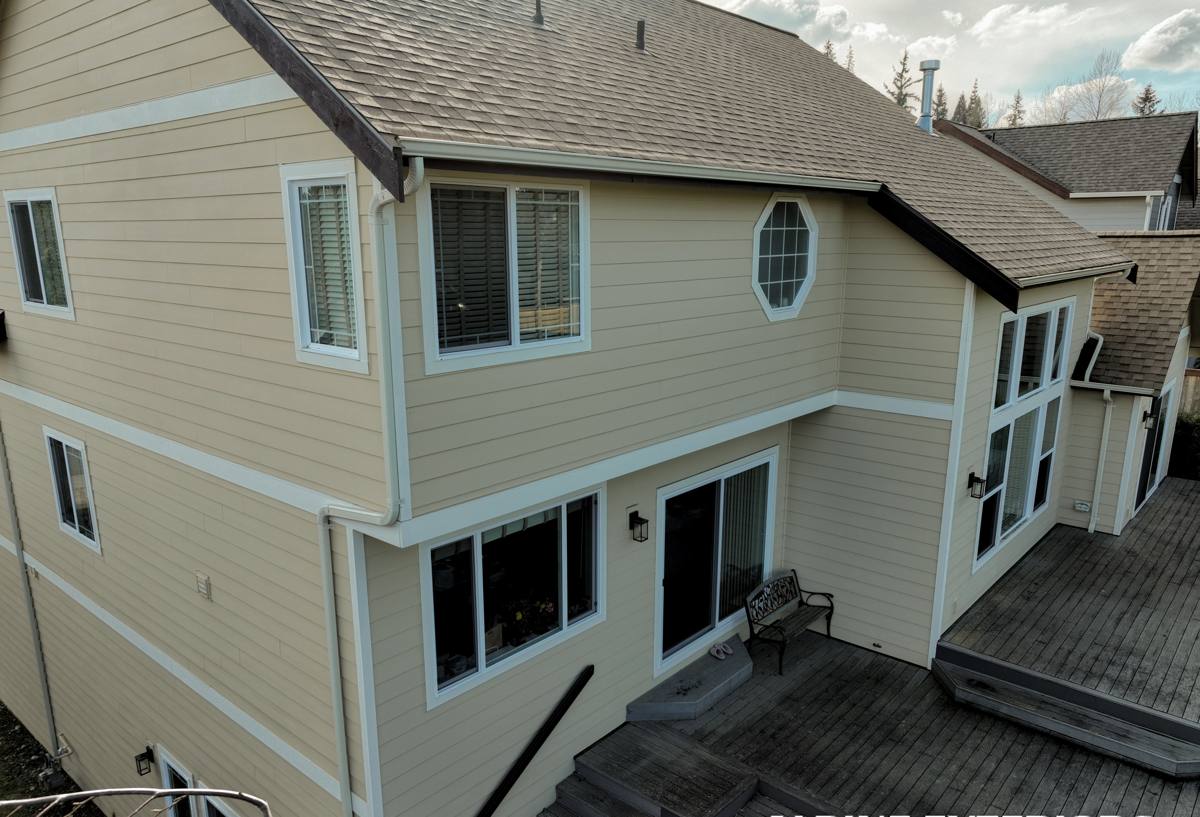
What Salt Air, Rain, and Moss Actually Do to Siding
Salt Air and Metal Components
Salt air accelerates corrosion on anything metal — nail heads, flashing, fastener screws, and trim caps. Over years, corroding fasteners can weep rust stains down the face of siding or, worse, lose their grip strength. Coastal and near-coastal installations need corrosion-resistant fastener specifications and metal flashing that won't degrade faster than the siding it's protecting.
Driving Rain and Wind-Driven Moisture
Anacortes gets rain that doesn't just fall straight down — wind off the water pushes it sideways into wall assemblies, especially on exposed and water-facing elevations. Siding systems that rely on face-sealing (caulk alone to keep water out) tend to fail here faster than systems that manage water with proper lap, flashing, and a drainage plane behind the cladding.
Moss, Algae, and Prolonged Dampness
Shaded, north-facing, and tree-covered walls in this part of Skagit County stay damp longer than sun-exposed ones. That extended dampness is exactly what moss and algae need to take hold. On some siding materials, that means ongoing organic growth that stains and can trap moisture against the substrate. The finish and composition of the siding material matters as much as the installation itself.
Why We Install Only James Hardie Fiber Cement in Anacortes
We standardized on James Hardie fiber cement siding for every home we side, and coastal Skagit County conditions are a big part of why. Fiber cement is not organic material — it doesn't feed moss and algae the way wood-based products can, and it holds up to sustained dampness without the swelling, softening, or rot risk that comes with wood fiber content. It's also non-combustible, which matters given the dry-season wildfire smoke and ember exposure that has become a more regular part of Pacific Northwest summers.
James Hardie's ColorPlus factory-applied finish is baked on and backed by a substantial finish warranty, which matters directly for a marine environment — it holds color and resists the fading and chalking that raw or field-painted finishes can show sooner in constant sun-and-salt exposure. We do not install LP SmartSide, vinyl, Cemplank, Allura, primed spruce, or cedar. Each of those has legitimate uses elsewhere, but for the specific combination of salt air, driving rain, and moss pressure that Anacortes homes face, we've made Hardie our standard and don't deviate from it.
HZ5 Engineering for This Climate
James Hardie engineers its products by climate zone, and the Pacific Northwest falls into the HZ5 category — formulated for regions with significant moisture exposure. That's not a marketing detail; it affects the product's moisture resistance and freeze-thaw performance, which is directly relevant to a peninsula town with high humidity and a long wet season.
What a Correct Installation Involves
Fiber cement siding is only as good as the installation behind it. In a marine climate, the details that get skipped on a rushed job are exactly the ones that cause callbacks two or three winters later.
- Weather-resistive barrier installed and lapped correctly, with all penetrations sealed before siding goes on
- Proper drainage plane or rainscreen gap behind the siding so incidental moisture can escape rather than sit against the wall
- Corrosion-resistant, manufacturer-approved fasteners set at the correct depth — not overdriven, not underdriven
- Flashing at every horizontal transition: window and door heads, deck ledgers, roof-to-wall intersections, and butt joints
- Minimum clearance maintained between siding and grade, decks, roof lines, and other horizontal surfaces to avoid capillary draw and splash-back
- Factory-cut and field-cut edges sealed per manufacturer specification to prevent moisture wicking into the cut face
- Correct nailing pattern and course overlap for the specific Hardie product line being installed
Any one of these steps done wrong won't necessarily show up right away. It shows up in year three or four, usually as a moisture problem hidden behind the siding rather than a visible defect on the surface — which is exactly why the installation crew's attention to these details matters more than almost anything else in the project.
How Our Process Works
1. On-Site Assessment
We walk the home, note exposure direction (which walls take the worst of the wind-driven rain and salt), check existing moisture damage, and evaluate the current wall assembly and trim conditions.
2. Product and Line Selection
We help you choose the right Hardie product line, plank style, and color for the home, factoring in sun exposure, shade patterns, and HOA or neighborhood considerations where relevant.
3. Prep and Removal
Old siding comes off, sheathing is inspected for hidden rot or moisture damage (common on older coastal homes), and any needed repairs happen before new materials go up — not after.
4. Weather Barrier and Flashing
This is the stage that determines long-term performance. We install the drainage plane, flashing, and barrier system correctly the first time, since this work is invisible once siding is installed.
5. Installation
Siding is installed to James Hardie's fastening and clearance specifications, not shortcuts developed for faster-drying inland climates.
6. Final Walkthrough
We review the completed work with you, including caulking, trim details, and touch-up paint where factory-finished pieces were field-cut.
Cost Factors for Anacortes Siding Installation
Every home is different, but the factors that move a siding installation estimate up or down are consistent. Broad ranges depend heavily on square footage, home complexity, and current wall condition — we don't quote firm numbers without seeing the home.
| Factor | Why It Matters Here |
|---|---|
| Home size and wall complexity | More corners, gables, and trim details mean more labor and material cuts |
| Sheathing condition | Coastal moisture exposure sometimes means hidden rot that must be repaired before new siding goes on |
| Existing siding removal | Tear-off of old wood, vinyl, or aluminum siding adds labor versus a bare-wall install |
| Water and wind exposure | Water-facing or wind-exposed elevations may need additional flashing detail |
| Product line and profile | Lap siding, shingle-style panels, and board-and-batten carry different material and labor costs |
| Trim and accessory scope | Fascia, soffit, and trim replacement done alongside siding affects total project cost |
Why Hiring a Crew That Already Works Anacortes Matters
General siding experience doesn't automatically translate to coastal Skagit County conditions. A crew that mostly works drier, inland jobs may not default to the flashing details, fastener specs, or clearance standards that this climate requires — not out of carelessness, but because those details simply don't come up as often where rain isn't wind-driven and salt isn't in the air. A crew that regularly works Anacortes and the surrounding water-facing communities has already seen where corners-cut installations fail here, and builds around those failure points as a matter of habit rather than an afterthought.
That local pattern recognition — knowing which elevations need extra attention, which fastener specs actually hold up, and how long moss-prone walls stay damp after a storm — is the difference between a siding job that looks good at handoff and one that still looks and performs well a decade later.
Maintenance After Installation
Correctly installed James Hardie siding is low-maintenance, not no-maintenance. In this climate, a periodic rinse to clear salt residue and organic buildup, prompt attention to any caulk lines that separate, and keeping gutters and downspouts clear so water isn't dumping onto walls all go a long way toward protecting the investment. None of this is heavy labor — it's the kind of upkeep that takes an afternoon a year or two.
If you're planning a siding replacement or new installation in Anacortes, we're happy to walk the property, look at your specific exposure conditions, and put together a straightforward, no-pressure estimate using the form below.