 Skagit County
 Deck Repair Built for Sedro-Woolley's Climate
Decks in Sedro-Woolley take a different kind of beating than decks in drier parts of the state. The Skagit Valley sits between the Cascade foothills and Puget Sound, and that location means moisture-laden marine air pushes inland for much of the year, driving rain comes in sideways during fall and winter storms, and shaded or north-facing decks can carry a green film of moss from October through May. None of that is dramatic on its own, but stacked year after year it works its way into fastener holes, ledger connections, and any spot where two boards meet and water has a chance to sit. That's where deck repair calls in this area actually start — not with a deck that looks bad, but with one that's quietly holding water somewhere it shouldn't.
We work on decks throughout Skagit County, and Sedro-Woolley jobs tend to follow a pattern: aging cedar or pressure-treated structures built for a drier assumption than the one they actually live with, railings that loosened before anyone noticed, and ledger boards that were flashed adequately at construction but never re-checked. A repair done right accounts for all of that, not just the board that's currently soft underfoot.
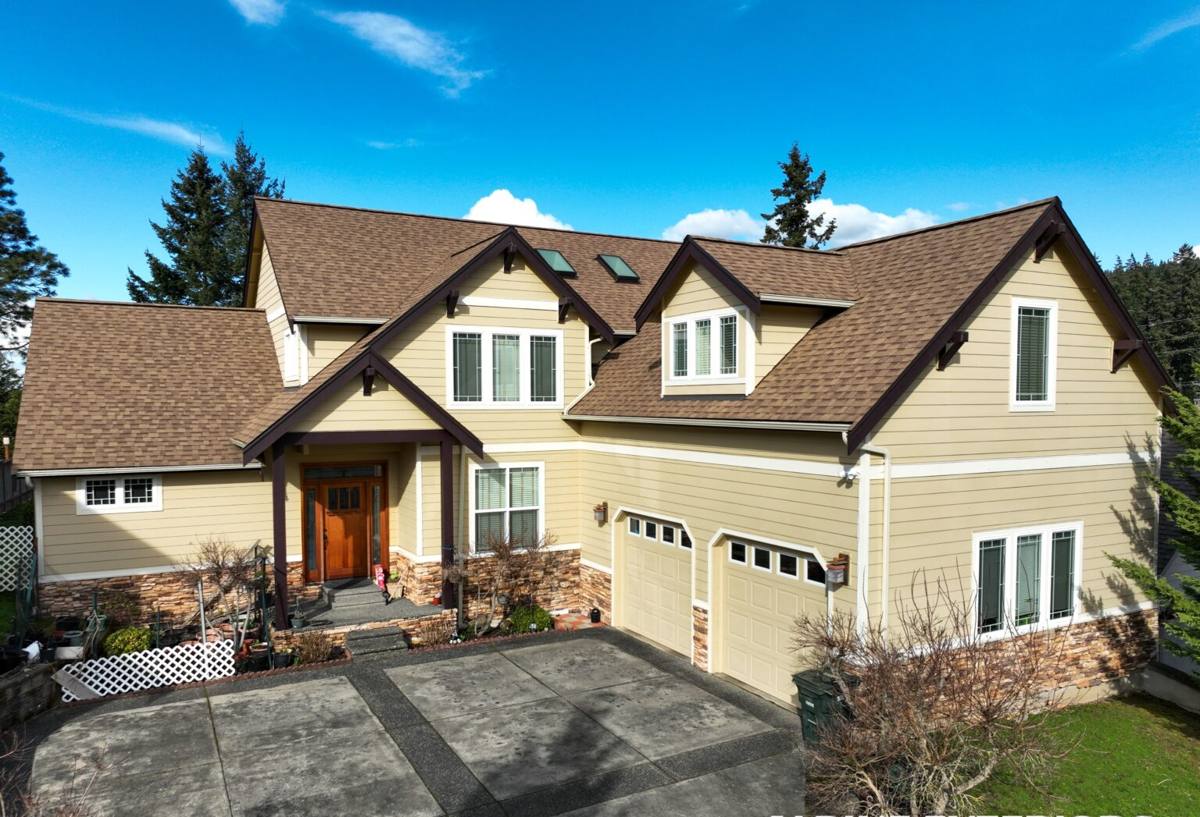
What Local Homes Need From a Deck Repair
A repair that only addresses the visible problem tends to come back within a season or two. What actually holds up in this climate is a repair that treats the deck as a system — framing, fasteners, boards, flashing, and drainage all working together to shed water instead of holding it.
The Moisture Problem, Specifically
Wood doesn't rot because it gets wet — it rots because it stays wet. In a climate with a long moss season and frequent driving rain, the decks that fail early are usually the ones with poor airflow underneath, debris trapped between boards, or a ledger connection that lets water track behind the house band board. Any deck repair worth doing has to break that cycle, not just patch around it.
Moss and Surface Buildup
Moss on a deck surface isn't just cosmetic. It holds moisture against the wood or composite surface long after the rain stops, and on painted or sealed surfaces it accelerates finish breakdown. On stairs and ramps it's also a slip hazard. Repair work in shaded or north-facing Sedro-Woolley yards often includes addressing the conditions that let moss take hold in the first place — not just scrubbing it off once.
What a Correct Deck Repair Actually Involves
"Deck repair" covers a wide range of work, and the right scope depends entirely on what's actually failing. We start every job by finding out what's underneath the surface problem, not just fixing what's visible.
Structural and Framing Checks
- Ledger board attachment to the house — the single most common source of hidden rot on older decks
- Joists and beams for soft spots, splitting, or fastener corrosion
- Post bases and footings for movement, rot at grade contact, or inadequate drainage around the base
- Railing posts and connections for looseness, which is a safety issue as much as a cosmetic one
- Flashing at the ledger and any point where the deck meets the house siding
Surface and Finish Work
- Replacing individual boards that have cupped, split, or gone soft, rather than resurfacing over a bad substructure
- Re-fastening boards that have worked loose from seasonal wood movement
- Addressing gaps or spacing that trap debris and hold moisture between boards
- Cleaning and treating moss-prone areas before refinishing, so the new finish isn't sealing moisture in
Drainage and Airflow
A deck that drains well and breathes underneath will always outlast one that doesn't, regardless of what species of wood or composite it's built from. Part of a correct repair is making sure water has somewhere to go and air can circulate beneath the structure — grading, gaps, and skirting design all factor in.
Repair, Partial Rebuild, or Full Replacement?
Not every deck problem needs a full rebuild, and not every deck problem should be patched. Part of an honest estimate is telling you which category your deck actually falls into.
| Situation | Typical Approach | What to Watch For |
|---|---|---|
| A few soft or split boards, structure otherwise sound | Board replacement + fastener check | Confirm joists underneath aren't also compromised |
| Loose or wobbly railings | Post and connection repair | Treat as a safety item, not cosmetic |
| Rot at the ledger or house connection | Targeted structural repair with re-flashing | This is the repair most likely to be skipped by rushed bids — don't let it be |
| Widespread soft framing or multiple failed footings | Partial or full rebuild | Patching over failed framing is a short-term fix at best |
| Deck is structurally sound but finish is failing everywhere | Strip, clean, and refinish | Moss and mildew must be fully addressed first or the new finish fails early |
Why a Crew That Already Works Sedro-Woolley Matters
Deck problems in this part of Skagit County have a recognizable pattern because the climate that causes them is consistent — a lot of rain, real moss pressure, and shoulder seasons where a deck can stay damp for days between dry spells. A crew that works this area regularly has already seen how that plays out on ledgers, framing, and finishes here, so we're not guessing at what's causing a soft spot or a stubborn moss patch — we've traced it back to the source enough times to know where to look first.
There's also a practical side to hiring local: a Sedro-Woolley job doesn't sit at the bottom of a schedule behind travel time from across the county, and follow-up — if a repair needs a second look after a hard winter — is straightforward rather than a hassle.
Materials and Fasteners That Hold Up Here
Material choice matters more in a wet climate than a dry one, because the margin for error is smaller. We use fasteners and hardware rated for exterior, corrosion-prone environments — standard interior-grade screws and nails corrode faster than the wood around them in a climate like this, and a corroded fastener is a common hidden cause of a board that seems to "just come loose" on its own. For structural repairs, we match or exceed the original framing's treatment rating so the repair doesn't become the weak point in an otherwise sound deck.
On surface material, we'll give you a straight comparison of options rather than push whatever's easiest to install. Cedar has a classic look and repairs easily board-by-board, but it needs more regular finish maintenance in this climate to resist moss and graying. Composite and PVC decking need less finish upkeep but require different fastening and spacing approaches to handle moisture correctly, and not every composite product performs the same way in a shaded, damp yard. We'll talk through the maintenance and moisture trade-offs of each honestly, based on your deck's exposure and how much upkeep you actually want to do.
Our Deck Repair Process
- On-site assessment. We check the full structure, not just the spot you called about — framing, ledger, posts, and surface — because deck problems are rarely isolated to one board.
- Honest scope and estimate. You'll get a clear explanation of what's actually wrong, what needs to be fixed now, and what can reasonably wait.
- Repair work. Structural issues are addressed first, then surface and finish work, using fasteners and materials suited to this climate.
- Drainage and airflow check. Before we call it done, we confirm water has somewhere to go and the underside of the deck can breathe.
- Final walkthrough. We show you what was done and what to keep an eye on going forward, especially heading into the wet months.
Simple Maintenance That Extends the Life of a Repair
A good repair lasts a lot longer with a small amount of upkeep, especially given how much moisture this area sees.
- Sweep leaves and debris off the deck surface and out from between boards regularly in fall
- Keep gutters and downspouts clear so runoff isn't dumping extra water directly onto or near the deck
- Address moss at the first sign of it rather than waiting for it to spread
- Check railings and stair connections for looseness once or twice a year
- Re-seal or re-stain wood decking on the manufacturer's recommended schedule — skipping a cycle in this climate shows up faster than it would somewhere drier
Getting an Honest Look at Your Deck
If your deck in Sedro-Woolley has a soft board, a loose railing, a persistent moss problem, or you're just not sure how much life it has left, we're glad to come take a look. We'll tell you plainly what we find, what it would take to fix it right, and what you can reasonably put off — no pressure, no upsell. Request a free estimate through the form below and we'll get you scheduled.