 Skagit County
 Why Anacortes Windows Wear Differently Than Windows Inland
Anacortes sits out on Fidalgo Island, surrounded by saltwater on nearly every side, which means homes here take on a combination of stresses that windows twenty miles inland rarely see. Salt-laden air moves off Rosario Strait, Guemes Channel, and Fidalgo Bay and settles on every exterior surface, including window frames, hardware, and glazing seals. Add in driving rain that comes sideways during fall and winter storms, plus the long, damp moss season that blankets Skagit County from roughly October through April, and you have a climate that actively works against poorly installed or poorly chosen windows.
None of this means Anacortes homes need exotic solutions. It means the replacement work has to respect what the marine environment actually does to materials over time: corrosion at hardware and fasteners, moisture intrusion at flashing and sill details, and slow degradation of anything organic (bare wood trim, cheap caulk, unsealed sills) that stays damp too long. A window replacement done right here should shrug off all three.
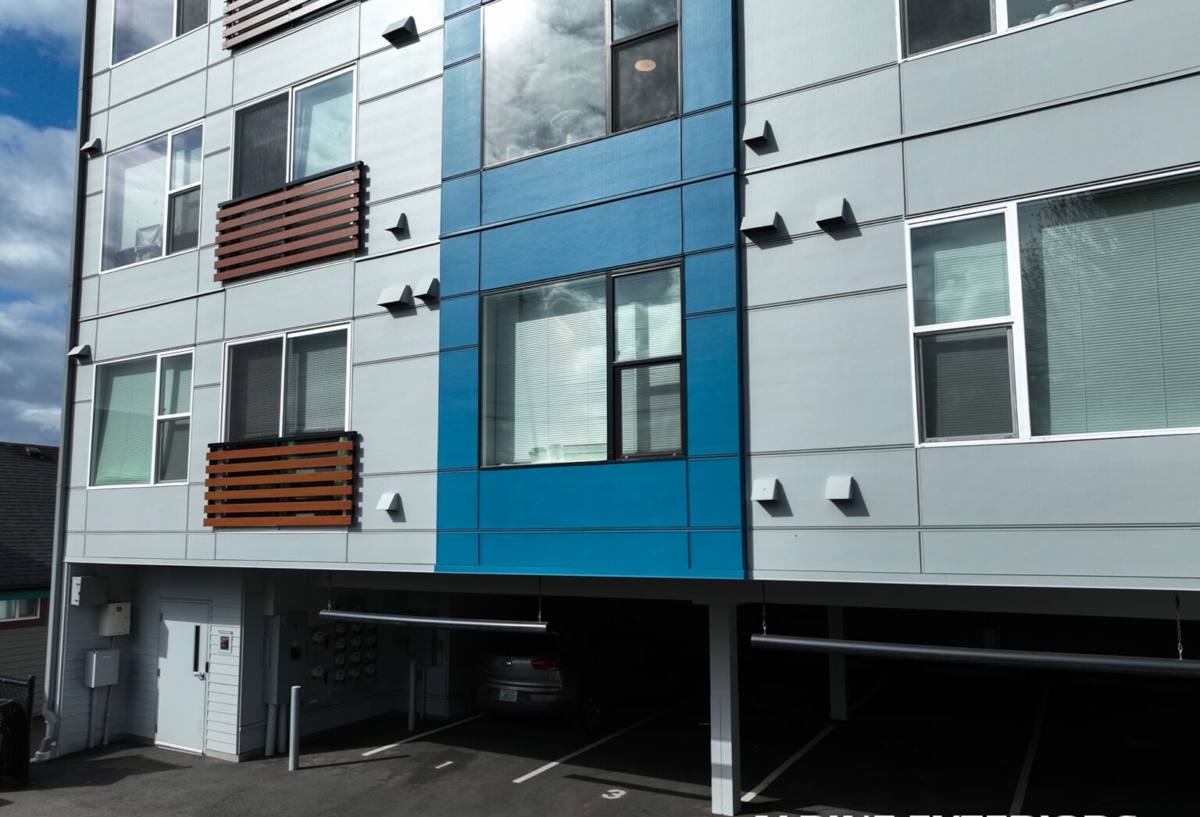
What Salt Air Does to Windows Over Time
Salt air is corrosive to metal, and that includes aluminum cladding, steel reinforcement inside vinyl frames, and especially hardware like hinges, locks, and balance systems. Homes closer to the water and homes with more direct wind exposure see this faster, but even properties set back from the shoreline get some exposure carried in on prevailing winds.
Where corrosion shows up first
- Window locks and cranks that start to stick, bind, or feel gritty within a few years
- Aluminum or steel components with white, chalky corrosion (aluminum) or rust bleed (steel) at fasteners
- Screen frames and hardware that pit or discolor faster than the window itself
- Weep hole covers and sill hardware that seize up, which then traps water instead of draining it
This is why hardware selection matters as much as frame material on a coastal job. Stainless steel or corrosion-resistant coated fasteners and hardware cost a little more up front but hold up substantially longer in this air than standard-grade hardware, and we spec them as a matter of course on Anacortes installs rather than treating it as an upsell.
Driving Rain and Getting the Water Management Right
Wind-driven rain is the other half of the equation. When rain comes at a wall horizontally instead of falling straight down, it tests every seam, joint, and flashing detail a window installation has. A window that would perform fine in a calmer climate can leak in Anacortes if the flashing sequence isn't built to shed water outward and downward at every layer, not just caulked and hoped for.
The install details that actually stop leaks
A correct window replacement in this climate follows a specific water-management order, and skipping steps is where most leaks trace back to:
- Sill pan flashing installed first, sloped to drain water back outside the wall rather than letting it sit on the rough sill
- Self-adhered flashing tape integrated with the building's existing weather-resistive barrier (housewrap or building paper), lapped correctly so upper layers overlap lower layers
- Proper shimming and fastening so the frame stays square and doesn't rack, which is what causes corners to open up over time
- Backer rod and exterior sealant at the trim-to-siding joint, sized and installed so the sealant can flex rather than crack
- Interior air sealing with low-expansion foam or sealant, which matters as much for condensation control as for leaks
Any one of these skipped is a callback waiting to happen. We've seen replacement jobs elsewhere in the county fail within a year or two not because the window itself was bad, but because the flashing sequence was shortcut to save an hour of labor.
Moss Season and Why Sills and Trim Take the Hit
Skagit County's long wet season, roughly October through April, keeps north- and shade-facing surfaces damp for extended stretches, and that's exactly where moss and algae take hold. On windows, this shows up most on horizontal sills, exterior trim, and anywhere water sits instead of draining. Bare or under-primed wood trim is the most vulnerable, since sustained moisture is what leads to rot, while vinyl and fiber cement trim resist it but still need clean drainage paths so water doesn't pool and grow a film that traps more moisture against the surface.
Practically, this means sill design and drainage matter as much as the window unit itself. A sloped sill, functioning weep holes, and trim details that don't create flat, water-holding ledges will keep moss and rot pressure down significantly compared to a flat-sill, poorly drained setup.
Choosing the Right Window Material for This Climate
| Material | How it holds up here | Trade-offs to know |
|---|---|---|
| Vinyl | Good corrosion resistance since there's no bare metal exposed to salt air; handles moisture well | Can't be repainted easily if you want a color change later; quality varies a lot between manufacturers |
| Fiberglass | Very stable in temperature swings and moisture, strong resistance to warping near the water | Higher upfront cost than vinyl |
| Aluminum-clad wood | Attractive, and the cladding protects the wood exterior face | We're cautious with this near saltwater — any breach in the cladding seal lets moisture reach wood underneath, and repairs are more involved than with all-vinyl or fiberglass |
| Bare wood | Traditional look, repairable | Highest maintenance burden in this climate; needs regular repainting and sealing to keep moss and rot at bay, which is a real ongoing commitment near the coast |
We're not telling homeowners a given material is bad — wood-frame and clad-wood windows have a long track record and plenty of homeowners maintain them well. Our standard is about matching the material to how much upkeep a homeowner actually wants to do, and being honest that anything with exposed or semi-exposed wood on a marine-air site needs more attention than vinyl or fiberglass.
Glass and hardware specs worth asking about
- Dual-pane, low-E glazing as a baseline for this climate's temperature and moisture swings
- Argon-filled units for better insulating performance, standard on most quality lines now
- Corrosion-resistant (stainless or coated) hardware, not standard-grade steel
- Multi-point locking hardware on larger openings for a tighter seal against wind pressure
Our Process for an Anacortes Window Replacement
Because so much of the long-term performance comes down to install details rather than the window brand alone, our process is built around getting the water management right, not just setting a unit in an opening.
What a visit and install typically looks like
- On-site assessment — we look at existing sill condition, signs of past moisture intrusion, siding type, and exposure (how directly a wall faces prevailing wind and rain)
- Honest scoping — if we find rot or water damage at an opening during removal, we flag it before proceeding rather than covering it up, since sealing a window over compromised framing just hides the problem
- Full flashing sequence — sill pan, tape integration with the existing weather barrier, and proper lapping, every time, not just on request
- Corrosion-appropriate hardware and fasteners specified for coastal exposure
- Clean interior and exterior finish work so trim sheds water instead of holding it
- Walkthrough — we show the homeowner the finished work and explain what maintenance, if any, it'll need going forward
What Working With a Locally Experienced Crew Actually Buys You
Window replacement isn't unique to Anacortes as a trade, but the failure modes here are specific: corrosion patterns tied to salt exposure, leak points tied to wind-driven rain direction, and moss growth tied to how long surfaces stay wet. A crew that's done this work around Skagit County has already seen which details cause problems in this exact environment and builds around them by default, rather than treating this as a generic install and hoping the climate doesn't find the weak spot.
That local pattern-recognition also shows up in smaller ways: knowing which sides of a house in this area typically take the worst weather, recognizing early-stage moisture damage around older window openings before it becomes a bigger repair, and setting expectations correctly about what maintenance a given material and location will actually need.
Cost Factors to Understand Before You Get Quotes
We're not going to publish a specific price here, because window replacement cost depends on real variables that differ from house to house. What we can do is lay out what actually drives the number, so quotes make sense when you get them.
| Factor | Why it moves the price |
|---|---|
| Window count and size | Larger openings and more windows mean more material and labor |
| Material choice | Vinyl, fiberglass, and clad-wood carry different unit costs |
| Condition behind the existing window | Rot or water damage found during removal adds repair scope |
| Full-frame vs. insert replacement | Full-frame replaces flashing and framing too; inserts reuse the existing frame and cost less but only make sense when that frame is in good condition |
| Access and story height | Second-story or hard-to-access openings take more time and equipment |
| Trim and siding repair | Matching existing trim or repairing siding disturbed during the install adds labor |
A full-frame replacement generally costs more than an insert because it addresses the flashing and framing, not just the window unit. On a coastal property with any history of moisture issues, we usually recommend full-frame so the water management gets rebuilt correctly rather than layered over an old, possibly compromised frame.
Signs It's Time to Replace, Not Just Patch
- Visible corrosion on hardware that makes locks or cranks difficult to operate
- Fogging or moisture between panes, meaning the seal has failed
- Soft or discolored wood at the sill or surrounding trim
- Persistent moss or algae growth on the sill that keeps returning after cleaning
- Noticeable drafts or a cold feeling near the window even with it closed
- Visible daylight or gaps at the frame-to-wall joint
Any single item on that list might just need a repair. A few of them together, especially paired with an older window, usually point to replacement being the more sensible investment than continuing to patch.
If you're weighing window replacement for a home in Anacortes, we're happy to take a look and give you a straightforward, no-pressure estimate based on what your windows and openings actually need — just fill out the form below.