 Skagit County
 Storm Damage Roof Repair Built for Sedro-Woolley's Weather
Sedro-Woolley sits in the Skagit River valley, far enough inland to avoid the worst of coastal storm surge but close enough to the Sound that the same wet, moisture-heavy weather systems roll through all winter. Add in the wind that funnels down the valley off the Cascade foothills, months of steady rain, and the shade from mature trees that keeps roofs damp long after a storm passes, and you get a climate that is genuinely hard on roofing. We repair storm-damaged roofs across Skagit County, and Sedro-Woolley homes tend to show a specific pattern of wear that's worth understanding before you decide what your roof actually needs.
This page covers storm damage roof repair specifically — not a full re-roof, not routine maintenance, but the targeted work that follows wind, rain, or falling debris events and keeps a roof watertight without paying for more than the home needs.
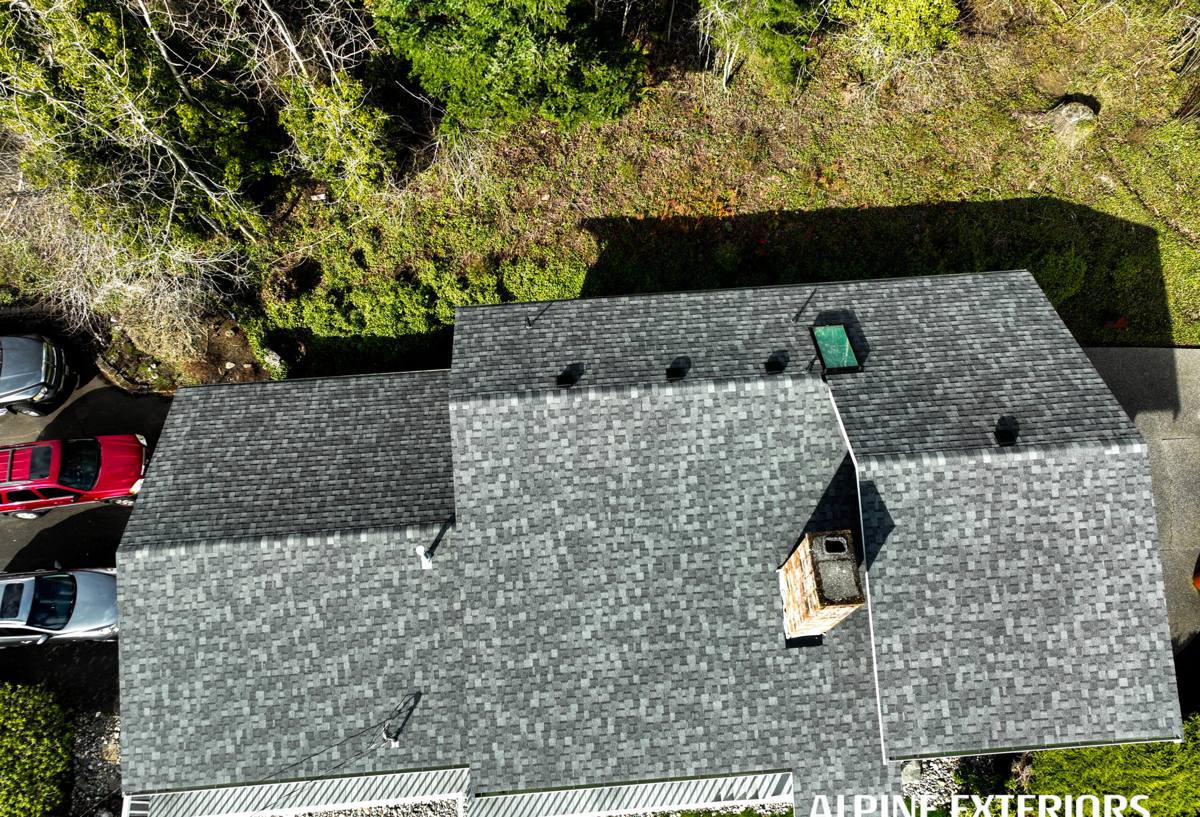
Why Storm Damage Shows Up Differently Here
Coastal storms that move through Skagit County usually bring sustained wind out of the south or southwest, followed by long stretches of driving rain. In Sedro-Woolley specifically, that wind often gets funneled and accelerated by the terrain of the valley, which means gusts can lift shingle tabs and flashing edges even when official wind speeds don't sound dramatic. The rain that follows finds those lifted edges fast.
The other factor is moss and moisture retention. Sedro-Woolley's tree cover and river-valley humidity mean many roofs stay damp longer after a storm than roofs in more open, sun-exposed parts of the county. That extended dampness is exactly what moss needs to establish, and moss doesn't just sit on a roof — it lifts shingle edges, holds water against the roof deck, and turns a small wind-damage spot into a slow leak if it's not addressed at the same time as the storm repair.
None of this means Sedro-Woolley roofs are inherently worse. It means storm repair here has to account for moss and moisture retention as part of the same job, not as a separate problem to deal with later.
What Actually Causes the Damage We See
- Wind gusts lifting or creasing shingle tabs, especially on roof edges and ridge lines exposed to valley wind
- Wind-driven rain forced up and under shingles and flashing rather than running off normally
- Falling branches and debris from wind events, which can crack or puncture shingles and decking
- Moss and organic debris trapping moisture against the roof surface after a storm, delaying drying and accelerating rot
- Flashing around chimneys, vents, and valleys working loose from repeated wind and temperature cycling
What Counts as Storm Damage — and What Doesn't
Not every problem a homeowner notices after a storm was caused by the storm. Being honest about that distinction matters, both for your budget and for any insurance claim you might file.
Genuine storm damage is typically sudden and traceable to a specific event: a branch strike, a run of shingles missing after a documented wind event, or flashing that was clearly intact before and displaced after. Long-term wear — shingles that are simply at the end of their service life, moss that's been building for years, or granule loss from age — is a maintenance issue, not storm damage, even if a storm is what made you notice it. We'll tell you which is which. It doesn't help either of us to file or repair something as "storm damage" that was already headed toward replacement.
The Inspection: What We Actually Check
A proper storm damage inspection isn't a walk-around from the ground with binoculars. We get on the roof (weather permitting) and check the areas that fail first in this climate.
- Shingle tabs and edges for lifting, creasing, or granule loss along wind-exposed slopes
- Ridge caps and hip lines, which take the brunt of valley wind gusts
- Flashing at chimneys, skylights, vents, and roof-to-wall transitions for movement or gaps
- Valleys, where wind-driven rain concentrates and moss tends to collect first
- Gutters and downspouts for debris, granule buildup, and separation from the fascia
- The attic side, for water staining, damp insulation, or daylight through the decking
- Any visible moss or algae growth and how far it's lifted shingle edges
We document what we find with photos before touching anything. If you're pursuing an insurance claim, that documentation matters — more on that below.
Repair vs. Replacement — Making the Right Call
Storm damage repair only makes sense when the roof underneath is otherwise sound. If the shingles were already near the end of their lifespan, or if moss has been undermining the roof for years, patching the storm damage alone just delays a bigger job. Here's how we think through that decision:
| Factor | Points toward repair | Points toward replacement |
|---|---|---|
| Age of existing roof | Under 12–15 years, in otherwise good condition | Nearing or past typical service life for the material |
| Extent of damage | Isolated to a section, valley, or flashing point | Spread across multiple slopes or structural areas |
| Moss/moisture history | Minimal, recently maintained | Long-standing moss with visible deck softening |
| Decking condition | Solid, no soft spots found during inspection | Soft, delaminating, or water-stained decking |
| Matching materials | Current shingles still available or close match | Discontinued product, mismatch would be visible |
Most storm calls we get in Sedro-Woolley are legitimately repair jobs — a section of shingles, a flashing detail, a valley. We'll tell you plainly if we think you're better off putting the money toward replacement instead.
How Our Repair Process Works
- Inspection and documentation. We assess the damage, photograph it, and identify whether it's storm-related or pre-existing wear.
- Honest scope and estimate. You get a written estimate that separates storm repair from any unrelated maintenance items we found, so you can decide what to do about each.
- Temporary protection if needed. If there's active leaking or exposed decking, we'll tarp or seal it to stop water intrusion before the full repair is scheduled.
- Matching materials. We source shingles, flashing, and underlayment that match your existing roof as closely as possible, or explain the trade-offs if an exact match isn't available.
- The repair itself. Damaged shingles are removed and replaced, flashing is resealed or replaced, and any exposed decking is checked and repaired before new material goes down.
- Moss and debris treatment where relevant. If moss contributed to the damage, we address it as part of the job rather than leaving it to undo the repair within a season or two.
- Final walkthrough. We show you what was done and what to watch for going forward.
Materials We Use for Storm Repairs
Shingles and Underlayment
For asphalt shingle roofs, we use products rated for the wind exposure common in the valley and pair them with proper underlayment — this is the layer that does the real work when wind-driven rain gets past the shingle surface, which happens more often here than in drier parts of the state.
Flashing
Flashing failure is one of the most common causes of repeat leaks after a storm repair, because it's often patched with sealant instead of properly re-formed and integrated with the shingle courses. We replace flashing rather than caulk over it whenever the metal itself has moved or corroded — sealant alone doesn't hold up to a full Skagit County winter.
Ridge and Valley Details
Given how much wind exposure ridge lines take here, we pay particular attention to ridge cap fastening and valley construction, since these are the spots that reopen first if a repair is rushed.
Insurance and Storm Claims
If you're filing a homeowner's insurance claim for storm damage, a few things help the process go smoothly:
- Photograph the damage yourself as soon as it's safe to do so, before any tarping or cleanup
- Keep any receipts for emergency measures like tarping, since these are often reimbursable
- Ask your inspector for a written report that separates storm damage from pre-existing wear — adjusters look closely at this distinction
- Get your own independent estimate rather than relying solely on the adjuster's scope, especially if hidden decking damage is found once repair work begins
We're glad to provide documentation and estimates for your claim, but we work for you, not the insurance company — our job is to tell you what the roof actually needs.
Why Local Experience in Sedro-Woolley Matters
Storm damage repair isn't just about swapping shingles. It's about knowing which parts of a roof in this specific area fail first, how long moss takes to become a structural issue in this humidity, and how the valley's wind patterns concentrate stress on certain roof lines more than others. A crew that works Sedro-Woolley regularly isn't guessing at any of that — we've seen the same failure patterns repeat across the neighborhood and know what to check first.
There's also a practical side: after a widespread storm event, response time matters. A roof with exposed decking doesn't wait well through another Skagit County rain system. Working locally means we can usually get eyes on the damage and temporary protection in place faster than a crew traveling in from outside the county.
Get a Free, No-Pressure Estimate
If your roof took damage in a recent storm — or you're just not sure whether what you're seeing is storm-related or ordinary wear — we're happy to take a look. The estimate is free, there's no pressure to move forward, and we'll tell you honestly whether you're looking at a repair, a bigger job, or nothing urgent at all. Use the form below to get in touch.