 Skagit County
 Building Decks for Avon's Skagit Valley Conditions
Avon sits low in the Skagit River delta, close enough to the water that homes here deal with a specific mix of weather most inland builders don't plan for: salt-tinged marine air, long stretches of driving rain, and a moss season that can run from October through May. A deck built to a generic spec sheet will survive that mix for a few years. A deck built for it will still be solid and safe a couple of decades later. The difference isn't exotic materials — it's getting the boring details right: flashing, fasteners, drainage, and spacing.
This page covers what we look at when we build or replace a deck in Avon specifically, not just siding or exterior work in general terms. If you're comparing quotes, the questions below are worth asking any contractor you talk to.
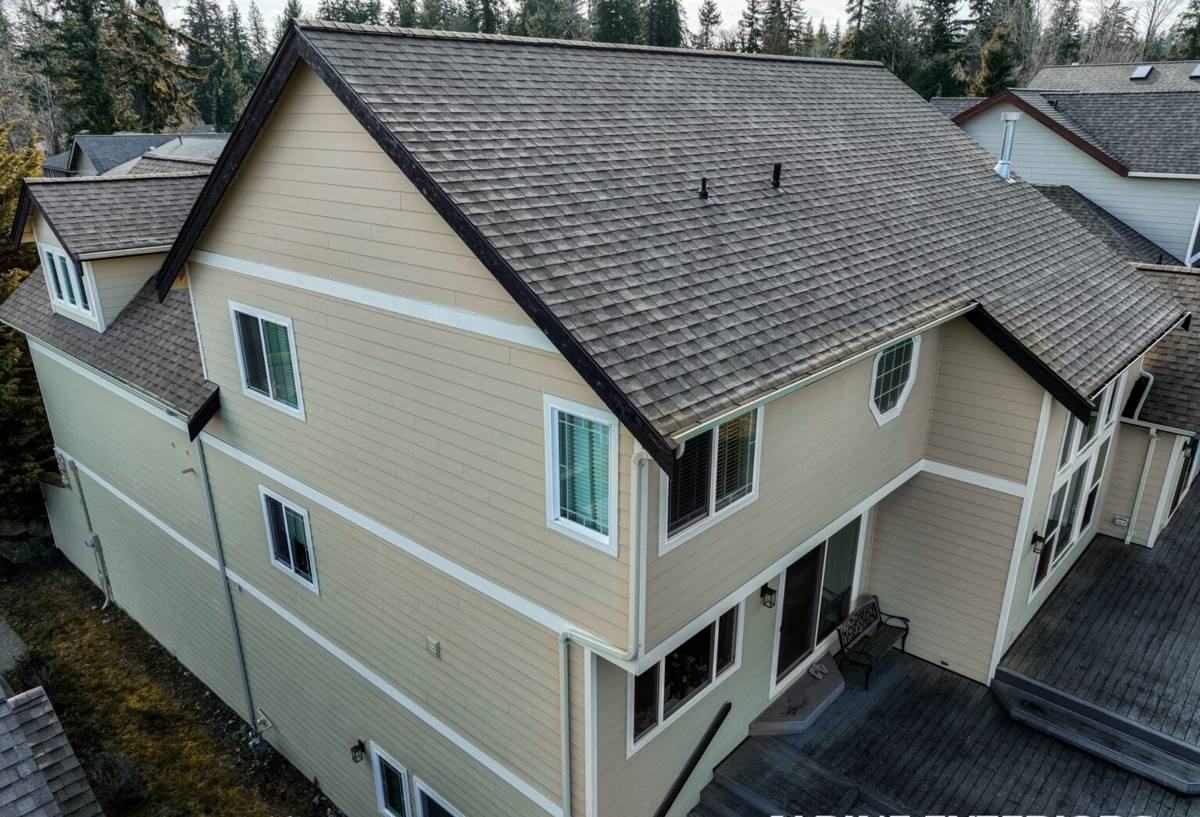
What the Local Climate Actually Does to a Deck
Salt Air and Metal Fatigue
Proximity to Skagit Bay and Puget Sound means the air here carries more salt than a deck built forty miles inland ever has to deal with. Standard zinc-coated screws and joist hangers corrode faster in that environment. You won't see it happen — it happens under the boards, at the connections you can't inspect without pulling decking up. By the time rust streaks show up on the surface, the fastener underneath has usually already lost a meaningful chunk of its holding strength.
Driving Rain and Water Intrusion
Rain that comes in sideways, which is common in this part of the valley during fall and winter storms, gets pushed into joints that would stay dry in a calmer climate. That means ledger board connections (where the deck attaches to the house), stair stringer notches, and any spot where decking butts up against siding or trim are the first places water finds a way in if they weren't detailed correctly.
Moss, Algae, and Surface Decay
Skagit County's moss season is long because the conditions that grow it — shade, moisture, mild temperatures — persist for most of the year here. On a deck, moss and algae aren't just cosmetic. They hold moisture against the wood or composite surface, and on wood decking that constant dampness accelerates rot at the board edges and around fastener heads. Boards that don't get airflow underneath them, or that sit low to grade, moss up faster than boards built with proper clearance.
Choosing a Decking Material for This Climate
There's no single "right" material for every budget, but some options handle Avon's conditions better than others. Here's how the common choices actually compare once you factor in the local weather, not just the showroom price tag.
| Material | Upfront Cost | Maintenance Here | Moss/Algae Resistance | Realistic Lifespan |
|---|---|---|---|---|
| Pressure-treated pine | Lowest | Annual cleaning + refinish every 2-3 years | Poor unless kept clean and dry | 10-15 years |
| Cedar | Moderate | Cleaning + sealant every 1-2 years | Fair; naturally rot-resistant but still needs upkeep | 15-20 years |
| Capped composite | Higher | Occasional wash, no sealing | Good; smooth cap sheds moss more easily | 25-30 years |
| PVC decking | Highest | Occasional wash, no sealing | Very good | 30+ years |
Composite and PVC cost more up front, but in a climate that grows moss on nearly any horizontal wood surface, the maintenance savings are real — not marketing. That said, wood decking done right, with good airflow, correct fasteners, and someone willing to clean and reseal it on schedule, still holds up fine in Avon. It's an honest trade-off between upfront cost and ongoing effort, not a case where one option is "bad."
Structural Details That Matter More Here Than Elsewhere
Ledger Board Flashing
The ledger board — where the deck bolts to the house — is the single most common failure point on decks in wet climates, and it's almost always invisible until something gives way. We flash this connection so water sheds away from the house framing rather than tracking behind the ledger, which is the spot most prone to hidden rot in a rainy delta climate like this one.
Joist Protection
Covering the tops of joists with a self-adhering flashing tape stops water from sitting in the screw holes where deck boards attach. It's a small material cost that meaningfully extends the life of the framing underneath, especially given how much rain this area sees over a typical winter.
Fasteners and Hardware
Given the salt content in the air near the bay, we use stainless steel or heavy-coated fasteners and connectors rated for corrosive exposure, not the basic galvanized hardware that's fine in a drier inland town. It costs a bit more per box of screws. It's not worth cutting on a deck you want to last.
Footings and Soil
Delta soil in this part of Skagit County tends to hold water, which affects how footings are set and how deep they need to go to reach stable, frost-safe bearing ground. Footings poured without accounting for local soil conditions can shift over a few wet winters, which shows up later as a deck that's noticeably out of level.
Board Spacing and Airflow
Correct gapping between deck boards, and enough clearance between the deck framing and the ground, lets air move underneath the whole structure. That airflow is what actually keeps moss and mildew from taking hold on the underside and edges of the boards — more effective long-term than any surface treatment.
Permits and Code Basics
Most new decks and many replacement decks in Skagit County require a building permit, particularly once you're above a certain height off grade or attaching a structure to the house. Guardrail height, stair rise and run, and footing depth are all governed by code, and inspectors here pay particular attention to ledger attachment given how often it's the point of failure in this climate. We handle the permit process as part of the job rather than leaving it for the homeowner to sort out — it's one less thing to chase down, and it means the finished deck is something you can sell or insure without question later.
Our Process for a Deck Build or Replacement in Avon
- On-site assessment — we look at grade, drainage, sun/shade exposure, and the condition of the existing structure if we're replacing a deck rather than building new.
- Design and material selection — sized to how you'll actually use the space, with a decking material picked based on your budget and how much upkeep you want to take on.
- Permitting — we pull what's required and coordinate inspections so the job is documented and code-compliant.
- Framing and flashing — ledger flashing, joist tape, corrosion-resistant hardware, and footings set for local soil conditions.
- Decking and railings — installed with the gapping and clearances that matter for airflow and drainage in this climate.
- Final walkthrough — we go over the finished deck with you, including what maintenance it actually needs and on what schedule.
Keeping a Deck in Good Shape Once It's Built
Whatever material you choose, a little seasonal attention goes a long way in this climate. Here's the basic maintenance rhythm we recommend for decks in the Avon area:
- Sweep debris off the deck regularly through fall — wet leaves left sitting are one of the fastest ways to grow moss on any surface.
- Rinse or wash the deck surface at least once a year, more often in shaded areas, to knock back algae and moss before it takes hold.
- Check and clear gaps between boards so water and debris don't pack in and hold moisture against the wood.
- Inspect railing posts and stair connections annually for movement, which can signal a fastener starting to fail.
- For wood decks, plan on cleaning and resealing on the schedule the product calls for — skipping a cycle in this climate shows up faster than it would somewhere drier.
- Keep gutters and downspouts near the deck clear so runoff isn't dumping extra water onto or under the structure.
Why Local Experience on Deck Builds Actually Matters
Deck-building fundamentals are the same everywhere, but the details that make a deck last in Avon — the ledger flashing approach, the fastener grade, the footing depth for delta soil, the spacing that fights off a long moss season — come from having actually built and repaired decks in this specific stretch of Skagit County, not from a general contracting manual. We've seen what fails here and why, and we build to avoid those specific failure points rather than to a generic minimum standard.
If you're planning a new deck or need to replace one that's showing its age, we're happy to take a look and give you a straightforward, no-pressure estimate — just fill out the form below and we'll get back to you.