 Skagit County
 Why Burlington Roofs Wear Out Faster Than Homeowners Expect
Burlington sits in a part of Skagit County where the roof over your head does real work year-round. Moist air moves in off the water and up the valley, rain often comes in sideways during winter storms, and shaded, north-facing roof sections can stay damp for weeks at a stretch. None of that is dramatic on its own, but stacked together over a few decades, it's exactly the combination that ages roofing materials, corrodes fasteners, and lets small problems turn into structural ones.
Most of the roof repair calls we run in this area aren't from one big storm event. They're from slow, steady wear that finally reached a tipping point — a nail that backed out two winters ago, a flashing seam that's been seeping just enough to rot the sheathing underneath, or moss that's been holding water against shingles since spring.
Salt-Influenced Air and Metal Components
Homes closer to the water and the tidal flats around Skagit County deal with a mild but constant salt influence in the air. It's not the same intensity you'd see right on the open coast, but it's enough to accelerate corrosion on exposed metal — roofing nails, flashing, gutter hangers, and vent caps. Once a fastener starts to rust, it loses grip strength, and that's often the first domino in a roof leak.
Driving Rain and Wind-Driven Water
Winter storms in this part of Washington rarely fall straight down. Wind pushes rain sideways and up under shingle edges, into open valleys, and through any flashing that's lost its seal. A roof that would hold up fine under a gentle vertical rain can still leak badly when the same amount of water arrives at an angle.
A Long Moss Season
Between the tree cover common in this area and the number of overcast, damp days each year, moss has a long growing window here — often nine months or more of conditions it likes. Moss doesn't just look bad; it lifts shingle edges as it grows, holds water against the roofing material, and works its root structure into granules and seams. A roof that's clean and dry sheds water. A mossy roof holds it.
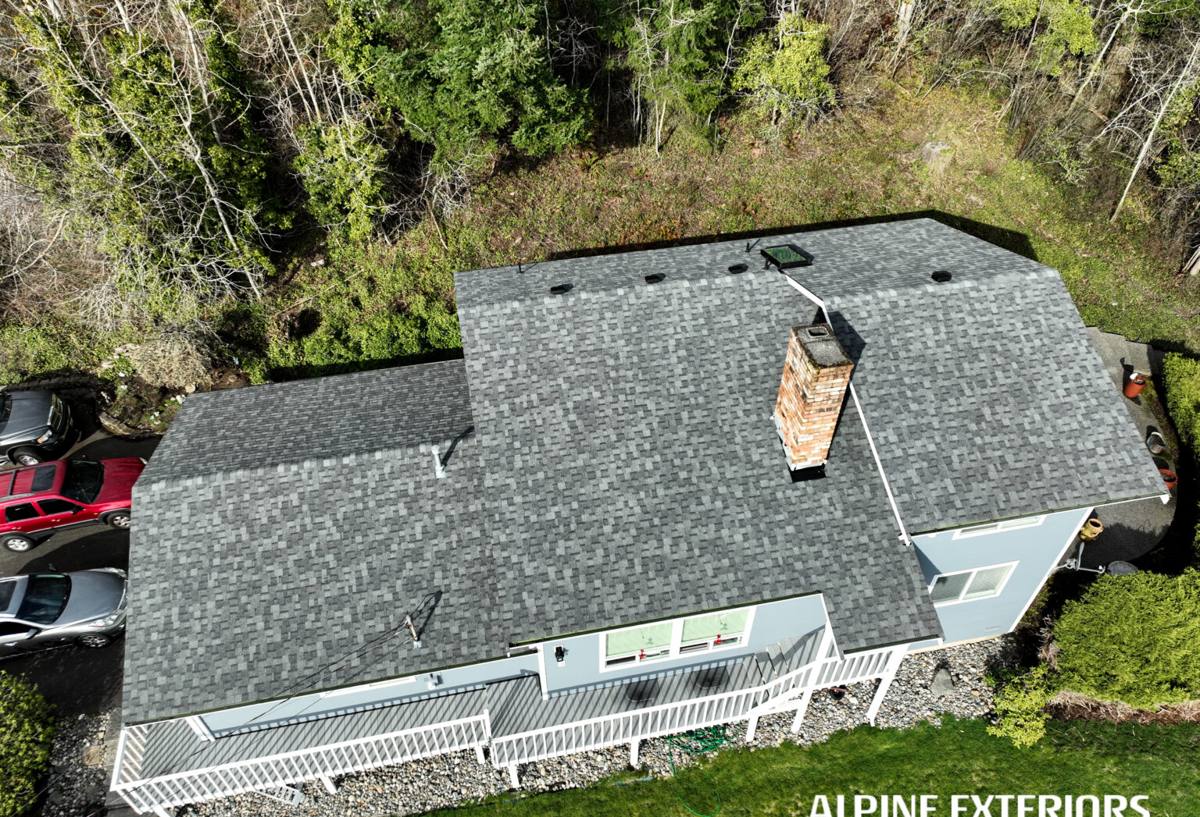
Signs a Burlington Roof Needs Repair, Not Just Watching
Most roof damage gives warning signs well before water shows up on a ceiling. Catching them early is almost always cheaper than waiting.
- Granules collecting in gutters or at the base of downspouts
- Shingles that are curling, cupping, or lifting at the edges
- Dark streaking or thick moss growth, especially on shaded slopes
- Rust staining around nail heads, vents, or flashing
- Soft or spongy decking felt underfoot in the attic
- Daylight visible through the roof deck from inside the attic
- Water stains on interior ceilings, especially near chimneys, skylights, or valleys
- Sagging sections along the roofline or at valleys
- Missing or torn shingles after a windstorm
Any one of these on its own might not mean an urgent problem. Several at once, or any sign paired with an active interior leak, means it's time to get someone on the roof to look closer.
What an Honest Roof Repair Actually Involves
A real roof repair is more than swapping a few shingles and calling it done. Done correctly, it addresses the cause of the failure, not just the visible symptom.
Finding the Actual Source
Water travels. A stain on a bedroom ceiling might trace back to a flashing gap ten feet away, or a leak that's been running down a rafter for months. Before any repair starts, we trace the path — checking flashing, valleys, penetrations, and the surrounding shingle field, not just the spot where the damage showed up inside.
Checking What's Underneath
Surface shingles only tell part of the story. If water has been getting in for a while, the decking underneath may be soft, delaminated, or rotted. Repairing over damaged decking doesn't hold — it just hides the problem until it fails again, usually at a worse moment.
Matching Materials and Technique
Repairs should tie into the existing roof correctly — proper shingle lap, correct nailing pattern and placement, compatible flashing metal, and underlayment that seals rather than just covers. A patch that isn't integrated into the surrounding roofing system is often just a new leak waiting to happen in a different spot.
Common Roof Repair Issues We See in Burlington
| Issue | Typical Cause Here | What a Correct Repair Includes |
|---|---|---|
| Leak at chimney or skylight | Failed step or counter-flashing seal | Remove and rebuild flashing, not just caulk over the gap |
| Leak in a valley | Wind-driven rain overwhelming an aged valley liner | Replace valley material and re-lace shingles correctly |
| Soft or rotted decking | Long-term moisture intrusion from moss or a slow leak | Cut out and replace damaged sheathing before re-roofing that section |
| Rusted fasteners lifting shingles | Moist, salt-influenced air corroding nail heads | Re-fasten with corrosion-resistant nails, replace damaged shingles |
| Widespread moss and granule loss | Extended shade and long moss season | Moss removal, treatment, and shingle assessment for remaining life |
Repair or Replace? How We Help You Decide
Not every damaged roof needs to come off. We look at the age of the roofing, how widespread the damage is, and what condition the decking is in before recommending anything.
| Factor | Leans Toward Repair | Leans Toward Replacement |
|---|---|---|
| Roof age | Under 15 years, single problem area | Near or past manufacturer's expected lifespan |
| Extent of damage | Isolated to one section, valley, or penetration | Spread across multiple slopes |
| Decking condition | Solid, dry sheathing found on inspection | Soft, rotted, or repeatedly repaired decking |
| Granule loss / wear | Localized, surrounding shingles still flexible | Widespread wear across most of the roof |
| Repair history | First or second repair on this roof | Third or later repair to the same general area |
We'll tell you honestly if a repair makes sense, and just as honestly if it doesn't. Patching a roof that's genuinely at the end of its service life usually costs the homeowner more over time than a well-timed replacement.
Our Roof Repair Process in Burlington
- Inspection: We get on the roof and in the attic, not just look from the ground, and document what we find.
- Diagnosis: We identify the actual cause of the leak or damage, tracing it back from the entry point.
- Written scope: You get a clear explanation of what's damaged, what needs to happen, and a realistic price range before work starts.
- Repair: We remove damaged materials, replace any compromised decking, and rebuild flashing and shingle courses to spec.
- Cleanup and check: Job site is cleared of debris and nails, and we walk the repair with you before we call it finished.
Materials We Use and Why
We stick to roofing materials and fastener grades that hold up to the conditions this area actually produces, rather than whatever is cheapest to install. That means corrosion-resistant fasteners given the moist, mildly salt-influenced air, quality synthetic or self-adhering underlayment at vulnerable points like valleys and eaves, and flashing metal that's compatible with the surrounding materials so it doesn't create a corrosion reaction over time.
We're straightforward with homeowners about trade-offs, too. Some lower-maintenance materials cost more up front but need less attention over the years; others are cheaper initially but require more regular upkeep — moss treatment, recoating, or more frequent inspection — to perform well in a climate like this one. We'd rather explain that plainly than oversell a product that doesn't fit your roof, your budget, or how much maintenance you actually want to do.
Why Local Experience in Skagit County Matters
A roof repair crew that works this county regularly knows which neighborhoods deal with heavier moss growth, which areas see the harshest wind-driven rain during winter storms, and which older roofing installations in this area tend to develop the same handful of recurring problems. That's not something you get from a crew driving in from outside the region for a single job.
It also means we're still around after the repair. If something about the fix doesn't hold up the way it should, you're not chasing down a contractor who's moved on to the next county. We live and work in this area, and our reputation here depends on repairs that actually last through a full Skagit County winter, not just the drive away from your house.
Get a Straightforward Roof Repair Estimate
If you're seeing granules in the gutters, moss taking hold on a shaded slope, or a stain creeping across a ceiling, it's worth having it looked at before the next storm system moves through. Fill out the form below for a free, no-pressure estimate — we'll tell you plainly what we find and what it would take to fix it right.