 Skagit County
 Why Board & Batten Fits La Conner Homes
Board and batten started as a practical answer to a simple problem: how do you cover a wall with vertical boards without leaving open seams for weather to get through? The batten strip over each joint solved that, and the look stuck around because it works on almost anything — old farmhouses, waterfront cottages, newer craftsman-style builds. La Conner has all three, which is part of why board and batten keeps coming up in conversations with homeowners here. The vertical lines read as clean and a little more custom than standard lap siding, and they suit the mix of historic and newer homes you find near the water and out toward the surrounding Skagit Valley farmland.
That said, the look is only half the reason it fits this area. Board and batten is also one of the few siding styles where the wrong material or the wrong installation shows up fast — usually at the battens themselves. Get it right and it holds up for decades. Get it wrong and you're looking at soft spots, streaking, and gapped seams within a few winters.
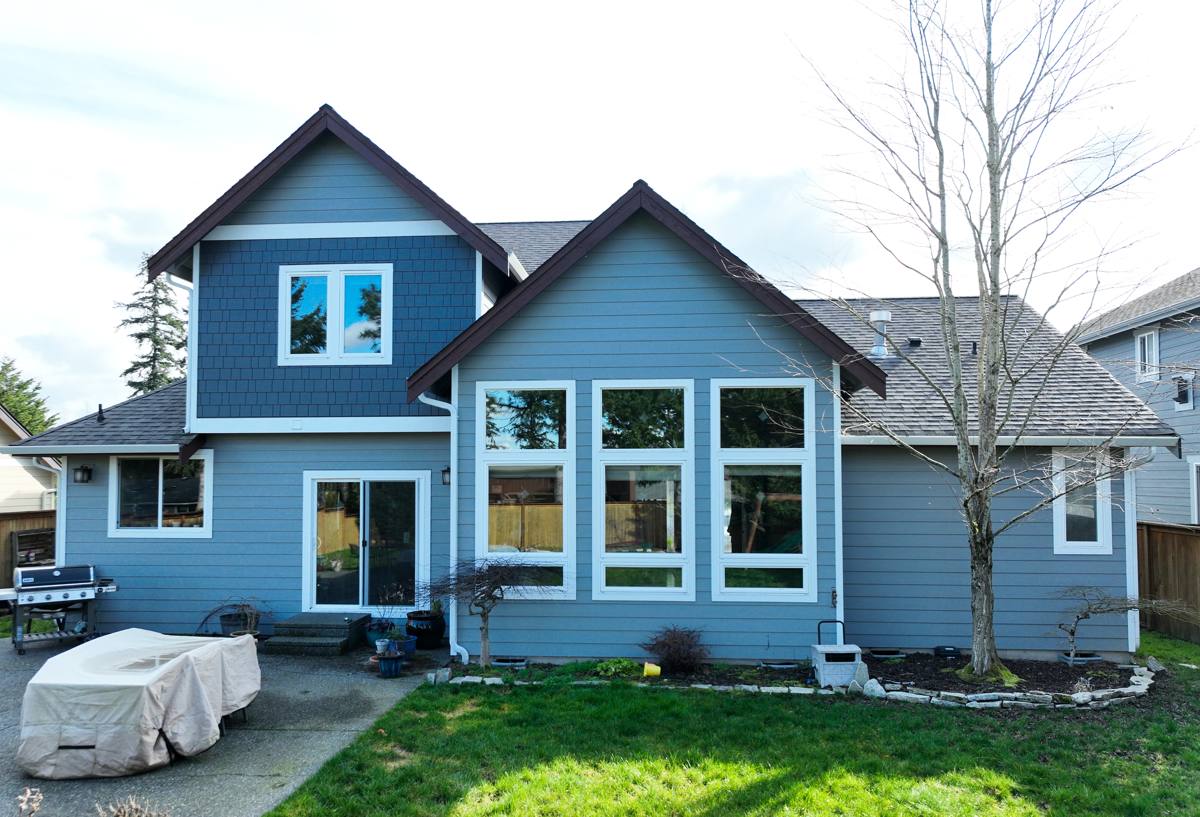
What Skagit County's Climate Actually Does to This Siding
La Conner sits close enough to Skagit Bay and the Swinomish Channel that salt air is a real, everyday factor on the exterior of a home — not just an occasional storm event. Salt-laden air accelerates corrosion on fasteners and metal flashing, and it speeds up the breakdown of paint film on anything that isn't factory-finished. Over years, homeowners see chalking, fading, and rust bleed at nail heads well before the siding itself is actually worn out.
Then there's the rain. Storms moving through the Sound and off the water tend to drive rain sideways rather than straight down, which matters a lot for a siding style built around vertical seams. Board and batten has more joints per square foot than a lap profile — every batten is a seam — so each one is a potential entry point if it isn't flashed and fastened correctly.
The third factor is moss and algae season, and in Skagit County that season is long. Mild, wet winters keep north- and shade-facing walls damp for months at a stretch. Porous or wood-based materials absorb that moisture, swell, and eventually rot from the inside out, and any surface that stays damp long enough will grow moss or mildew whether or not the substrate underneath is failing. This is the combination — salt air, wind-driven rain, and extended damp season — that we build every La Conner installation around.
What a Correct Board & Batten Installation Actually Involves
A good-looking board and batten wall and a correctly built one are not always the same thing. The parts that matter are mostly things you can't see once the job is finished:
Drainage behind the boards
Vertical siding needs a way for the small amount of moisture that gets past the surface to drain and dry out. That means a rainscreen gap — furring strips that hold the siding off the water-resistive barrier — rather than fastening boards flat against the wall. Without that gap, any moisture that gets behind the battens has nowhere to go, which is exactly the setup that causes hidden rot in a damp climate like ours.
Fasteners and hardware
In a salt-air environment, fastener choice isn't a minor detail. Standard fasteners corrode faster here than they do farther inland, and corroded fasteners streak the siding and eventually lose their grip. Stainless steel or hot-dip galvanized fasteners, installed at the manufacturer's specified pattern, are non-negotiable this close to the water.
Flashing at every transition
Window heads, water tables, roof-to-wall intersections, and any horizontal break in the siding need proper flashing — not caulk standing in for flashing. Caulk has a place in a board and batten installation, but it's a finishing detail, not a waterproofing strategy. Homes that rely on caulk to do a flashing's job are the ones that show water damage first.
Batten spacing and board width
Board and batten has a manufacturer-specified relationship between the width of the base panel and the spacing of the battens over each seam. Installers who eyeball this for the sake of a certain look can end up with insufficient coverage over the seam, which defeats the purpose of the batten in the first place.
Comparing Materials for Board & Batten Siding
Board and batten shows up in several materials, and the material matters more here than in a drier climate because moisture exposure is constant rather than seasonal. Here's an honest comparison of the common options:
| Material | Salt Air / Moisture Behavior | Maintenance | Typical Longevity |
|---|---|---|---|
| James Hardie fiber cement | Non-combustible, dimensionally stable, does not absorb and swell the way wood-based products do; factory finish resists chalking and fading | Low — occasional rinse and inspection, no repainting on the standard finish schedule | Multiple decades when installed to spec |
| Engineered wood (e.g. LP SmartSide) | Wood-fiber core is more moisture-sensitive; edge sealing and caulking maintenance is critical, especially at cut ends | Moderate — needs vigilant sealing and periodic repainting | Shorter than fiber cement if moisture management lapses |
| Cedar / primed spruce | Natural wood absorbs moisture readily; salt air and prolonged damp seasons accelerate cupping, splitting, and rot | High — regular refinishing, staining or painting, and inspection for insect and moisture damage | Variable, heavily dependent on upkeep |
| Vinyl | Doesn't rot, but can become brittle and fade or chalk under UV and salt exposure over time; batten profiles are less rigid and can show waviness | Low, but limited repair options if damaged or faded | Moderate, with visible aging at seams and fasteners over time |
We install James Hardie exclusively — not because the other materials are worthless, but because the trade-offs on wood-based and vinyl products (moisture sensitivity, ongoing sealing, fading, or long-term brittleness) are the exact weaknesses this climate exploits fastest. Hardie's fiber cement, backed by a factory ColorPlus finish and a strong transferable warranty, holds its shape and color in salt air and constant moisture without asking the homeowner to stay on top of maintenance to keep it that way.
Our Process for a La Conner Board & Batten Project
- Walkthrough and wall assessment. We look at the existing siding, sheathing, and any signs of past moisture intrusion before quoting anything — especially on walls facing the water or prevailing wind.
- Tear-off and substrate check. Once old siding comes off, we inspect the sheathing underneath. Hidden rot gets addressed before anything new goes on; covering a compromised wall is how small problems become expensive ones.
- Water-resistive barrier and rainscreen. We install house wrap and furring strips to create the drainage gap board and batten needs in this climate.
- Hardie installation. Boards and battens go up per James Hardie's fastening schedule and spacing requirements, with corrosion-resistant fasteners throughout.
- Flashing and trim detail. Every window, door, and horizontal transition gets flashed before trim goes on, and caulk is used only where it belongs.
- Final walkthrough. We go over the finished job with the homeowner and point out anything worth knowing for future upkeep.
Why It Matters to Hire a Crew That Already Works in La Conner
Siding installation isn't identical everywhere, and a crew that mostly works inland doesn't necessarily think about salt air corrosion or wind-driven rain as a default. A crew that already works in and around La Conner has seen which orientations take the worst weather locally, which fastener and flashing choices actually hold up near the water over several years, and how long a given wall assembly stays damp during the wet season. That experience shows up in the small decisions — fastener grade, rainscreen detailing, where extra flashing gets added — that don't appear on a quote but determine how the siding performs ten years out. It also means fewer surprises during permitting and less guesswork about how a given home's exposure should shape the installation.
Maintenance Checklist for Board & Batten Near the Water
Hardie board and batten is low-maintenance, not no-maintenance. A short annual routine keeps it performing the way it should:
- Rinse salt spray and general grime off the exterior once or twice a year, especially on walls facing open water or prevailing wind.
- Walk the exterior and check caulking at trim, window, and door junctions for cracking or separation.
- Keep gutters and downspouts clear so roof runoff isn't dumping extra water onto any one section of wall.
- Trim back vegetation and shrubs that block airflow along shaded or north-facing walls, where moss growth is most likely.
- Look along the battens for any gaps, loose fasteners, or streaking, which can signal a fastener or flashing issue worth catching early.
- Note any soft spots or discoloration near the base of the wall, a common sign of splash-back moisture over time.
What Affects the Cost of a Board & Batten Project
Board and batten generally costs more than horizontal lap siding of the same square footage, mainly because of the extra material and labor in the battens themselves. Beyond that baseline, a few things move the number on any given La Conner home:
- Condition of the existing wall. Sheathing repairs found during tear-off add cost but prevent much larger problems later.
- Home size and number of stories. More wall area and harder-to-reach sections mean more labor and equipment time.
- Trim and detail complexity. Homes with more windows, dormers, or architectural detail require more precise (and time-consuming) flashing and cutting.
- Site access. Tight waterfront lots or limited staging space can add time to material handling and setup.
- Color and finish choice. Factory-applied ColorPlus finishes come in a range of standard colors; custom or premium finishes can shift the price slightly.
We'd rather walk a specific home and give an honest number than guess at one here — every wall assembly and exposure is a little different, especially this close to the water.
If you're weighing board and batten for a home in La Conner, we're glad to come take a look, explain what your walls actually need given their exposure, and put together a straightforward, no-pressure estimate.