 Skagit County
 Deck Replacement in Bow: Built for What This Climate Actually Does to Wood
Bow sits close enough to Samish Bay and the surrounding saltwater that homeowners here deal with a combination most inland Skagit County properties don't: salt-laden air, driving rain off Puget Sound weather systems, and a moss season that can run eight months out of the year in shaded yards. A deck built without that combination in mind will show it fast — soft boards near the ledger, green film on north-facing stairs, and fasteners that bleed rust through the finish well before the structure itself is actually failing. Replacing a deck in Bow isn't just swapping old boards for new ones; it's building for the specific way this microclimate attacks a structure.
We work Bow regularly as part of our Skagit County service area, which means we're not guessing at what holds up here — we've pulled up enough failed decking in this exact area to know where the weak points are before we even start the estimate.
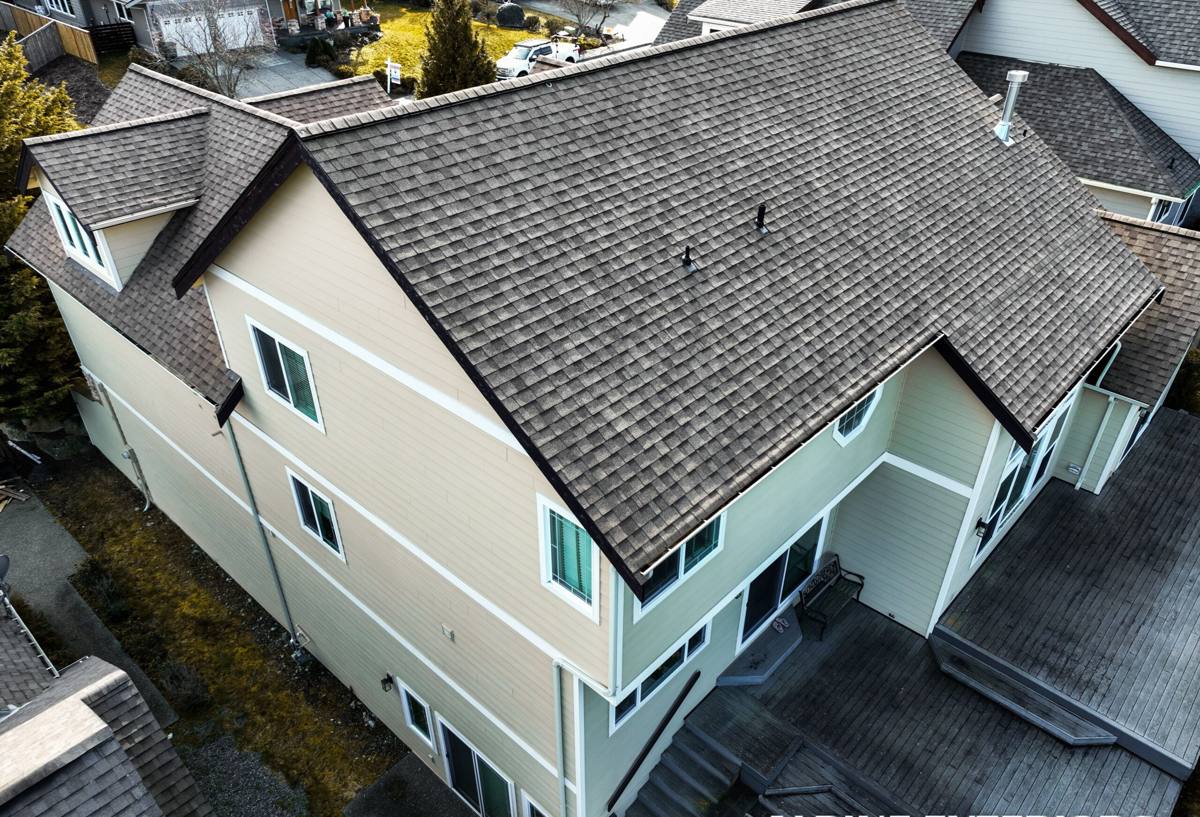
What Salt Air and Long Wet Seasons Do to a Deck
It helps to understand the failure pattern before talking about the fix, because it changes what "correct" actually means for a Bow deck.
Salt Air and Metal Fasteners
Proximity to saltwater accelerates corrosion on anything less than fully rated stainless or hot-dip galvanized hardware. Cheaper coated screws and joist hangers can start showing rust bleed within a couple of seasons in a Bow-area yard, and once a fastener is corroding, the wood around it stays wet longer, which speeds up rot right at the connection points that matter most structurally.
Driving Rain and Ledger Boards
Wind-driven rain off the water doesn't fall straight down — it gets pushed sideways into ledger boards, stair stringers, and any spot where the deck meets the house. That's the single most common place we find hidden rot on a tear-off: the ledger board and the rim joist behind it, hidden under old flashing that was never properly lapped.
Moss, Shade, and Surface Wear
Bow's tree cover and marine humidity keep shaded deck surfaces damp far longer than a homeowner would guess just by looking at the sky. Moss and algae hold moisture against the board surface, and on softer woods or older composite generations, that constant damp cycle is what actually shortens the deck's life — not one big storm, but months of low-grade saturation every single year.
Signs a Bow Deck Needs Replacement, Not Repair
- Soft or spongy spots when you walk the deck, especially near the house or at stair landings
- Fastener heads rusted, popped, or leaving dark streaks down the board face
- Ledger board separating slightly from the house, or visible gaps where flashing should be
- Persistent green or black staining that pressure washing only removes for a few weeks
- Joists or posts that feel soft when probed with a screwdriver, particularly at ground contact points
- Railings that flex or feel loose at the base, which often points to post rot below the surface
- A deck older than 15-20 years that's never had structural framing inspected or replaced
Any one of these on its own might be a repair. Several together, especially structural softness at the ledger or posts, usually means the framing has been compromised long enough that patching won't hold — and in this climate, a deck that's already showing rot at the frame level tends to fail faster than the same deck would somewhere drier.
What a Correct Replacement Involves
Tear-Off and Frame Inspection
We don't just pull decking boards and reuse the frame underneath without a real look. Every ledger, joist, beam, and post gets checked for rot, insect damage, and corrosion once the surface is off. In Bow specifically, we pay close attention to the ledger-to-house connection and any post bases sitting in or near standing moisture, since those are the spots this climate targets first.
Flashing and Water Management
This is where a lot of deck failures actually start, and it's the part that's invisible once the job is done wrong. Proper ledger flashing — correctly lapped with the house's water-resistive barrier, not just caulked and hoped for — is non-negotiable on a Bow rebuild given how much sideways rain this area gets. We also grade and flash around post bases and stair stringers so water sheds away from end grain instead of pooling against it.
Fastener and Hardware Standards
Given the salt air exposure, we use stainless steel or high-grade coated fasteners rated for coastal/marine-adjacent use, along with corrosion-resistant joist hangers and structural connectors. It costs more upfront than standard coated hardware, but replacing rusted-out fasteners in eight years costs a lot more than doing it right the first time.
Decking Material Selection
We'll walk through the honest trade-offs for your specific yard — sun exposure, tree cover, budget — rather than pushing one product as a default.
| Material | Moisture/Moss Behavior | Maintenance | Typical Lifespan Here |
|---|---|---|---|
| Pressure-treated lumber | Absorbs moisture readily; needs sealing to resist moss staining | Annual cleaning, periodic sealing | 10-15 years with upkeep |
| Cedar | Naturally moisture-resistant but softens without maintenance in constant damp shade | Regular sealing/staining | 15-20 years with upkeep |
| Composite decking | Doesn't rot, but can hold surface moss/algae if not cleaned | Occasional washing, no sealing | 25-30 years |
| PVC/capped composite | Best resistance to moisture and staining; sheds moss more easily | Low; occasional rinse | 25-30+ years |
Why We Don't Cut Corners on Fasteners or Flashing
We've been called back to fix decks in this area where the framing was fine but the hardware wasn't — galvanized-but-not-stainless screws that rusted through in a handful of years because of the salt exposure, or ledger flashing that was skipped to save a step. Our standard on every Bow job is stainless or marine-rated hardware at the ledger and post connections, and full flashing detail at every water entry point, even when it adds a little time to the job. That's a maintenance and moisture-behavior decision, not a brand judgment — it's simply what holds up given what this specific location does to a structure year after year.
Our Process for a Deck Replacement in Bow
- On-site assessment — we walk the existing deck, probe the frame, and check drainage and sun/shade patterns specific to your lot
- Honest scope — we tell you plainly whether it's a repair or a full replacement, and why
- Material walkthrough — we go over decking and railing options against your budget and how much shade/moisture the deck sees
- Permit handling — most deck replacements in Skagit County require a permit; we handle that paperwork
- Tear-off and framing repair — old decking removed, framing inspected and rebuilt where needed with corrosion-resistant hardware
- Flashing and install — proper ledger flashing, decking installed to manufacturer spec, railings and stairs set
- Final walkthrough — we go over the finished deck with you before calling the job done
What to Have Ready Before We Come Out
- Rough sense of how you use the deck (grilling, seating, hot tub load, etc.) so we can talk through structural needs
- Any known trouble spots — soft boards, past leak history at the house wall, standing water after rain
- A general budget range so we can steer material options toward what fits
- Timeline constraints, especially if you're planning around a specific season or event
Cost Factors for a Bow Deck Replacement
We won't quote a number without seeing the deck, but a few things consistently move the price up or down on jobs in this area:
| Factor | Effect on Cost |
|---|---|
| Deck size and footprint | Larger square footage and multiple levels increase material and labor |
| Framing condition | Rotted joists, beams, or posts found during tear-off add rebuild cost |
| Decking material | Pressure-treated is lowest upfront; PVC/capped composite costs more but needs less upkeep |
| Railing style | Basic wood railing costs less than composite, cable, or glass panel systems |
| Site access | Tight side-yard access or elevated decks with limited equipment access add labor time |
| Permit and inspection | Required for most full replacements; adds a modest fixed cost |
Why Hire a Crew That Already Works Bow
A deck built to a generic spec sheet doesn't account for what actually happens to it a mile from Samish Bay. We already know which fastener grades hold up against the salt air out here, which flashing details actually stop wind-driven rain at the ledger, and which decking materials handle a shaded, moss-prone yard without turning into a slip hazard by winter. That local experience means fewer surprises during tear-off and a deck that's built for the conditions it'll actually face, not just the conditions on a manufacturer's warranty sheet written for a dry climate.
If your deck in Bow is showing soft spots, rusted fasteners, or persistent moss staining, we're happy to come take a look. We'll give you a straight answer on repair versus replacement and a free, no-pressure estimate — just fill out the form below to get started.