 Skagit County
 Siding Installation in Bow: What the Climate Actually Demands
Bow sits close enough to the water that salt-laden air is a daily fact of life, not an occasional nuisance. Combine that with the driving rain that rolls through Skagit County most of the year and the shade many lots here carry from mature trees, and you get one of the harder environments in Western Washington to keep siding looking good and performing well. A siding installation in Bow isn't the same job as one in a drier, inland climate — the materials, the flashing details, and the fastening all need to account for near-constant moisture exposure and a long moss season that never really stops trying to take hold.
This page focuses specifically on siding installation for homes in Bow — what the local climate does to exterior walls over time, what a correctly installed job actually involves, and why a crew with real experience in this part of Skagit County makes a measurable difference in how long that siding lasts.
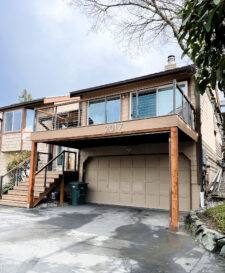
What Skagit County's Weather Does to Siding Over Time
Salt Air and Corrosion
Airborne salt doesn't just affect homes right on the shoreline — it travels on wind and settles on siding, trim, and fasteners well inland from the water. Over years, that salt exposure accelerates corrosion on unprotected metal fasteners and flashing, and it can degrade lower-grade paint finishes faster than the manufacturer's warranty timeline assumes. Siding systems that rely on site-applied paint are the most exposed to this problem, since a compromised paint film lets moisture and salt reach the substrate underneath.
Driving Rain and Wind-Driven Moisture
Wind-driven rain is a different problem than simple rainfall. It pushes water sideways and upward into laps, seams, and penetrations that a siding system was never designed to handle if it's installed with tight or incorrect clearances. In Bow, storms coming off the water frequently carry enough horizontal force to drive moisture behind siding that looks fine from the ground. The damage from this kind of intrusion is almost always hidden until it shows up as rot in the sheathing or framing behind the wall.
Extended Moss and Mildew Season
Shaded lots, high humidity, and mild temperatures give moss and mildew a long growing season in Skagit County — often nearly year-round on north-facing walls or under tree cover. Moss holds moisture against the siding surface far longer than open air would, which is exactly the condition that leads to swelling, delamination, or paint failure on materials that aren't engineered to tolerate sustained dampness.
What a Correct Siding Installation Actually Involves
The Weather-Resistive Barrier and Flashing
Before a single piece of siding goes up, the wall needs a continuous weather-resistive barrier with properly lapped seams, and flashing integrated at every window, door, deck ledger, and roofline intersection. This is the layer that actually keeps a home dry — the siding itself is the second line of defense, not the first. Skipping or rushing this step is the single most common cause of moisture damage behind siding in this climate, regardless of what material is installed over it.
Fastening, Clearances, and Panel Gaps
Fiber cement siding needs to be fastened at the manufacturer's specified pattern and depth, with correct clearances from grade, roof lines, and abutting surfaces so water has somewhere to go instead of wicking upward into the panel. Gaps at panel ends need consistent spacing for expansion, and every one of those gaps needs to be treated correctly — either caulked per spec or left open per manufacturer instructions, depending on the detail. Getting this wrong doesn't usually cause a problem in year one; it shows up three, five, or ten years later.
Caulking, Trim, and Transition Details
Every transition — siding to trim, trim to window, trim to roofline — is a potential entry point for wind-driven rain. Correct installation uses the right sealant for the material, applied at the right joints (and skipped at joints that should drain, not seal), with trim profiles that shed water away from the wall rather than channeling it into a seam. This level of detail is where experienced crews and inexperienced ones produce very different long-term results, even when the material itself is identical.
Why We Install Only James Hardie Fiber Cement in Bow
We install James Hardie fiber cement siding exclusively — we don't install vinyl, LP SmartSide, Cemplank, Allura, primed spruce, or cedar. That's a deliberate standard, not a sales preference, and it's based on how these products actually perform over years of exposure to salt air, driving rain, and moss, not on marketing claims.
Fiber cement is dimensionally stable in a way wood-based and engineered-wood products aren't — it doesn't swell, delaminate, or invite the wood-boring and moisture problems that can affect engineered wood siding when a seam or cut edge is exposed to sustained dampness. It's non-combustible, which matters for fire-rated assemblies and insurance considerations, and James Hardie's ColorPlus factory finish is baked on and warranted separately from the substrate, which removes the repainting cycle that vinyl and site-primed products eventually require. For a climate like Skagit County's, where the siding rarely gets a real chance to fully dry out between rain events, that combination of stability and a factory-cured finish is what holds up.
James Hardie also engineers its HZ5 product line specifically for climates with higher moisture exposure, which fits the Pacific Northwest better than a one-size-fits-all product. The company backs correctly installed siding with a strong transferable warranty, which matters to homeowners who plan to sell — a warranty that follows the house, not just the original buyer, is worth confirming with any siding product you're considering.
Our Installation Process
- Site walk and assessment — we look at the existing siding, sheathing condition where visible, moisture history, sun and shade exposure, and any problem areas around windows, decks, or rooflines.
- Tear-off and substrate check — old siding comes off and we inspect the sheathing underneath for rot or hidden damage before anything new goes up. Any compromised substrate gets repaired, not covered over.
- Weather-resistive barrier and flashing — a new barrier is installed with correctly lapped seams, and flashing is integrated at every penetration and transition point.
- James Hardie panel or lap installation — installed to manufacturer fastening, clearance, and gap specifications, with attention to the details that matter most in a wet climate.
- Trim, caulking, and finish details — trim is set to shed water, joints are sealed or left to drain as specified, and touch-up paint is applied to any factory-cut edges per James Hardie's guidelines.
- Final walkthrough — we review the completed work with the homeowner before calling the job done.
Comparing Siding Materials for a Bow Home
| Factor | James Hardie Fiber Cement | Vinyl Siding | Engineered Wood / LP-Type Siding |
|---|---|---|---|
| Salt air & moisture resistance | Engineered for it; HZ5 line built for wetter climates | Doesn't absorb moisture but can warp or gap over time | Vulnerable at cut edges and seams if moisture gets in |
| Fire resistance | Non-combustible | Combustible | Combustible |
| Finish & repainting | Factory ColorPlus finish, warranted separately | Color molded in but fades; can't easily repaint | Typically site-primed or factory-primed; needs paint upkeep |
| Typical lifespan when correctly installed | Decades, backed by transferable warranty | Variable; sun and impact damage common over time | Depends heavily on moisture management and maintenance |
What Siding Installation Costs Depend On
We don't quote pricing without seeing the home, but a few factors consistently drive cost up or down on jobs in Skagit County:
| Cost Factor | Why It Matters |
|---|---|
| Home size and number of stories | More square footage and taller walls mean more material and more labor, including scaffolding or lift access. |
| Tear-off vs. new construction | Removing and disposing of existing siding adds labor that new-construction installs don't have. |
| Sheathing or trim repair | Moisture damage found during tear-off has to be repaired before new siding goes on — this is common in older Skagit County homes. |
| Panel style and trim detail | Lap siding, shingle-style panels, and custom trim profiles all price differently. |
| Site access | Steep lots, mature landscaping, or tight setbacks can slow tear-off and installation. |
Signs Your Bow Home's Siding Needs Replacing
- Visible warping, buckling, or gaps that weren't there a few years ago
- Persistent moss or mildew staining that returns soon after cleaning
- Soft spots or discoloration near the bottom of walls or below windows
- Paint that's peeling, chalking, or failing faster than expected
- Rising energy bills that suggest the wall assembly is no longer sealing properly
- Visible rot or damage around trim, corners, or siding-to-roof transitions
Why Hire a Crew That Already Works in Bow
A siding crew that's worked in Bow and the surrounding parts of Skagit County already understands which walls take the worst of the wind-driven rain, how much moss growth to expect on shaded elevations, and where salt exposure tends to cause the most wear. That local pattern recognition shows up in small decisions during installation — flashing details, fastening choices, and where to pay extra attention to sealant — that a crew unfamiliar with this specific coastal climate might not think twice about. It also means faster, more accurate assessments when something's gone wrong with existing siding, because the failure patterns here aren't a mystery to us.
If you're planning a siding project in Bow, we're happy to take a look and walk you through what we'd recommend for your home — no pressure, no obligation. Fill out the form below to schedule a free estimate.